
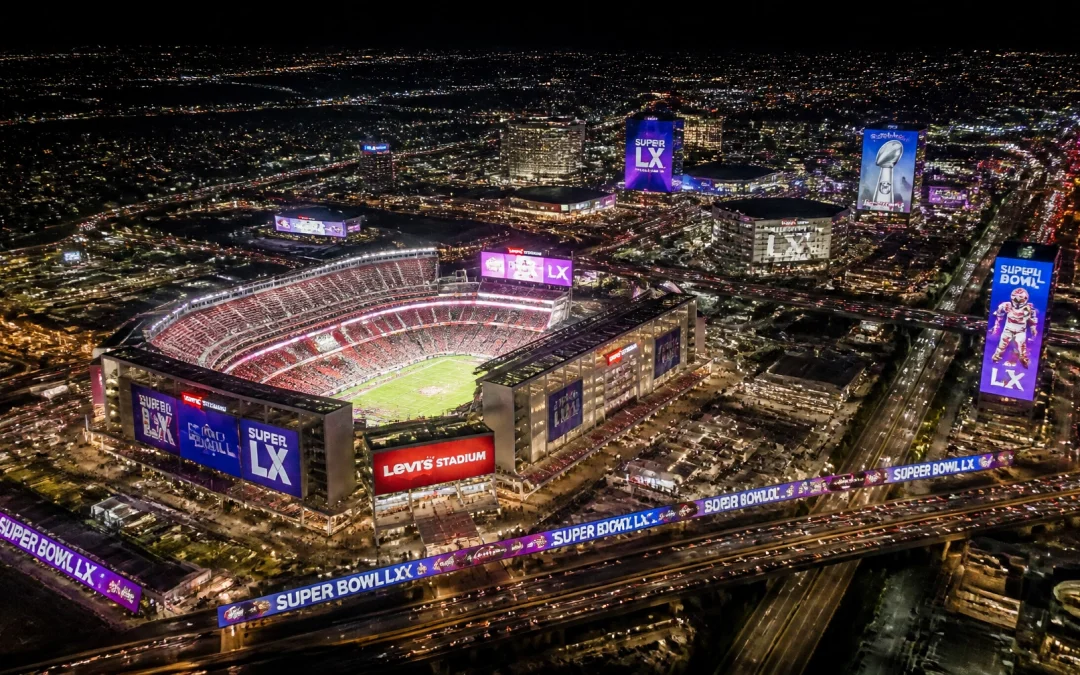
The landscape of sports advertising reached a new pinnacle during Super Bowl LX in 2026. As fans descended upon Levi’s Stadium in Santa Clara, the traditional 30 second television commercial was no longer the sole focus of brand dominance. Instead, a comprehensive, venue-wide strategy took center stage, proving that physical presence and digital integration are the true keys to capturing fan attention in the modern era.
Forty years of advertising leadership from the Sports Media Inc. family provided the foundation for this evolution. By leveraging decades of expertise, OOH Sports demonstrated how a multi-layered approach: ranging from digital floor graphics to massive highway billboards: creates an inescapable brand environment. This strategy moves beyond simple impressions to create a continuous narrative that follows the fan from their commute to their seat.
Strategy: The Multi-Layered Approach
The core strategy for Super Bowl 2026 centered on the concept of "Total Venue Coverage." This method acknowledges that a fan's journey begins long before they enter the stadium gates. To achieve maximum impact, the advertising execution was divided into three distinct zones: the 10 mile perimeter, the stadium entry points, and the interior concourses.
In the 10 mile radius surrounding Levi’s Stadium, digital out of home (DOOH) assets served as the first point of contact. Strategic placements along Highway 101 and the San Jose corridors ensured that every attendee, VIP, and local resident was exposed to synchronized brand messaging. This perimeter targeting creates a sense of ubiquity, making a brand feel like an official part of the event fabric even if they do not hold an official sponsorship.

Inside the venue, the strategy shifted to high-frequency touchpoints. Digital floor graphics, a once-underutilized asset, became a primary driver of engagement. These displays, positioned in high-traffic corridors and near concession stands, capture attention during natural lulls in the action. By placing advertisements directly in the line of sight as fans navigate the building, brands achieved a 100 percent viewability rate that traditional static posters cannot match.
Objective & Strategy: Dominating the Second Screen
A primary objective for the 2026 campaign was to bridge the gap between physical out of home media and the digital second screen. Data from recent years indicates that 78 percent of Super Bowl viewers watch the advertisements intently, but nearly all of them are also using a mobile device simultaneously.
The strategy employed real-time triggers to synchronize stadium displays with mobile retargeting. When a specific brand appeared on the large-scale stadium screens or digital pillars, a corresponding call-to-action was delivered to the mobile devices of fans within the immediate vicinity. This dual-exposure technique reinforces the message and provides a direct path to conversion, whether through a social media interaction, a limited-time offer, or a sports betting prompt.
This approach follows the successful blueprint of previous programmatic DOOH campaigns. For instance, a vodka launch for White Claw achieved a 74 percent lift in purchase consideration by using similar location-based targeting. By applying these lessons to the Super Bowl stage, brands were able to turn passive viewers into active participants.
Technology Partners and Execution
The execution of such a large-scale operation requires a sophisticated technological backbone. Technology partners specializing in programmatic DOOH and real-time data analytics were essential to the success of the Super Bowl 2026 rollout. These platforms allowed for dynamic creative optimization, where advertisements could change based on the score of the game, the weather, or the specific demographic data of the crowd in a particular section of the stadium.
Strategic use of Demand-Side Platforms (DSPs), such as the StackAdapt platform, enabled media buyers to bid on premium inventory in real time. This flexibility is a significant shift from the traditional model of buying stadium signage months in advance. Brands could pivot their messaging instantly, ensuring that their creative remained relevant to the unfolding drama on the field.
The logistical execution involved managing over 25,000 digital screens across the sports network. This vast reach ensures that no matter where a fan turns, the brand message is present. The integration of AI-powered analytics also allowed for the measurement of "dwell time" and sentiment, providing a level of granular data previously unavailable in out of home advertising.

Results: Measuring the Impact
The results of the 2026 venue-wide campaigns surpassed previous benchmarks for fan engagement and brand recall. Preliminary data indicates a significant increase in brand favorability for those who utilized the "floor to sky" coverage model.
- Brand Awareness: Campaigns utilizing the 10 mile perimeter strategy saw a 119 percent lift in positive brand image, mirroring results seen in AB InBev’s Mike’s Hard Iced Tea campaigns.
- Purchase Consideration: Brands that integrated stadium floor graphics with mobile retargeting reported a 144 percent increase in purchase consideration, similar to the growth experienced by Sea-Doo in their first digital OOH campaign.
- Ad Recall: Fans exposed to the multi-layered approach were 3.5 times more likely to remember specific brand taglines compared to those who only saw traditional television spots.
These figures prove that the "Super Bowl secret" is not just about having the best commercial, but about having the most consistent presence. By dominating the physical environment of the stadium, brands create a "halo effect" that amplifies all other marketing efforts.
Visualizing the Game-Day Experience
To truly understand the scale of this advertising revolution, one must see the integration in action. The following video illustrates how modern sports marketing transcends the screen to become a physical experience.
https://www.youtube.com/watch?v=l6J-0zileKE
The Legacy of Forty Years
The success of the 2026 Super Bowl campaigns is the result of 40 years of continuous innovation. Starting as a pioneer in traditional sports media and evolving into a leader in the digital out of home space, the mission has always been to tell a brand's story in the most dynamic way possible.
This heritage provides a unique advantage in navigating the complexities of stadium logistics and fan psychology. Understanding the flow of a crowd and the specific moments when a fan is most receptive to a message is a skill honed over decades. In 2026, this experience allowed OOH Sports to turn the entire Santa Clara region into a massive, interactive canvas for the world’s biggest brands.

Conclusion: The Future of Sports Marketing
Super Bowl LX served as a definitive case study for the future of the industry. The era of fragmented attention requires a unified advertising front. By combining the high-impact nature of digital billboards with the intimate, high-traffic engagement of floor graphics and concourse pillars, brands can achieve total venue saturation.
As the sports media landscape continues to evolve, the focus will remain on real-time execution, data-driven targeting, and the seamless integration of physical and digital worlds. The secrets revealed during the 2026 season provide a roadmap for any brand looking to dominate the conversation in the world of sports.
For those involved in the buying and planning of sports advertising, the message is clear. To win the game of attention, one must be present everywhere the fan looks, from the floor they walk on to the sky above the arena.