
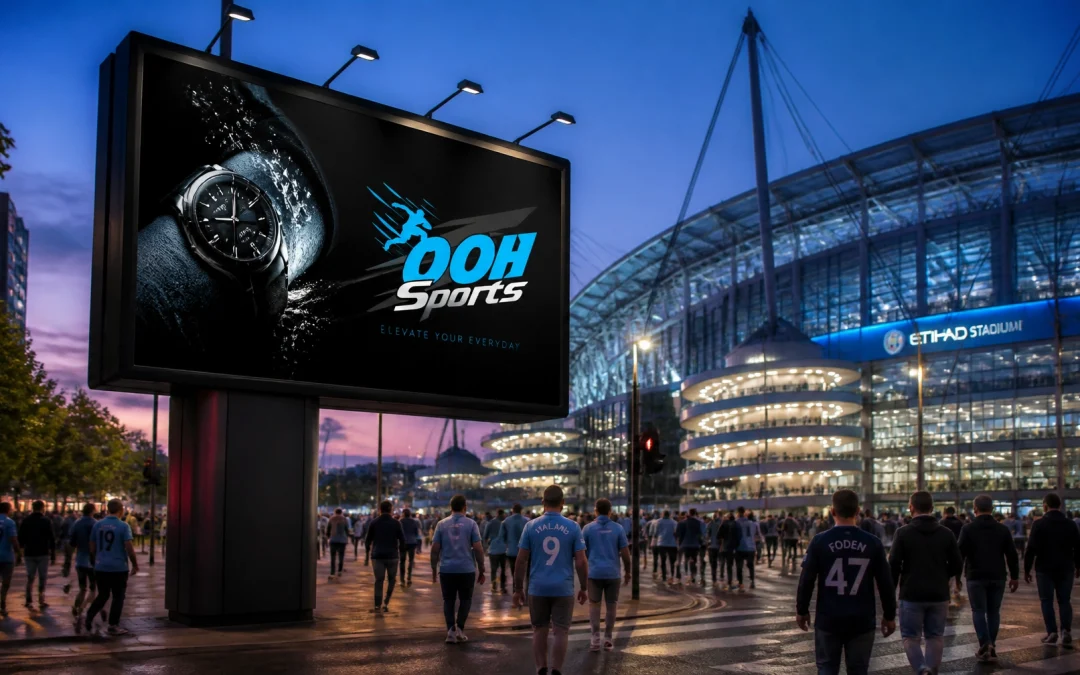
Traditional sports marketing often focuses on the few hours of action inside the arena. While the scoreboard and field-level LEDs offer immediate impact, the most effective branding strategies recognize that the fan experience begins long before the first whistle and continues well after the final play. True fan engagement requires a comprehensive approach that captures attention throughout the entire journey to and from the venue.
Stadium perimeter advertising represents a strategic shift in how brands interact with sports audiences. By leveraging a digital network that extends up to 10 miles around a sports venue, marketers can create a sustained brand presence that resonates with the emotional intensity of the game day environment. This guide explores the mechanics, strategies, and measurable outcomes of high-impact advertising near the stadium.
The Strategy of the Stadium Perimeter
The stadium perimeter is not just a geographic boundary. It is a high-density zone of emotional and commercial activity. Within a 10-mile radius of a major sports arena, audience engagement levels are significantly higher than in standard urban environments. Research indicates that sports fans are six to eight times more engaged than the average television viewer or internet user during live event windows.
The strategy involves saturating this zone with programmatic digital out-of-home (DOOH) placements. Unlike static billboards, digital screens allow for real-time updates and dynamic creative that can respond to the specific context of the game. This approach ensures that a brand is not just a passive observer but an active participant in the fan's day.
By targeting transit hubs, retail centers, bars, and major thoroughfares within the 10-mile radius, a campaign can achieve a frequency of exposure that builds deep familiarity. This geographical precision eliminates wasted impressions on audiences who are not part of the active sports demographic on game day.
Objective: Moving Beyond the Scoreboard
While official stadium sponsorships provide prestige, they often come with high entry costs and limited inventory. Programmatic DOOH offers a more flexible alternative that allows brands to maintain a dominant presence near the venue without the constraints of traditional sponsorships.
The objective of a perimeter campaign is to own the "fan path." This includes:
- Pre-Game Anticipation: Capturing attention as fans travel toward the stadium.
- The Social Window: Reaching fans in bars and restaurants in the hours leading up to the game.
- Post-Game Reaction: Reinforcing brand messaging during the heightened emotional state following a win or loss.
This multi-touchpoint strategy ensures that the brand remains top-of-mind. Strategic placement near the stadium can often lead to "ambush marketing" opportunities where a brand appears as an unofficial part of the event narrative, achieving high visibility at a fraction of the cost of a primary sponsorship.

The Fan Journey: A Connected Experience
Successful engagement is built on the understanding of the fan journey. This journey is a series of predictable movements and emotional peaks. A campaign that follows this path can move a consumer from awareness to purchase consideration with high efficiency.
1. The Approach
In the hours before an event, fans begin their commute. Digital screens on major highways and transit lines serve as the first point of contact. At this stage, the creative should focus on high-impact branding and broad messaging that aligns with the excitement of the upcoming game.
2. The Gathering
Once near the stadium, fans congregate in local establishments. Digital screens in retail areas and entertainment districts allow brands to interact with fans during social hours. This is an ideal time for performance-based messaging, such as limited-time offers or interactive prompts.
3. The Exit
After the game, the emotional intensity is at its peak. The exit journey is a critical window for reinforcement. Campaigns that acknowledge the game's outcome or provide relevant post-game information can achieve a 119% lift in positive brand image, as seen in campaigns for brands like Mike's Hard Iced Tea.

Technology and Execution
The execution of a stadium perimeter campaign relies on sophisticated technology partners and data-driven planning. Programmatic platforms allow for the automated buying of inventory based on specific triggers. These triggers can include time of day, weather conditions, or even the live score of a game.
One of the primary advantages of this technology is the ability to scale across a vast network. Access to thousands of digital screens ensures that a brand can achieve "share of voice" parity with even the largest official sponsors. This shift is part of a broader trend where 25,000 digital screens are redefining sports marketing.
Key execution tactics include:
- Device ID Targeting: Identifying and retargeting audiences who were exposed to the DOOH screens during the game day window.
- Dynamic Creative Optimization (DCO): Swapping creative assets in real-time to match the energy and context of the fans.
- Geofencing: Ensuring that the messaging is strictly contained within the high-value 10-mile radius.
Measurable Results and Impact
The success of a perimeter campaign is not measured solely by impressions. Modern attribution models allow for the tracking of brand lift, purchase consideration, and even physical foot traffic. Data from recent campaigns demonstrates the significant impact of this localized strategy.
For instance, a campaign for White Claw using programmatic DOOH around sports venues resulted in a 74% lift in purchase consideration. Similarly, Sea-Doo's first digital OOH campaign saw purchase consideration increase by 144%. These figures highlight the ability of perimeter advertising to move the needle on consumer behavior in ways that traditional broad-reach media cannot.
By focusing on a specific geographic perimeter, brands can avoid common mistakes in sports DOOH campaigns, such as overspending on low-impact areas or failing to align the message with the audience's real-time environment.
Creative Best Practices for Creative Directors
For creative directors, the challenge is to design for a fast-moving, high-distraction environment. The stadium perimeter requires a different visual language than digital or print media.
- Simplicity is Paramount: Fans are often in motion. The primary message must be digestible in under three seconds.
- High Contrast: Use bold colors and large typography to ensure legibility against a bright city skyline or a dark evening sky.
- Contextual Relevance: Incorporate elements that resonate with the sports culture of that specific stadium. This creates an immediate bond with the fan.
- Action-Oriented: If the goal is performance, the call to action must be unmistakable. Whether it is a QR code for a discount or a prompt to visit a nearby retailer, the instruction should be the focal point.

Conclusion
Succeeding near the stadium requires a departure from the "one size fits all" approach of traditional media. By utilizing the 10-mile stadium perimeter, brands can insert themselves into the most passionate moments of a consumer's life. The combination of programmatic precision, high-quality digital inventory, and data-driven attribution makes this strategy an essential component of the modern sports marketing mix.
As the digital landscape continues to evolve, the ability to reach fans where they live, travel, and celebrate will remain the ultimate advantage for brand managers and CMOs looking to maximize their ROI in the sports arena.