
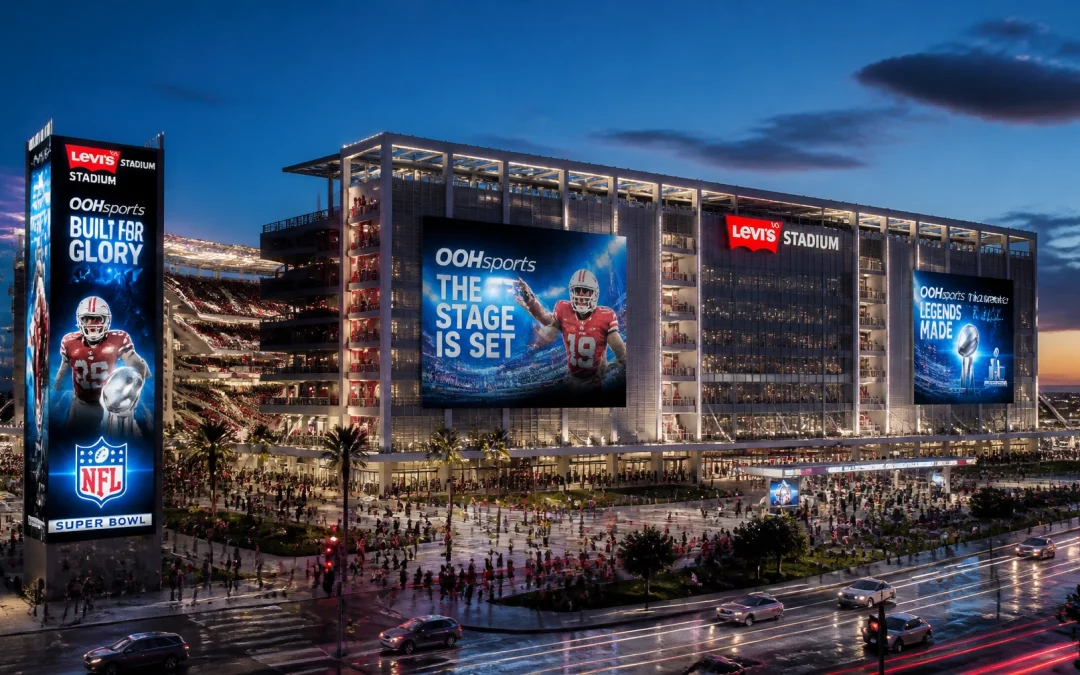
As the summer of 2026 unfolds, the sports marketing world remains fixated on the unprecedented advertising execution seen at Super Bowl LX. The event, hosted at Levi’s Stadium in Santa Clara, did not just break records for television viewership and ticket prices. It served as the definitive proof of concept for venue-wide out-of-home (OOH) advertising. For months, media buyers, brand managers, and chief marketing officers have analyzed how a singular, integrated strategy managed to dominate the physical and digital landscape of one of the world's largest sporting events.
The conversation centers on the shift from traditional, isolated sponsorship placements to a comprehensive network that covers every touchpoint of the fan journey. From the moment spectators landed at the airport to the second they stepped onto the stadium floor, brands were present in a way that felt organic yet unavoidable. This level of saturation was made possible through a legacy of expertise and a technological infrastructure that has been decades in the making.
A 40-Year Legacy of Advertising Leadership
The success of the 2026 Super Bowl campaigns did not happen by accident. It was the result of over 40 years of leadership in the sports media industry. Sports Media Inc., the parent organization of OOH Sports, has spent four decades refining the art of stadium and arena advertising. This historical perspective is critical in an era where digital trends fluctuate rapidly.
Having navigated the transition from static vinyl banners to high-definition LED displays, the organization possesses a deep understanding of fan psychology and sightlines. The longevity of the firm provides a level of trust that is essential for brands making multi-million dollar investments during the Super Bowl. While new players in the digital space often focus solely on the technology, this 40-year foundation ensures that the technology is applied in a way that respects the flow of the game and the fan experience.
Dominating the Venue: From Floors to Billboards
The term "venue-wide" has taken on a new meaning in 2026. In the past, stadium advertising often meant a few signs on the scoreboard or a handful of concourse posters. For Super Bowl LX, the strategy expanded to include every available surface, creating a truly immersive environment.

Floor Graphics and Path-to-Purchase
One of the most talked-about elements was the use of high-impact floor graphics. By utilizing the very ground fans walk on, brands were able to guide attendees toward specific locations, such as concessions or merchandise zones. These graphics are more than just logos. They act as "path-to-purchase" markers that influence behavior in real time. When combined with digital displays, floor graphics create a three-dimensional advertising experience that captures attention in areas previously considered "dead space."
High-Definition Billboards and Video Walls
Beyond the floors, the stadium was enveloped in digital video. Every digital board, from the massive exterior displays to the smaller screens in the luxury suites, was synchronized to deliver a cohesive brand message. This allowed advertisers to tell a story that evolved as the fan moved through the venue. A teaser might appear on a perimeter billboard, followed by a full cinematic creative on the main video wall, and finally a call to action on a concourse display.
The 10-Mile Perimeter Strategy
The impact of venue-wide advertising at Super Bowl 2026 was not confined to the stadium walls. One of the most effective tactics employed was the 10-mile perimeter strategy. This approach recognizes that the Super Bowl experience begins long before the kickoff.

By securing access to every digital video advertising board within a 10-mile radius of the venue, OOH Sports allowed brands to "own" the city of Santa Clara and the surrounding areas. This perimeter included transit hubs, major highways, hotel lobbies, and shopping centers.
Capturing the Fan Journey
Fans traveling to the game were met with brand messaging at every turn. This constant reinforcement serves multiple purposes. First, it builds incredible brand recall. Second, it creates a sense of "official" presence, even for brands that may not be primary league sponsors. For example, brands like Nike have historically used high-impact OOH near major events to create a perceived association that rivals official partnerships. This "ambush" marketing, when executed with professional DOOH assets, is a powerful tool for brands with the vision to look beyond the stadium gates.
Programmatic Efficiency and Measurement
In 2026, the shift toward programmatic digital out-of-home (pDOOH) reached a tipping point. The ability to buy stadium media with the same precision and flexibility as online display ads has revolutionized the industry. Technology partners and demand-side platforms (DSPs) now allow for real-time adjustments based on game events, weather, or crowd density.
Data-Driven Results
The focus of the post-game analysis has been on hard data. Results from the 2026 cycle show that programmatic DOOH campaigns delivered significant lifts in key performance indicators.
- Purchase Consideration: Campaigns for major beverage brands, similar to the vodka launch by White Claw, saw a 74% lift in purchase consideration through targeted DOOH.
- Brand Image: Major tea and beverage brands reported a 119% lift in positive brand image when utilizing synchronized stadium networks.
- Fan Engagement: Geographically targeted strategies around high-traffic sports venues boosted fan engagement by as much as 90% in some sectors.

These metrics prove that venue-wide advertising is not just about visibility. It is a measurable performance channel that justifies the premium price tag associated with Super Bowl inventory.
The Visual Impact: A New Standard for Creative
The creative execution at Super Bowl 2026 also set a new standard. Brands moved away from static images, opting instead for high-resolution video that utilized the specific dimensions of each screen. This tailored approach ensures that the message is never distorted or lost, regardless of the viewing angle.
https://www.youtube.com/watch?v=l6J-0zileKE
The video above illustrates the dynamic nature of modern sports media. It showcases how a brand's message can be brought to life in a way that is as passionate as the sports fans themselves. By painting the skies and the arenas with vibrant digital creative, OOH Sports has effectively transcended traditional advertising.
Why Brands Are Still Talking About It
As the industry looks ahead to the next season, the lessons from Super Bowl 2026 are clear. Venue-wide advertising is the most effective way to cut through the noise of a fragmented media landscape. While viewers may look away from the television during a commercial break, they cannot look away from the physical environment they are inhabiting.
The combination of a 40-year legacy, venue-wide coverage from floors to billboards, and a 10-mile perimeter strategy provides a level of dominance that no other medium can match. It is a revolution in sports marketing that continues to set the pace for how brands connect with fans in the most high-stakes environments in the world.
For media buyers and chief marketing officers, the goal for 2027 is now to replicate the success seen in Santa Clara. The roadmap has been established, the technology is proven, and the results are undeniable. Venue-wide advertising is no longer a luxury. It is the new standard for excellence in sports media.