
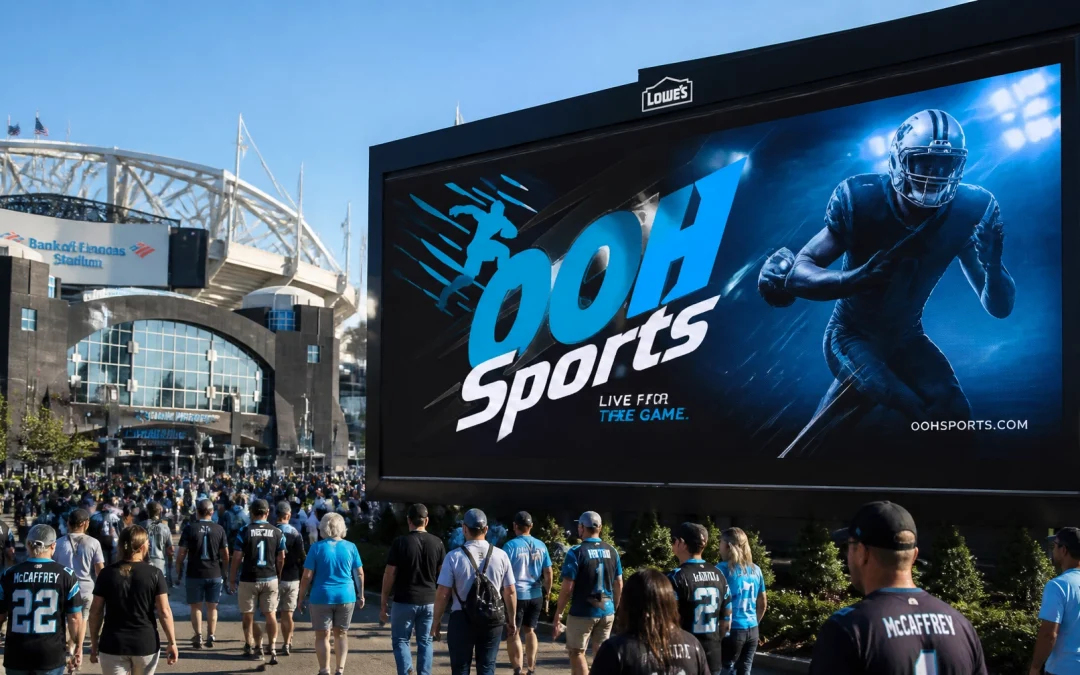
The landscape of sports marketing is undergoing a significant transformation. As traditional media continues to fragment, the physical space surrounding sporting events has emerged as a high-value territory for brand engagement. This shift is driven by the expansion of the OOH Sports network, a specialized digital out of home (DOOH) infrastructure designed to connect brands with fans at every touchpoint of their journey. By integrating advanced technology with strategic placements, the network provides media buyers and planners with a sophisticated toolset to capture attention in the real world.
The Strategy Behind Network Expansion
The growth of OOH Sports is rooted in a disciplined approach to geographic and digital saturation. Unlike general out of home providers, this network focuses exclusively on the sports ecosystem. The core strategy centers on creating a 10 mile perimeter around major sports venues, ensuring that a brand message is present wherever fans congregate before, during, and after a game.
This perimeter strategy encompasses a variety of environments, including transit hubs, hospitality venues, and high-traffic retail corridors. The expansion is backed by the extensive experience of the Sports Media Inc. family, a group with a long history in sports-centric advertising. The goal of this growth is to move beyond static placements and offer a dynamic, interconnected network that mirrors the movement of a modern sports audience.

Objective and Targeting Tactics
The primary objective of the network expansion is to provide media buyers with a "one stop shop" for digital video advertising boards. By aggregating inventory across every relevant category, the network simplifies the planning process for complex, multi-market campaigns.
The targeting tactics utilized by the network are data-driven and contextually relevant. Key elements include:
- Venue Proximity: Prioritizing screens within the immediate vicinity of stadiums and arenas to capture the highest concentration of fans.
- Path-to-Purchase: Placing media in transit centers and near retail locations where fans make game-day purchases.
- Social Hubs: Utilizing screens in bars and restaurants where fans gather to watch away games or celebrate post-game victories.
- Audience Segmentation: Using mobile location data to understand fan behavior and optimize screen selection based on specific team loyalties or demographic profiles.
This granular approach ensures that ad spend is concentrated where it will have the most significant impact, reducing waste and increasing the relevance of the creative messaging.
Technology Partners and Programmatic Integration
A critical component of the network's success is its integration with advanced technology partners. The shift toward programmatic DOOH (pDOOH) has been a major catalyst for growth. By partnering with leading demand-side platforms (DSPs) such as StackAdapt, the network allows buyers to execute automated, real-time bidding for inventory.
Programmatic integration offers several tactical advantages:
- Flexibility: Campaigns can be paused, adjusted, or scaled in real time based on game results or changing weather conditions.
- Efficiency: Automated buying processes reduce the administrative burden on media planners.
- Optimization: Algorithms can shift budget toward the screens and times of day that are delivering the highest engagement levels.
- Omnichannel Alignment: pDOOH allows brands to synchronize their physical world presence with mobile, social, and connected TV (CTV) efforts.
The use of Sportrons and other digital video formats ensures that the creative is high-impact and capable of delivering the same quality of visual storytelling found in digital and broadcast media.

Measurable Results and Industry Impact
The effectiveness of the OOH Sports network is supported by compelling data from recent industry studies and case studies. Research indicates that OOH advertising tied to sports events generates significantly higher recall and action rates compared to standard placements.
Key performance metrics highlighting the network's impact include:
- High Recall: Approximately 6 in 10 adults recall seeing an OOH ad promoting a major sporting event.
- Actionable Engagement: Among those who recalled the ads, 90% took a real-world action, such as discussing the event with others or engaging with the brand on social media.
- Performance Lift: Independent studies have shown that OOH can deliver up to a 2x performance lift compared to broadcast and streaming TV in terms of driving digital actions.
- Local Economic Influence: Data shows that 99% of fans who attended a game after seeing an OOH ad spent money locally on food, transport, or hospitality.
These results prove that the network is not just an awareness tool but a performance driver. For brands in the sports betting, hospitality, and retail sectors, the ability to trigger a digital transaction from a physical world placement is a significant competitive advantage.
Navigating the 2026 Sports Landscape
As the industry moves through 2026, the fragmentation of sports rights across multiple streaming platforms has made the unskippable nature of OOH even more valuable. With sports viewing now split between traditional networks and services like Prime Video, Peacock, and Apple TV+, brands need a consistent "anchor" in the real world to maintain visibility.
The expansion of legal sports betting also continues to be a primary driver for network growth. The need for hyper-local placements that respect jurisdictional boundaries makes the OOH Sports network's precision targeting an essential requirement for sportsbook operators. By utilizing geo-precise DOOH, these advertisers can ensure their messaging is only seen in areas where their services are legally available.

Strategic Alignment for Media Buyers
For chief marketing officers and media planners, the growth of this specialized network represents an opportunity to achieve professional-grade results through a simplified buying process. The alignment of digital scale with sports-specific context allows for a level of strategic depth that general OOH networks often lack.
The focus remains on three pillars:
- Context: Delivering the right message in the emotional environment of a sports fan.
- Scale: Providing access to a national network of digital boards through a single point of entry.
- Data: Using location intelligence and programmatic tools to measure and optimize every impression.
The OOH Sports network continues to build its digital out of home infrastructure to meet the demands of a changing market. By staying focused on the perimeter of sports venues and the journey of the fan, it provides a stable and high-performing platform for brands looking to win in the attention economy.
Conclusion
The evolution of the OOH Sports network is a response to the need for more intelligent and integrated marketing solutions in the sports world. Through strategic expansion, technology partnerships, and a focus on measurable outcomes, the network has established itself as a critical component of the modern media mix. For those involved in the planning and buying of sports media, the network offers the tools and the reach necessary to succeed in a fragmented and fast-paced environment.
For further information on specific capabilities or to explore recent campaign successes, additional resources are available on the company website.