
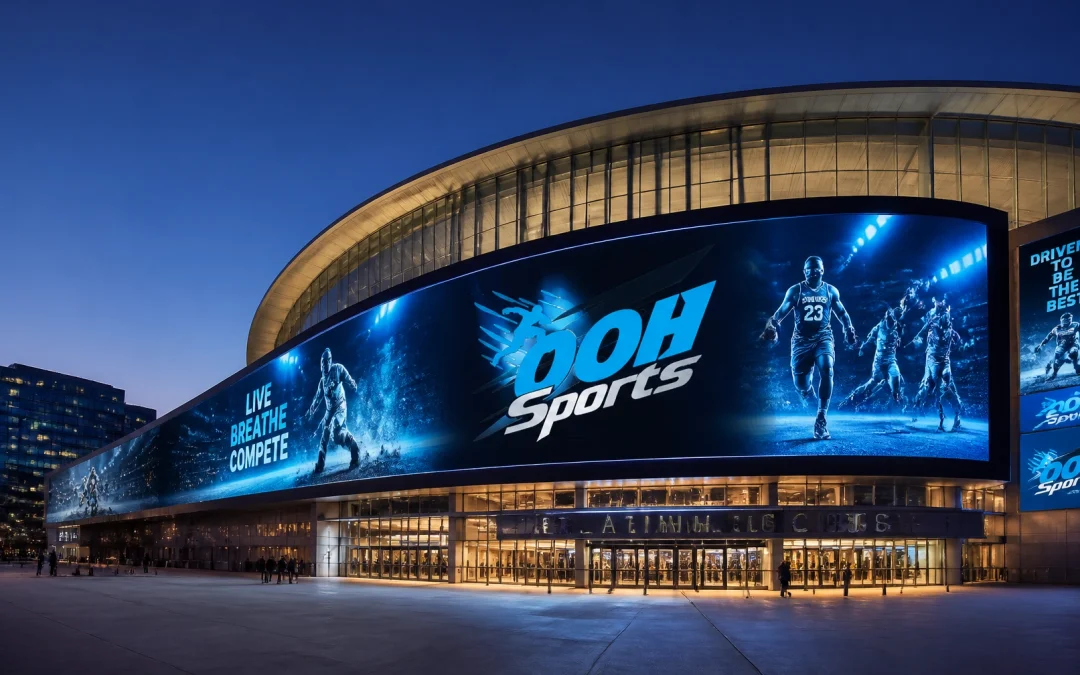
The landscape of sports marketing is undergoing a significant transformation. As traditional broadcast viewership fragments, digital out-of-home (DOOH) advertising has emerged as a primary vehicle for brands to reach fans in high-energy, real-world environments. The shift toward automated buying and data-driven creative has turned stadium perimeters and transit corridors into sophisticated marketing ecosystems.
According to industry forecasts, DOOH sports advertising will hit 50 billion by 2030, indicating a rapid adoption of digital formats over static placements. For media buyers and brand managers, staying ahead of these trends is essential for maximizing return on investment. This analysis outlines ten critical trends defining the next era of sports-centric DOOH.
1. Programmatic Guaranteed for Premium Stadium Inventory
The transition from manual to automated buying has reached a new level of maturity. Programmatic guaranteed allows advertisers to lock in premium digital screens near stadiums and fan zones well in advance, combining the certainty of direct buys with the efficiency of programmatic workflows. This strategy ensures that brands maintain a presence during high-demand windows, such as playoff games or championship matches, without the risk of being outbid in an open marketplace at the last minute.
2. Real-Time Dynamic Creative Optimization (DCO)
Static advertisements are being replaced by dynamic creative that responds to live data triggers. Modern DOOH campaigns now use real-time signals. These signals include live scores, game clocks, weather conditions, and even player milestones. For example, a beverage brand can automatically update its creative to display a celebratory message the moment a local team scores. This level of contextual relevance significantly increases fan engagement by aligning the brand with the emotional highs of the game.

3. Stadium Perimeter and Hyper-Local Targeting
One of the most effective tactics in modern sports marketing is the use of stadium perimeter targeting. By focusing on digital screens within a ten-mile radius of a sports venue, brands can reach a concentrated audience of attendees, tailgaters, and fans at local sports bars. This geographic precision minimizes wasted impressions and ensures the message is delivered to consumers who are already in a "sports-first" mindset.
4. Audience-First vs. Location-First Planning
The industry is moving away from simply buying "screens in a location" toward buying "audiences in a moment." Media planners now use mobile location data and third-party audience segments to identify where sports fans move before and after an event. Whether the target is "avid season ticket holders" or "casual local supporters," DOOH platforms can now activate screens based on where these specific groups are most likely to be at any given hour.
5. Integration with Real-Time Sports Betting
The legalization of sports betting in many regions has created a new category of high-speed advertising. Betting platforms are now using DOOH to display live odds that update in under 24 hours. Research into how to launch real-time sports betting DOOH campaigns shows that fans are highly responsive to immediate opportunities to engage with the game through mobile apps while in close proximity to the arena.
6. Omnichannel Retargeting with Device IDs
DOOH no longer exists in a vacuum. It is now a core component of omnichannel campaigns. By capturing the device IDs of individuals exposed to a digital billboard, advertisers can retarget those same users on their mobile devices or via social media. This "one-two punch" approach reinforces the brand message and drives consumers further down the purchase funnel, often leading to significant lifts in purchase consideration.

7. AI-Assisted Creative Variation at Scale
Artificial intelligence is being utilized to generate hundreds of creative variations for sports campaigns. Instead of manually designing an ad for every possible game outcome or team pairing, AI tools can produce localized visuals and copy variants within brand guidelines. This allows for massive scale in multi-market campaigns, ensuring that fans in different cities see content that is specifically relevant to their local rivalries and player rosters.
8. Focus on Measurable Brand Lift and Attribution
The ability to quantify the impact of OOH is a major driver of recent budget shifts. Advertisers now use sophisticated brand lift studies to measure changes in awareness and purchase intent. Data from these studies often shows double-digit increases in positive brand image. For instance, some programmatic DOOH campaigns have seen a 119 percent lift in brand image by utilizing targeted, high-impact placements during key sporting events.
9. Leveraging Tentpole Global Events
Major sporting events like the Olympics or the FIFA World Cup serve as catalysts for DOOH innovation. During these periods, brands often move beyond single placements to execute city-wide takeovers. These large-scale activations use DOOH to build a narrative arc from the pre-game hype phase through the live event and into the post-game celebration, creating a dominant brand presence that traditional stadium sponsorships alone cannot match.

10. Advanced Analytics and Attribution Modeling
The use of AI-powered DOOH analytics has eliminated much of the guesswork previously associated with out-of-home media. Marketers can now track footfall traffic to retail locations or stadiums following exposure to a digital screen. This level of attribution allows for a more direct comparison between programmatic DOOH and traditional stadium ads, helping planners allocate budgets toward the most effective channels.
The integration of technology and sports media has made DOOH one of the most powerful tools in a brand's arsenal. By leveraging real-time data, programmatic automation, and precise geographic targeting, advertisers can ensure their message is not only seen but is contextually relevant to the fans who matter most.