
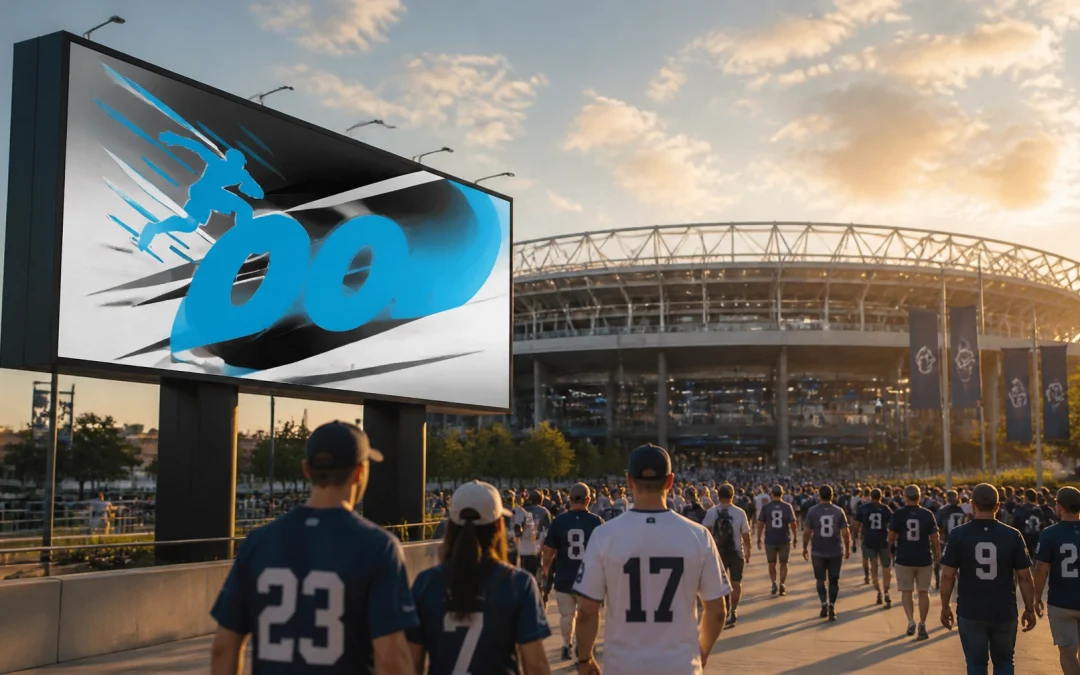
Traditional sports marketing has often focused exclusively on the action happening within the four walls of an arena. However, the modern fan journey begins long before the opening whistle and continues well after the final score. For brand managers and chief marketing officers, the challenge lies in capturing attention during these critical transit moments. The most successful strategies today utilize Digital Out-of-Home (DOOH) advertising to create a continuous brand presence that follows the fan throughout their entire game-day experience.
By focusing on a 10-mile radius around major sports venues, brands can dominate the visual landscape. This approach transforms a simple advertisement into an immersive experience. Strategic placement across diverse digital networks allows for a high frequency of impressions, ensuring that a brand remains top-of-mind. The following five branding strategy tips provide a blueprint for maximizing fan engagement through stadium perimeter advertising.
1. Establish Early Touchpoints with Pre-Game Build-Up
Fan engagement does not start at the stadium gates. It begins at the local gas station, the convenience store, or the liquor store where fans gather supplies for their pre-game celebrations. Utilizing digital screens in these high-traffic locations allows a brand to enter the fan's consciousness during the anticipation phase.
Targeting transit routes and retail hubs within a 10-mile perimeter of the stadium ensures that the messaging reaches the most relevant audience. For example, a beverage brand can display vibrant, high-energy creative on gas station pumps or in-store displays. This strategy creates a direct link between the brand and the upcoming event.
Tactical Execution:
- Identify high-traffic retail locations on primary transit routes to the stadium.
- Deploy creative that mirrors the excitement of the pre-game ritual.
- Utilize day-parting to ensure ads are most visible 3 to 5 hours before the event starts.

2. Leverage Real-Time Contextual Relevance
One of the primary advantages of programmatic DOOH is the ability to update creative content in real-time. Fans are highly attuned to the current state of their favorite team, and brands that acknowledge live events gain immediate credibility. Whether it is a "Game Day" countdown or a celebratory message after a significant win, contextual relevance drives deeper emotional connections.
In the world of sports, timing is everything. A brand that adjusts its messaging based on the weather, the score, or even the opponent creates a sense of shared experience with the fans. This level of personalization makes the brand feel like a participant in the event rather than a bystander.
Strategic Objectives:
- Use live data feeds to trigger specific creative based on game progress.
- Acknowledge local team milestones or player achievements.
- Adjust messaging based on environmental factors like temperature or rain to offer relevant solutions.
3. Dominate the 10-Mile Stadium Perimeter
The area surrounding a sports venue is a high-density zone of target consumers. This 10-mile radius represents the "last mile" of the fan journey, where excitement is at its peak. By blanketing this area with digital messages across billboards, street furniture, and transit hubs, a brand can achieve total environment ownership.
This strategy is particularly effective for non-sponsors who want to achieve high visibility without the cost of an official stadium partnership. By strategically placing ads on every available digital board within the perimeter, a brand can create an association with the game that is nearly as strong as the official sponsors. This method was notably used in campaigns like the one where Nike established a massive presence around the NYC Marathon without being an official sponsor.
Key Benefits:
- High frequency of impressions in a concentrated geographic area.
- Reaches both the fans attending the game and the thousands of people in the surrounding area.
- Cost-effective alternative to expensive in-stadium signage.

4. Bridge the Physical and Digital Gap
DOOH advertising is most effective when it serves as a gateway to digital interaction. Creative directors should view physical screens as the starting point of a two-way conversation. Integrating QR codes or specific hashtags allows fans to transition from passive viewers to active participants.
When a fan scans a QR code on a digital billboard, they can be directed to an exclusive offer, a mobile game, or a social media filter. This interaction provides brands with valuable first-party data and allows for post-campaign retargeting. For instance, a campaign for Sea-Doo saw a 144 percent increase in purchase consideration by effectively utilizing digital touchpoints to drive consumer interest.
Implementation Steps:
- Include high-contrast, easily scannable QR codes in the creative layout.
- Offer an immediate value exchange, such as a discount or exclusive content, to encourage scans.
- Track conversion metrics to measure the effectiveness of the call-to-action.

5. Maintain Momentum Post-Buzzer
The fan experience does not end when the game is over. The exit journey is a critical period where fans reflect on the event. Brands that maintain their presence on exit routes, in ride-share vehicles, and at transit hubs can capture this lingering emotional energy.
Post-game messaging should focus on gratitude, celebration, or late-night offers. A "Thanks for coming, fans!" message or a promotion for a post-game meal can be highly effective. This persistent presence ensures that the brand is the last thing the fan sees as they head home, solidifying the connection made throughout the day.
Tactics for Post-Game Presence:
- Target digital screens in ride-share vehicles and taxis leaving the stadium area.
- Utilize transit platform displays for fans using public transportation.
- Update creative to reflect the game outcome, offering congratulations or words of encouragement.

Measuring Campaign Success through Data
The effectiveness of these strategies is not just theoretical. Modern DOOH platforms allow for sophisticated measurement that tracks real-world impact. By using device ID tracking and brand lift studies, marketers can see exactly how their perimeter advertising influenced consumer behavior.
For example, White Claw’s programmatic DOOH campaign drove a 74 percent lift in purchase consideration. Similarly, Mike’s Hard Iced Tea achieved a 119 percent lift in positive brand image. These results demonstrate that a well-executed perimeter strategy delivers measurable ROI by reaching the right audience at the most impactful moments.
Conclusion
Boosting fan engagement requires a strategic shift from static, isolated advertisements to a dynamic, multi-touchpoint journey. By owning the 10-mile radius around sports venues and utilizing real-time, interactive creative, brands can create lasting impressions that transcend the game itself. The combination of early pre-game touchpoints, contextual relevance, and post-game persistence ensures that a brand remains an integral part of the fan's world.