
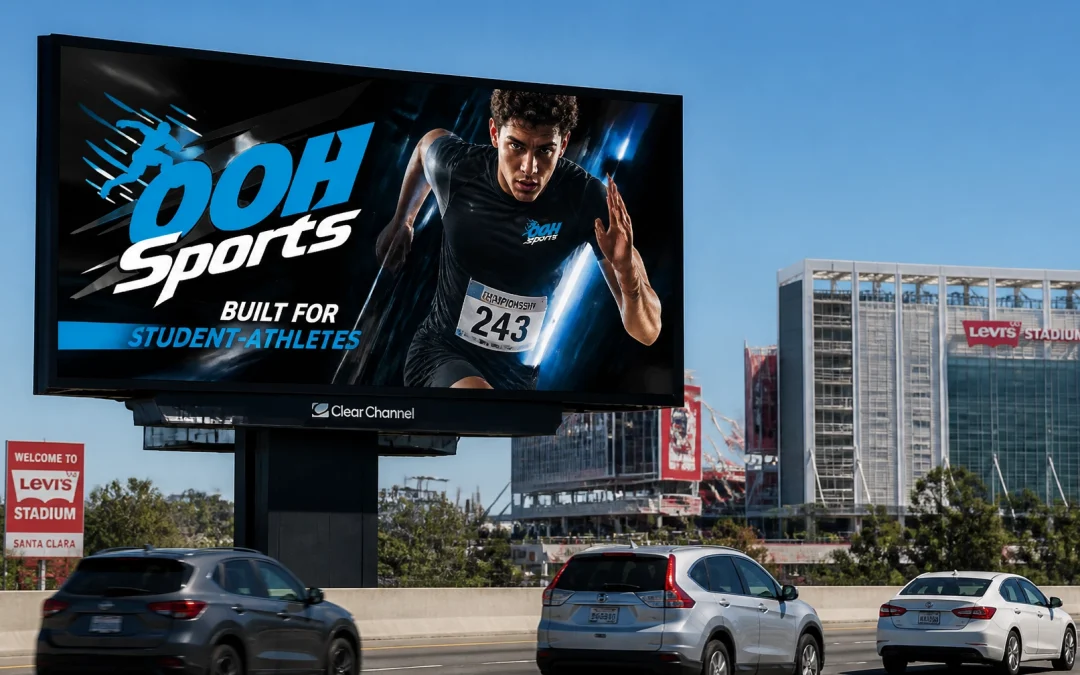
Super Bowl LX is set to transform the San Francisco Bay Area into the epicenter of the sporting world on February 8, 2026. As Levi’s Stadium in Santa Clara prepares to host the championship, the surrounding 10 mile perimeter becomes the most valuable advertising real estate in the country. For media buyers and brand managers, the challenge is no longer just about securing a spot during the broadcast. The real opportunity lies in the streets, the transit hubs, and the digital screens that capture the attention of over a million visiting fans and residents throughout Super Bowl Week.
This guide explores the intersection of high impact out of home (OOH) advertising and the rapidly evolving Name, Image, and Likeness (NIL) landscape. By leveraging a network of over 20,000 authentic student athlete voices, brands can now create localized, resonant campaigns that bridge the gap between digital social influence and physical presence.
The Strategic Importance of Super Bowl LX
The 2026 game marks the second time Levi’s Stadium has hosted the Super Bowl, but the landscape of sports marketing has shifted significantly since 2016. The modern fan experience is decentralized. While the game happens in Santa Clara, the cultural festivities span from the Moscone Center in San Francisco to the San Jose Convention Center. This regional festival creates a week long window of high dwell time and massive foot traffic.
According to host committee details, events such as the Super Bowl Experience and Opening Night will draw massive crowds across multiple municipalities. This geographic spread makes a multi-channel OOH strategy essential. Relying on a single venue is no longer sufficient. Brands must establish a presence where fans live, travel, and celebrate.
Strategy: Dominating the 10-Mile Perimeter
The core strategy for Super Bowl 2026 involves saturating the 10 mile radius around Levi’s Stadium. This area includes critical transit arteries like Highway 101 and key hubs such as San Jose International Airport (SJC) and San Francisco International Airport (SFO). The objective is to create a seamless brand journey that follows the fan from the moment they land in the Bay Area to the moment they enter the stadium gates.
Digital out of home (DOOH) platforms allow for real time updates and hyper local targeting. Using programmatic technology, advertisers can trigger specific creative based on time of day, weather, or game week events. For instance, a brand could display specific welcoming messages at SFO on Monday and pivot to tactical, game day countdowns in Santa Clara by Sunday morning.

Objective & Strategy: Amplifying 20,000 Student-Athlete Voices
The most significant advancement for the 2026 cycle is the integration of NIL into the OOH ecosystem. OOH Sports provides access to a platform of over 20,000 student athletes, offering a level of authenticity that traditional celebrity endorsements often lack. These athletes are not just influencers; they are the future of the sport and the heartbeat of their local communities.
The strategy involves pairing large scale DOOH placements with localized NIL content. When a fan sees a digital billboard on Highway 101 featuring a local college star, the message carries a weight of community pride. This "authentic voice" approach cuts through the noise of traditional corporate advertising. By utilizing the OOH Sports marketing platform, brands can coordinate these voices to create a unified narrative that feels both massive and personal.

Technology Partners & Execution
Execution at this scale requires a robust technological foundation. Programmatic DOOH allows media buyers to purchase inventory with the same precision they use for online ads. This includes the use of mobile device IDs to retarget fans who have passed specific billboards. If a visitor sees an ad near the Moscone Center, the platform can deliver a follow up message to their mobile device or display a relevant ad on a digital screen near their hotel in Santa Clara.
Collaboration with specialized technology partners ensures that every play is backed by data. The process begins with identifying the high traffic segments within the 10 mile perimeter. From there, the OOH Sports Sportrons network provides the hardware and software necessary to deploy high definition video content across the network. This isn't just about static images; it is about dynamic video that captures the kinetic energy of the Super Bowl.

Results: Measuring Success through Data
The success of a Super Bowl NIL campaign is measured by more than just impressions. Using advanced attribution models, brands can track the actual lift in purchase consideration and brand image. For example, previous programmatic DOOH campaigns in the sports sector have seen a 119 percent lift in positive brand image when executing targeted messaging.
In the context of Super Bowl LX, the platform tracks "exposed" device IDs to see how many fans engaged with the brand both in the physical world and later online. This full funnel approach provides a clear ROI for media planners. Case studies, such as the White Claw Vodka launch, have demonstrated that programmatic DOOH can drive a 74 percent lift in purchase consideration. For the Super Bowl, these numbers are expected to be even higher due to the concentrated nature of the audience and the emotional high of the event.

Steps to Succeed in 2026
To maximize the impact of an NIL and OOH strategy for Super Bowl LX, media buyers should follow a structured approach:
- Identify the Core Audience: Determine whether the focus is on the casual fan in San Francisco or the die hard ticket holder in Santa Clara.
- Secure Inventory Early: The 10 mile perimeter around Levi’s Stadium is in high demand. Early planning is essential for prime placements.
- Onboard Athlete Voices: Select from the 20,000 available student athletes to find the voices that best align with the brand’s values.
- Deploy Programmatic Creative: Use dynamic video content that can change based on the unfolding events of Super Bowl Week.
- Analyze and Retarget: Use the data from the OOH Sports case study library to refine the campaign in real time.
Conclusion
The Super Bowl is no longer a one day event; it is a week long cultural phenomenon that requires a sophisticated, multi faceted marketing strategy. By combining the massive reach of digital out of home advertising with the authentic power of 20,000 student athlete voices, brands can dominate the conversation in the San Francisco Bay Area. Success in 2026 will belong to those who think beyond the television screen and engage with fans in the real world.
For more information on how to lead the charge in sports marketing, visit the OOH Sports about page.