
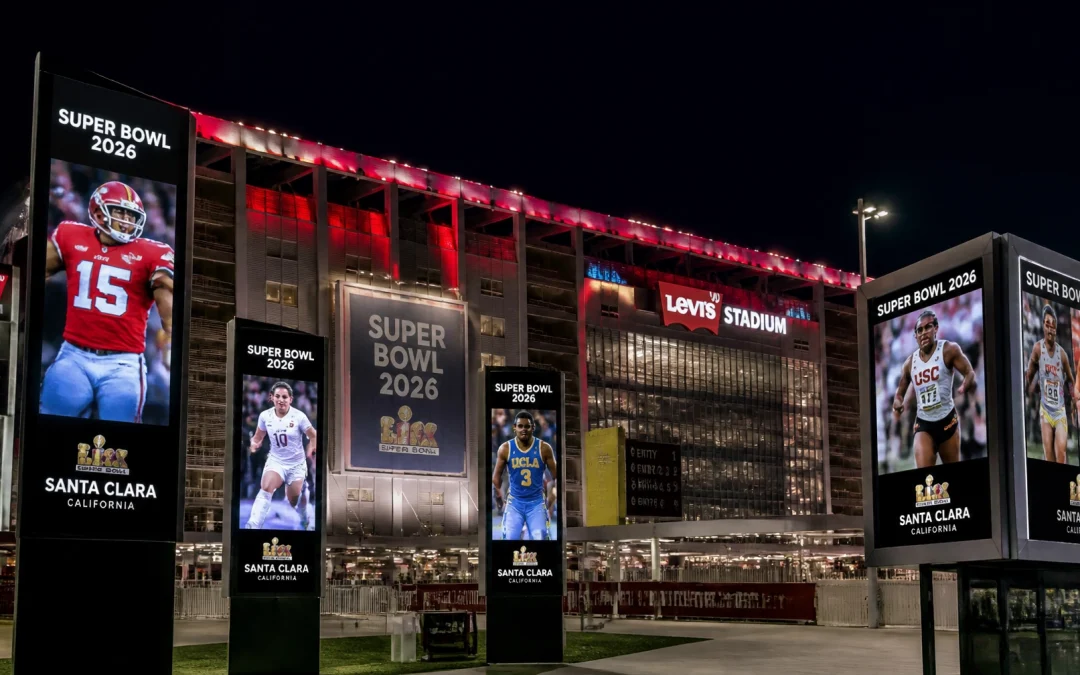
The landscape of sports marketing is undergoing a seismic shift as the countdown to Super Bowl 2026 begins. For decades, the pinnacle of advertising was the thirty-second television spot, a high-stakes gamble that cost millions of dollars for a fleeting moment of attention. However, as the industry moves toward a more fragmented and digital-first media environment, a new strategy is emerging. This strategy does not rely on a single broadcast window. Instead, it leverages a massive cultural ecosystem built on the authentic voices of over 20,000 student-athletes and the high-impact reach of Digital Out of Home (DOOH) advertising.
OOH Sports is at the forefront of this revolution, offering media buyers a way to transcend traditional advertising. By combining the power of the Name, Image, and Likeness (NIL) platform with a hyper-local digital network, brands can now own the conversation before, during, and long after the final whistle. This newsletter explores the mechanics of this shift and why student-athlete creators are becoming the most valuable assets for brands aiming to win over the next generation of fans.
Strategy: Moving from a Moment to an Ecosystem
The traditional Super Bowl strategy is often criticized for being a "one-and-done" approach. A brand spends a significant portion of its annual budget on a single ad, hoping it goes viral. In contrast, the 2026 strategy focuses on building a multi-week cultural presence. The goal is to create a sustained narrative that lives where the fans are, whether that is on their college campuses, in the host city, or on their mobile devices.
By utilizing a network of 20,000 student-athletes, OOH Sports allows brands to deploy "micro-ambassadors" who hold genuine influence within their respective communities. These athletes are not just faces on a screen. They are creators who produce content that resonates with fans on a peer-to-peer level. When this social influence is anchored by physical marketing assets like digital billboards and transit displays, the brand message becomes an unavoidable part of the physical and digital landscape.
Objective & Strategy: Authenticity at Scale
The primary objective for any major campaign during the Super Bowl season is to drive brand affinity and purchase consideration. Achieving this at scale usually requires a massive, national reach, which often comes at the cost of personal connection. OOH Sports solves this paradox by using NIL athletes to provide localized authenticity across a national footprint.
The strategy involves identifying athletes whose followers align with a brand’s target demographic. Instead of one celebrity, the campaign utilizes hundreds or thousands of student-athletes to flood the market. This creates a "surround-sound" effect. A fan might see a student-athlete they follow post about a brand on Instagram, then see that same athlete featured on a Sportron digital screen at a local venue, and finally encounter a large-format billboard on their way to a Super Bowl watch party.

Technology Partners and the Digital Network
To execute a campaign of this magnitude, sophisticated technology and a robust infrastructure are required. OOH Sports integrates with leading programmatic platforms to ensure that ads are delivered with precision. The network covers every category of digital video advertising boards, with a specific focus on the 10-mile perimeter around major sports venues and host city landmarks.
The proprietary Sportrons digital network is a critical component of this infrastructure. With access to ribbon boards, jumbotrons, and concourse screens in over 780 venues, the network allows brands to "own the environment." This technology enables real-time updates and data-driven optimization, ensuring that the creative content is always relevant to the unfolding action of the Super Bowl festivities.
The Power of NIL in Action
The following video demonstrates how the integration of sports media and athlete voices creates a dynamic advertising experience that traditional spots simply cannot match.
https://www.youtube.com/watch?v=l6J-0zileKE
Tactics: The 10-Mile Perimeter Takeover
The execution of a Super Bowl 2026 campaign involves several logical steps to maximize impact.
- Pre-Game Momentum: Starting weeks before the event, student-athletes begin sharing their journeys and brand associations on social media. Simultaneously, DOOH assets in college towns and major transit hubs begin displaying teaser content.
- Host City Dominance: During the week of the game, OOH Sports activates every available digital screen within a 10-mile radius of the stadium and official NFL fan zones. This includes billboards, street furniture, and digital displays in high-traffic retail areas.
- In-Venue Integration: Through the Sportrons network, brands appear on the screens where fans are most engaged. This includes concession areas, concourses, and live-site screens where fans gather to watch the game.
- Post-Game Retargeting: The campaign does not end at the trophy presentation. By using mobile device IDs exposed to the OOH ads, brands can retarget fans with follow-up offers and content from the student-athletes, extending the life of the campaign.

The 20,000 Voices: Why Scale Matters
Managing over 20,000 student-athlete voices might seem daunting, but it is this very scale that provides the winning edge. This massive pool of talent allows for hyper-segmentation. A brand can choose to work with female volleyball players in the Midwest, star quarterbacks in the South, or track and field athletes on the West Coast.
This diversity ensures that the brand's message is not a "one size fits all" broadcast. It is a collection of thousands of individual stories that collectively build a powerful brand narrative. In 2026, fans are looking for representation and authenticity. By empowering student-athletes to be the storytellers, OOH Sports helps brands bridge the gap between corporate messaging and the next generation of consumers.
Results: Measuring the Impact
The success of these omnichannel campaigns is documented through rigorous data analysis and brand lift studies. Previous case studies have shown that combining programmatic DOOH with authentic creator voices leads to significant increases in key performance metrics.
For instance, past campaigns for major beverage brands have yielded impressive results. A recent campaign for White Claw saw a 74% lift in purchase consideration. Similarly, Ab InBev's Mike's Hard Iced Tea achieved a 119% lift in positive brand image by utilizing a similar programmatic DOOH strategy. These numbers prove that the "surround-sound" approach of OOH and personal athlete voices is far more effective at moving the needle than a single, isolated television commercial.

Conclusion: The New Playbook for Media Buyers
The secret to winning fans during Super Bowl 2026 is no longer a secret. It lies in the transition from being a spectator in the commercial breaks to becoming a participant in the cultural conversation. By leveraging 20,000 student-athlete voices and an expansive digital out-of-home network, brands can achieve a level of reach and resonance that was previously impossible.
Media buyers and CMOs who embrace this NIL-led, OOH-anchored ecosystem will find themselves with more than just a fleeting moment of fame. They will build lasting connections with a loyal fan base. For those ready to move beyond the traditional 30-second spot, the future of sports marketing is already here, and it is louder, more authentic, and more effective than ever before.