
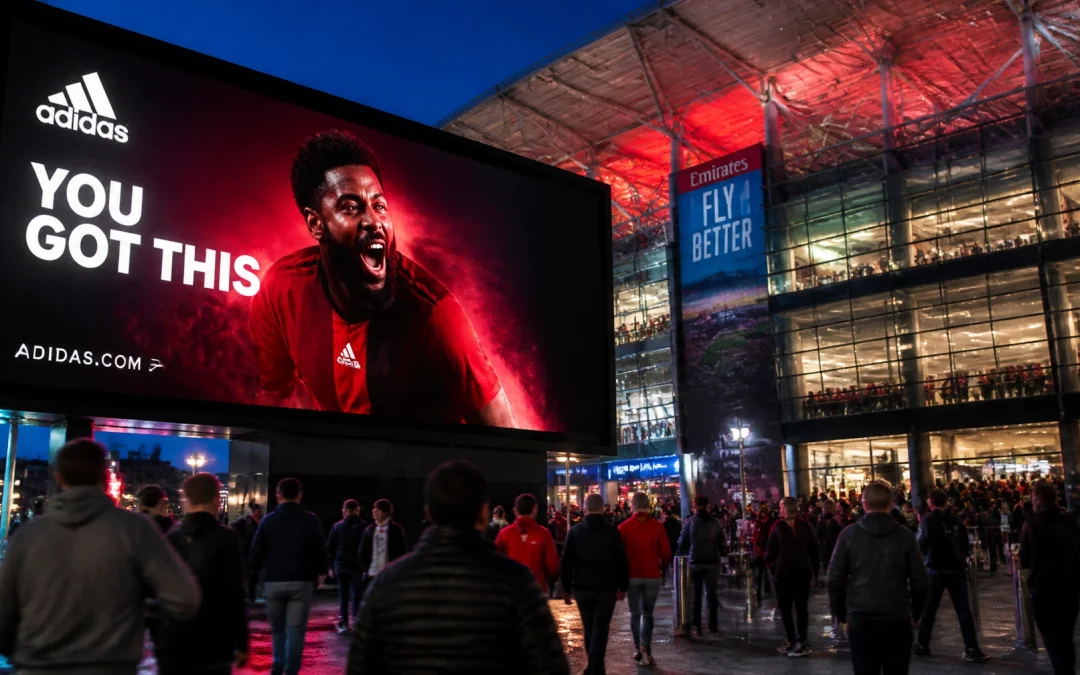
The landscape of sports marketing has undergone a fundamental transformation. In an era where fan attention is fragmented across multiple devices and platforms, Digital Out-of-Home (DOOH) advertising has emerged as a critical pillar for brand success. This guide provides a comprehensive overview of the latest trends, strategies, and measurement techniques necessary for media buyers and planners to thrive in the competitive sports media environment.
The Evolving Landscape of Sports DOOH
Sports media is no longer confined to the duration of a live game. It has evolved into a year-round ecosystem where fans engage with content through highlights, podcasts, fantasy leagues, and social media. In this environment, DOOH serves as the connective tissue between online intent and real-world decision-making.
Research indicates that nearly half of sports fans are more likely to make a purchase when brands appear consistently across multiple platforms. By integrating DOOH into the broader media mix, advertisers can maintain a persistent presence throughout the entire fan journey. This includes the pre-tournament build-up, in-venue messaging during the event, and post-game retargeting efforts.
Strategy: Treating Sports as a Year-Round Ecosystem
Success in sports advertising requires a shift away from viewing DOOH as a one-off game-day tactic. Instead, it must be treated as a strategic layer that follows the fan.
- Pre-Game Phase: Focus on building anticipation through high-impact displays in transit hubs, urban centers, and near retail locations.
- Game-Day Phase: Utilize inventory within and immediately surrounding sports venues to capture the high-energy atmosphere and peak attention of attendees.
- Post-Game Phase: Leverage DOOH to reinforce brand messaging as fans exit the venue and move through entertainment districts or travel home.
This continuous approach ensures that the brand remains top-of-mind, capitalizing on the emotional highs associated with live sports.
Objective & Strategy: The Programmatic Revolution
The adoption of Programmatic Digital Out-of-Home (pDOOH) has fundamentally changed how sports inventory is bought and optimized. Programmatic platforms allow for greater flexibility, enabling advertisers to purchase screens in arenas, sports bars, gyms, and transit lines through centralized Demand-Side Platforms (DSPs).
A key advantage of pDOOH is the ability to execute campaigns with precision based on specific triggers. For example, a campaign can be set to activate only during specific times of day, in response to live game scores, or when certain weather conditions are met. This level of control allows media planners to maximize budget efficiency by ensuring ads are only shown when and where they are most relevant.
For more information on the platforms driving this change, the spotlight on StackAdapt DSP highlights how programmatic adoption is accelerating within omnichannel campaigns.

Technology Partners & Creative Logic: AI-Driven Contextualization
Artificial Intelligence is now a mission-critical component of DOOH strategy. AI tools are utilized for audience planning, multi-market rollouts, and creative testing, allowing campaigns to adapt messaging to specific locations and contexts at scale.
Strategic adaptation is essential for maintaining relevance. Creative logic should be built to account for various scenarios:
- Venue-Specific Creative: High-energy, betting-focused content may perform best in sports bars, while training and performance-oriented messaging is better suited for gym environments.
- Dynamic Triggers: Messaging can shift automatically based on whether a team wins or loses, the current stage of a tournament, or even local rivalry dynamics.
- Micro-Relevance: Success often hinges on "block-by-block" targeting. Using DOOH to deliver localized messages: such as home-city pride or neighborhood-specific offers: ensures that the content resonates deeply with the local fan base.
Integrating the Multiscreen Fan Journey
The modern fan is a multiscreen consumer. They often watch the game on a Connected TV (CTV) while simultaneously checking stats on a mobile device and engaging with street-level displays. The most effective campaigns recognize this behavior and treat these screens as part of a single adaptive system.
Planning DOOH buys within the same brief as CTV, social, and mobile ensures a coherent narrative. When a fan sees a consistent story from the stadium screen to their streaming service and then to their social feed, the cumulative impact on brand recall and purchase intent is significantly higher.

Results & Measurement: Proving Impact with Data
One of the most significant shifts in the DOOH industry is the improvement in measurement and attribution. Historical skepticism regarding the ROI of OOH has been addressed through the use of device-level data and sophisticated lift studies.
Modern measurement plans typically include several layers:
- Proof-of-Play: Verification that ads were delivered as intended at the screen level.
- Brand Lift Studies: Measuring changes in awareness, brand preference, and purchase consideration. For instance, a White Claw programmatic DOOH campaign recently drove a 74% lift in purchase consideration for a new product launch.
- Attribution Modeling: Using exposed vs. control groups to quantify the impact of DOOH on both digital actions (website visits, app downloads) and physical outcomes (store or venue footfall).
- Performance Comparisons: Data has shown that OOH can deliver up to double the performance lift of traditional broadcast and streaming TV in certain categories. An AB InBev campaign for Mike’s Hard Iced Tea saw a 119% lift in positive brand image through the strategic use of pDOOH.
To ensure success, every campaign should have a defined "capture layer." This might include QR codes, unique promo codes, or market-specific landing pages that allow the lift from OOH to be directly observed in digital analytics. A notable example includes Sea-Doo’s first digital OOH campaign, which increased purchase consideration by 144% by aligning creative with specific audience segments.

Checklist for a Successful Sports DOOH Campaign
To succeed in the current sports media landscape, planners should adhere to the following checklist:
- Define Objectives Early: Clearly distinguish between awareness goals, ticket sales, or app conversion targets.
- Leverage Programmatic Efficiency: Use pDOOH to mix high-impact venue screens with high-frequency units in transit and retail environments.
- Develop Dynamic Creative: Prepare multiple creative variants that can be triggered by game events, locations, or audience segments.
- Establish a Measurement Framework: Deploy device-level lift studies and digital response tracking from the start of the campaign.
- Ensure Omnichannel Alignment: Coordinate the timing and messaging of DOOH with CTV, social media, and mobile advertising efforts.
As DOOH's share of total out-of-home spend continues to rise, the ability to execute data-driven, contextually relevant campaigns will be the primary differentiator for brands in the sports sector. By treating digital signage as a core component of media infrastructure rather than a secondary tactic, marketers can unlock the full potential of the sports fan ecosystem.