
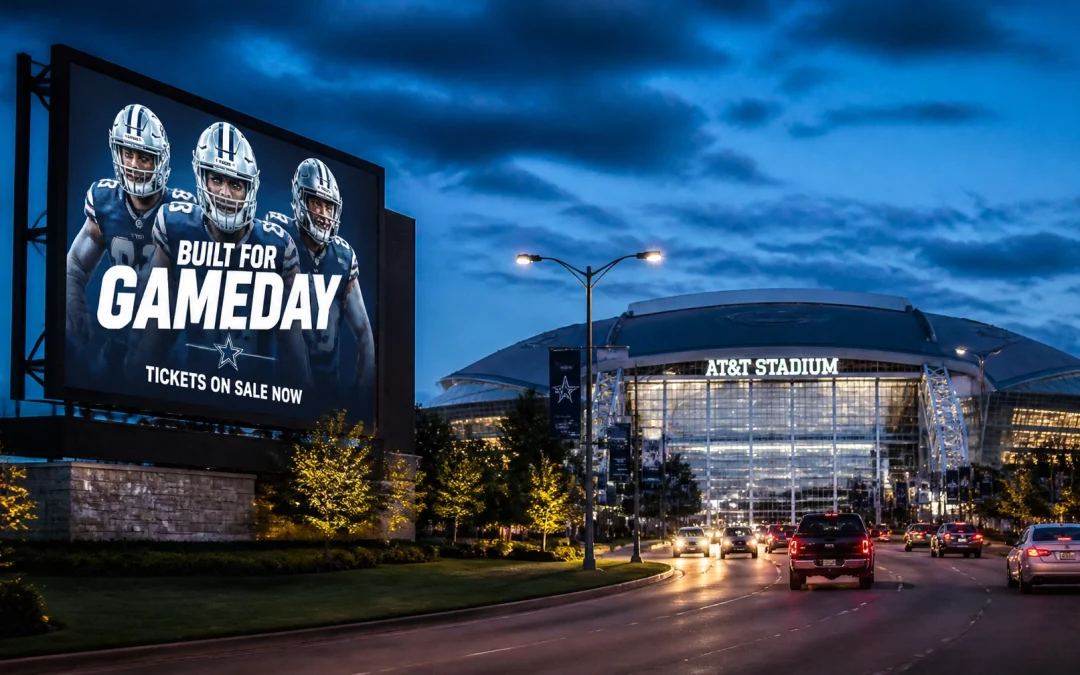
The landscape of sports marketing is undergoing a significant shift as the OOH Sports Network announces the expansion of its digital out-of-home (DOOH) footprint across North America. This milestone marks a new era for media buyers and planners who seek to capture the attention of highly engaged sports fans. By integrating advanced technology with strategic physical placement, the network now provides unprecedented access to the high-energy environment surrounding major sports venues.
This guide outlines the mechanics of the expanded network, the strategic benefits of the 10-mile perimeter model, and the technological framework that allows brands to achieve measurable results in a premium, brand-safe context.
Objective and Strategy
The primary objective of the OOH Sports Network is to bridge the gap between traditional outdoor advertising and the dynamic nature of live sports. The strategy centers on creating a "venue-based" ecosystem that follows the consumer journey from their home to the stadium and back. This is achieved by securing inventory on every participating digital video advertising board within a predefined radius of major arenas and stadiums.
The core of this expansion is the 10-mile perimeter model. This model ensures that a brand’s message is not limited to a single location but is distributed across a network of screens that sports fans naturally pass as they travel to a game. By dominating the 3-mile inner circle and extending coverage out to 10 miles, the network captures multiple touchpoints including transit hubs, busy intersections, and suburban fan hubs.
The Sportrons Advantage: Inside and Outside the Arena
A critical component of the network expansion is the Sportrons platform. Derived from the concept of the traditional stadium Jumbotron, Sportrons redefines the in-stadium experience by placing sponsored features and high-definition video advertisements on digital boards and LED screens throughout the venue.
In-Stadium Engagement
Inside the stadium, the focus is on high-impact moments. Ad placements are strategically timed to coincide with halftime shows, scoring breaks, and real-time sponsorship shoutouts. These screens are located in high-traffic areas such as concourses, VIP lounges, and near concession stands, ensuring maximum visibility when fan attention is at its peak.
Beyond the Walls
The expansion allows brands to extend their reach beyond the physical walls of the arena. This is where the 10-mile radius becomes a tactical asset. The network utilizes digital video boards and LED displays in the surrounding environment to target fans during pre-game tailgating or post-game celebrations. This multi-sensory approach can be further enhanced by integrating PA announcements, creating a unified brand experience that spans the entire game day.

Technology Partners and Programmatic Integration
The effectiveness of the OOH Sports Network is driven by its integration with leading Demand-Side Platforms (DSPs) and programmatic DOOH technology. This technical framework allows media buyers to manage sports-based inventory with the same precision and automation used in other digital channels.
Data-Driven Targeting
The network employs a variety of targeting parameters to ensure ad relevance:
- Geofencing: Campaigns are restricted to the 10-mile radius surrounding specific stadiums or arenas.
- Dayparting: Ads are flighted to align with the hours leading up to a game, the duration of the event, and the hours immediately following.
- Contextual Triggers: Real-time data feeds allow for creative updates based on live scores, weather conditions, or traffic patterns.
Programmatic Efficiency
Through collaboration with platforms such as StackAdapt, the OOH Sports Network facilitates automated buying and optimization. This reduces the friction traditionally associated with outdoor media buying, allowing for rapid deployment and mid-flight adjustments. Media planners can now view sports DOOH as an addressable channel that contributes to a broader omnichannel strategy.
Measurable Results and Impact
The decision to expand the OOH Sports Network is supported by robust industry data and internal case studies. According to research from the Out of Home Advertising Association of America (OAAA), sports fans are particularly receptive to DOOH advertising.
Key Performance Metrics
- Ad Recall: Research indicates that DOOH in sports environments can achieve an ad recall rate of approximately 82 percent.
- Consumer Action: Approximately 76 percent of individuals who view DOOH advertisements take a follow-up action, such as visiting a website, performing a search, or visiting a retail location.
- Growth Trends: The DOOH sector grew by 24.2 percent in the previous year and is projected to account for 45 percent of total OOH spend by 2027.
Proven Success
Internal case studies have demonstrated the power of this approach. For example, a recent campaign for a major beverage brand utilized programmatic DOOH to target fans within the stadium perimeter, resulting in a significant lift in purchase consideration. These results highlight the ability of the network to drive lower-funnel outcomes in addition to brand awareness.

Strategy for Implementation
For media buyers looking to leverage the OOH Sports Network, the implementation process follows a series of logical steps designed to maximize reach and efficiency.
- Venue Selection: Buyers identify the specific sports venues that align with their target demographic. The network provides access to major stadiums across the country.
- Radius Customization: While the 10-mile perimeter is the standard, the radius can be customized to meet specific business goals or to focus on high-density areas within 3 miles of the venue.
- Creative Optimization: Brands develop dynamic creative that can adapt to real-time events. This includes victory messaging or countdowns to game time.
- Deployment and Monitoring: Campaigns are launched through preferred DSPs, with real-time reporting on impressions, reach, and frequency.
The use of "implied sponsorship" is also a notable tactic within the network. This allows brands to gain access to sports venues on a short-term basis, such as a three-game commitment. This flexible entry point serves as a gateway for brands to test the impact of stadium-based advertising before committing to long-term partnerships.
Alignment with Industry Standards
The expansion of the OOH Sports Network aligns with the broader industry move toward cookieless, location-based advertising. As third-party cookies are phased out, the value of contextually relevant, high-attention inventory increases. The network provides a brand-safe environment that avoids the risks associated with user-generated content, offering instead a curated experience for fans.
By centralizing access to a unified sports footprint, the network simplifies the planning process for agencies and marketing teams. Rather than negotiating individual contracts with multiple screen owners, buyers can access a scaled network through a single point of contact. This leads to improved media efficiency and a more cohesive campaign narrative.

Future Growth and Innovation
OOH Sports continues to invest in technology that enhances the spectator experience and delivers value to advertisers. The ongoing expansion of the network is a reflection of the company's commitment to transforming sports marketing. By focusing on the intersection of passion, location, and data, the network enables brands to become a part of the sports story rather than just a witness to it.
The growth of the OOH Sports Network provides a clear path for media buyers to reach their audience where they are most attentive. Whether it is through the immersive screens of the Sportrons platform or the widespread reach of the 10-mile perimeter, the network offers the tools necessary for success in the competitive world of sports advertising.