
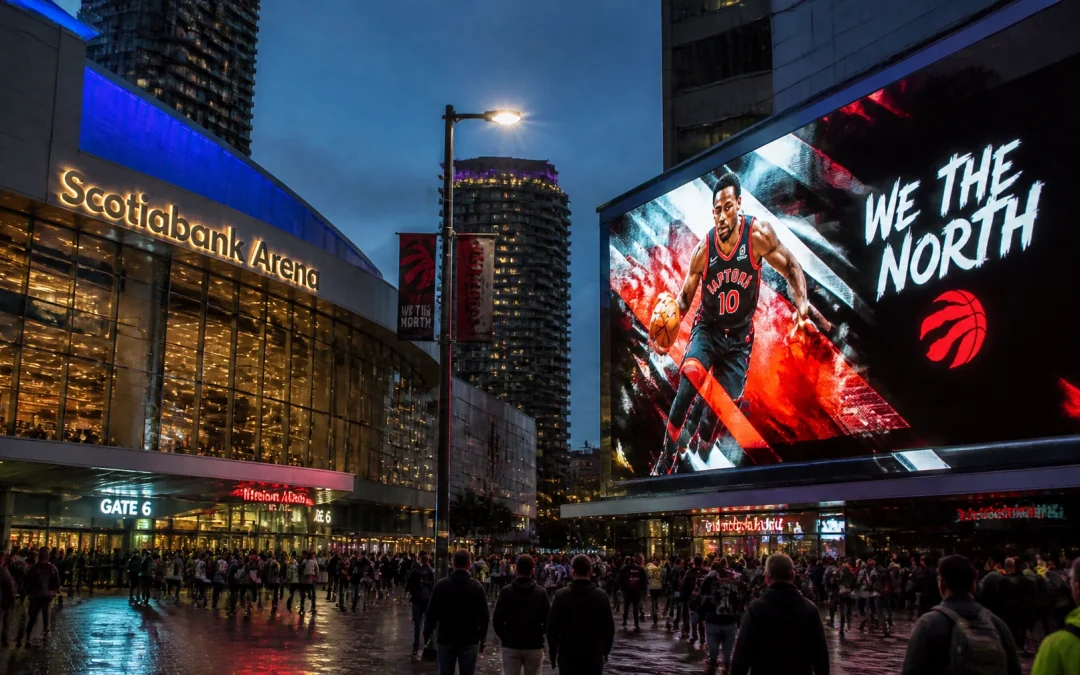
The landscape of sports marketing is undergoing a significant transformation. While traditional stadium sponsorships once dominated the industry, a new era of digital out-of-home (DOOH) advertising is redefining how brands connect with fans. This shift is not just about moving from static posters to digital screens. It is about the integration of data, programmatic technology, and strategic proximity to create a more impactful and measurable advertising ecosystem.
For media buyers and brand managers, the challenge has always been to capture the attention of fans who are often distracted by the game itself or their mobile devices. Innovation in sports DOOH addresses this by extending the brand message beyond the arena walls and into the entire fan journey. By leveraging a network of digital video advertising boards, brands can now maintain a consistent presence in the lives of fans before, during, and after the main event.
Strategy: Reimagining the Fan Journey
The traditional approach to sports advertising often focused on high-priced placements within the stadium. However, recent analysis suggests that these 2 million dollar stadium sponsorships may not always provide the best return on investment compared to more agile digital strategies. The modern strategy focuses on the perimeter, specifically a 10-mile radius around sports venues.
This perimeter-based approach recognizes that the fan experience begins long before the whistle blows. It starts in the transit hubs, the sports bars, and the retail centers surrounding the stadium. By placing digital content in these high-traffic areas, brands can engage fans when they are in a state of heightened anticipation and receptivity. This method ensures that the brand is not just a background element during the game but an active participant in the entire day's narrative.

Objective and Strategy: High-Impact Perimeter Targeting
The primary objective of modern sports DOOH is to maximize reach and frequency within a specific geographic area that correlates with high fan density. The 10-mile perimeter strategy is designed to capture the attention of fans as they commute to the game, gather for pre-game festivities, or celebrate post-game victories.
This strategy utilizes a multi-layered approach to targeting:
- Venue Proximity: Placing ads on screens closest to the stadium entrances and parking facilities to reach fans at the peak of their excitement.
- Transit Hubs: Utilizing digital displays in train stations, bus stops, and airports that serve as major arrival points for visiting fans.
- Entertainment Districts: Targeting areas with a high concentration of sports bars and restaurants where fans congregate to watch games or socialize.
- Retail Corridors: Reaching fans as they purchase team apparel, snacks, or beverages in the hours leading up to a match.
By blanketing this 10-mile radius, OOH Sports provides a level of saturation that traditional broadcast or static OOH cannot match. The digital nature of these boards allows for a high degree of flexibility, enabling brands to rotate creative assets or update messaging in real time.
Technology Partners: The Power of Programmatic DOOH
Innovation in this space is driven by sophisticated technology partners and programmatic platforms. The transition to programmatic digital out-of-home (pDOOH) has changed the way media is bought and sold. Platforms like the StackAdapt DSP allow media planners to execute campaigns with the same precision and ease as digital display or search advertising.
Technology integration enables several key capabilities:
- Automated Bidding: pDOOH allows for real-time bidding on inventory, ensuring that brands only pay for impressions that meet their specific criteria.
- Data-Driven Triggers: Campaigns can be set to activate based on specific conditions, such as game times, weather changes, or even live score updates. For example, a beverage brand might increase its ad frequency if the home team scores or if the temperature rises above a certain threshold.
- Audience Segmentation: Using mobile device IDs and location data, advertisers can identify areas with a high concentration of sports fans and prioritize those screens for their campaigns.
This technological foundation removes the guesswork from OOH advertising. It provides a level of control and transparency that was previously unavailable, allowing for more strategic budget allocation across a diverse network of screens.

Tactics: Proximity and Real-Time Execution
The execution of a sports DOOH campaign involves several tactical choices that optimize for fan engagement. One of the most effective tactics is the use of dynamic creative. Unlike static boards, digital screens can display motion graphics, countdown timers, and live social media feeds.
Key tactics include:
- Dayparting: Scheduling ads to run during the hours most relevant to the event. This might involve a heavy rotation during the four hours before kickoff and the three hours following the final whistle.
- Contextual Messaging: Crafting creative that acknowledges the specific game, the venue, or local fan traditions. This creates a sense of community and relevance that generic national ads lack.
- Cross-Channel Synergy: Linking DOOH efforts with mobile advertising. When a fan is exposed to a digital billboard, they can be retargeted with a mobile ad later in the day, reinforcing the brand message and driving them toward a specific action, such as a website visit or a product purchase.
- Event-Based Scaling: Rapidly increasing exposure during major tournaments or championship games. This allows brands to capitalize on the massive influx of fans into a city without the need for long-lead production times.
These tactics ensure that the advertising is not just seen but is also timely and relevant to the fan's immediate environment.
Results: Quantifying the Impact of Innovation
The effectiveness of these innovative strategies is backed by significant data. Recent campaigns managed by OOH Sports have demonstrated remarkable results across various industries. By moving away from traditional models and embracing pDOOH and perimeter targeting, brands have seen substantial increases in key metrics.
Case studies highlight the following outcomes:
- White Claw: A programmatic DOOH campaign for the launch of a new vodka product resulted in a 74 percent lift in purchase consideration. The campaign successfully targeted consumers in high-traffic areas near entertainment venues, driving significant interest in the new product. More details can be found in the White Claw case study.
- Mike's Hard Iced Tea: This campaign achieved a 119 percent lift in positive brand image. By utilizing digital screens in key social hubs around sports events, the brand was able to significantly improve consumer perception. The full report is available in the AB InBev case study.
- Sea-Doo: For its first digital OOH campaign, the brand saw a 144 percent increase in purchase consideration. The strategy focused on reaching outdoor enthusiasts in locations where they were most likely to consider a recreational vehicle purchase. Read more in the Sea-Doo analysis.
These results prove that DOOH is no longer just an awareness tool. It is a powerful driver of mid and lower-funnel metrics, providing clear attribution and measurable success. The ability to track device IDs exposed to an ad and subsequently monitor their digital or physical behavior provides a level of insight that was once impossible in out-of-home media.

Conclusion: The Future of Sports Marketing
Innovation in sports DOOH is not a temporary trend. It is a fundamental shift in how the advertising industry views the value of physical space. As 25,000 digital screens continue to change the market, the brands that succeed will be those that embrace technology and strategic proximity.
The combination of a 10-mile perimeter strategy, programmatic execution, and real-time data integration provides an unparalleled opportunity to reach sports fans. It offers the scale of traditional media with the precision of digital, creating a high-impact environment that resonates with the passion of the sports world. For media buyers and brand managers, the message is clear: the future of fan engagement is digital, data-driven, and located exactly where the fans are.