
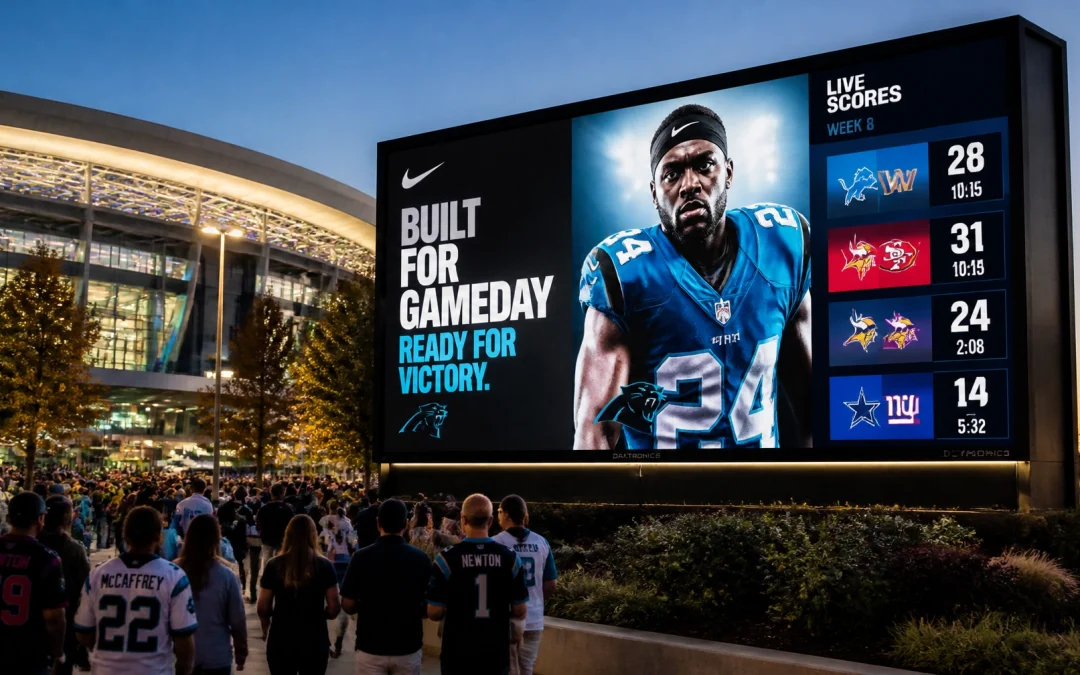
The landscape of sports marketing is undergoing a significant transformation. As fans move seamlessly between physical arenas and digital platforms, the methods used to capture their attention must evolve. Digital Out-of-Home (DOOH) advertising has emerged as a cornerstone of this evolution, offering a bridge between the high energy of live sports and the precision of digital targeting. By leveraging programmatic technology and real time data, brands can now scale their results far beyond the limitations of traditional static signage.
The Objective and Strategy of Modern Sports Marketing
The primary objective of any sports centered campaign is to capitalize on the heightened emotional state and focused attention of the fan base. To achieve this at scale, a multi layered strategy is required. This involves identifying the fan journey from the moment they leave their homes to the time they enter the stadium and eventually return.
A successful strategy focuses on a high impact perimeter, often extending up to 10 miles around major sports venues. This geographic targeting ensures that the brand remains top of mind during the most critical windows of engagement. By saturating the areas where fans commute, congregate, and celebrate, marketers can create a sense of omnipresence that traditional media often lacks.
Programmatic DOOH: The Engine of Innovation
Innovation in this space is largely driven by programmatic buying. Unlike traditional OOH, which required manual negotiations and long lead times, programmatic DOOH allows for the automated purchase of ad space based on specific triggers and audience data.
Precision Targeting and Audience Segments
Marketers can now layer various data points to ensure their message reaches the right person at the optimal time.
- Behavioral Data: Targeting fans based on past attendance at games or frequency of visits to sports bars.
- Contextual Triggers: Deploying specific creatives based on the weather, the current score of a game, or even the win/loss status of a local team.
- Lifestyle Interests: Reaching audiences in related environments such as high end gyms, universities, or transit hubs.
This level of granularity allows for a more efficient allocation of budget, ensuring that impressions are not wasted on uninterested demographics.

Technology Partners and the Omnichannel Experience
Scaling results requires a robust ecosystem of technology partners. Integrating DOOH into an omnichannel campaign means that the street level screen is just one touchpoint in a larger narrative.
Bridging the Gap Between Offline and Online
One of the most effective tactics in modern sports marketing is the use of mobile retargeting. When a fan is exposed to a DOOH ad near a stadium, their device ID can be captured within a privacy compliant framework. This allows the brand to serve a follow up ad on the fan's mobile device later that day. This sequence reinforces the message and provides a direct path to conversion, whether it is downloading a betting app, purchasing merchandise, or visiting a sponsor's website.
Strategic use of Sportrons and other digital video platforms ensures that the creative is not just a static image but a dynamic video experience that rivals the quality of television commercials. This consistency across screens is vital for maintaining brand authority and recall.
Contextual Execution: Meeting Fans Where They Are
The power of DOOH lies in its ability to adapt to the environment. In a sports bar, the creative might focus on real time betting odds or "order now" prompts for food and drink. In a fitness center, the focus might shift to performance wear or recovery supplements.
Strategic Placement Categories
- Transit Hubs: Capturing fans during their commute to the game.
- Sports Bars and Restaurants: Engaging with the "second screen" audience who are watching the game away from the stadium.
- Retail and Shopping Centers: Driving last minute purchases of team gear or snacks.
- Gyms and Health Clubs: Targeting the active lifestyle segment that overlaps heavily with sports viewership.
By diversifying the types of screens in a campaign, marketers can maintain a steady frequency of messaging throughout the day, rather than relying on a single "hero" moment.

Measuring Success with Data and Attribution
Historically, out of home advertising was criticized for a lack of measurable ROI. Today, the integration of advanced analytics has turned DOOH into a performance driven channel. Brands can now see the direct impact of their campaigns through various attribution models.
Key Performance Indicators
- Brand Lift Studies: Measuring the increase in brand awareness and favorability among those exposed to the ads.
- Foot Traffic Attribution: Tracking how many people visited a physical retail location after being exposed to a DOOH screen.
- Digital Conversion: Linking OOH exposure to spikes in website traffic, app installs, or social media engagement.
For example, a campaign for a major beverage brand might report a significant percentage increase in purchase consideration following a programmatic DOOH flight. Detailed case studies often show that when DOOH is used in conjunction with other digital channels, the incremental lift is substantially higher than when using those channels in isolation.

Future Trends: The Road to 2030
As the industry moves forward, several trends are set to further revolutionize how sports marketing results are scaled. The projected growth of the industry suggests that DOOH sports advertising will hit $50 billion by 2030.
AI and Dynamic Creative Optimization
Artificial Intelligence is beginning to play a larger role in creative execution. AI can analyze which visual elements are performing best in real time and automatically adjust the creative rotation to favor the highest converting assets. This ensures that the campaign is always optimized for the best possible outcome without constant manual intervention.
Integration with Live Data Feeds
The use of live data feeds will become standard. Imagine a billboard that updates every time a goal is scored, or one that displays a countdown to the start of the playoffs. This level of relevance makes the advertisement feel like a part of the event itself, rather than a commercial interruption.
Scaling for Maximum ROI
To truly scale results, marketers must move away from viewing OOH as a standalone "bucket" of spend. Instead, it should be viewed as a foundational layer of the broader digital strategy. Comparing programmatic DOOH vs. traditional stadium ads reveals that the flexibility and data depth of digital screens often provide a much higher return on investment for brands looking for measurable growth.
By combining the emotional power of sports with the technical precision of DOOH, brands can create impactful, memorable, and highly effective marketing campaigns. The key is to remain focused on the fan, leverage the latest technology, and always let the data guide the strategy.