
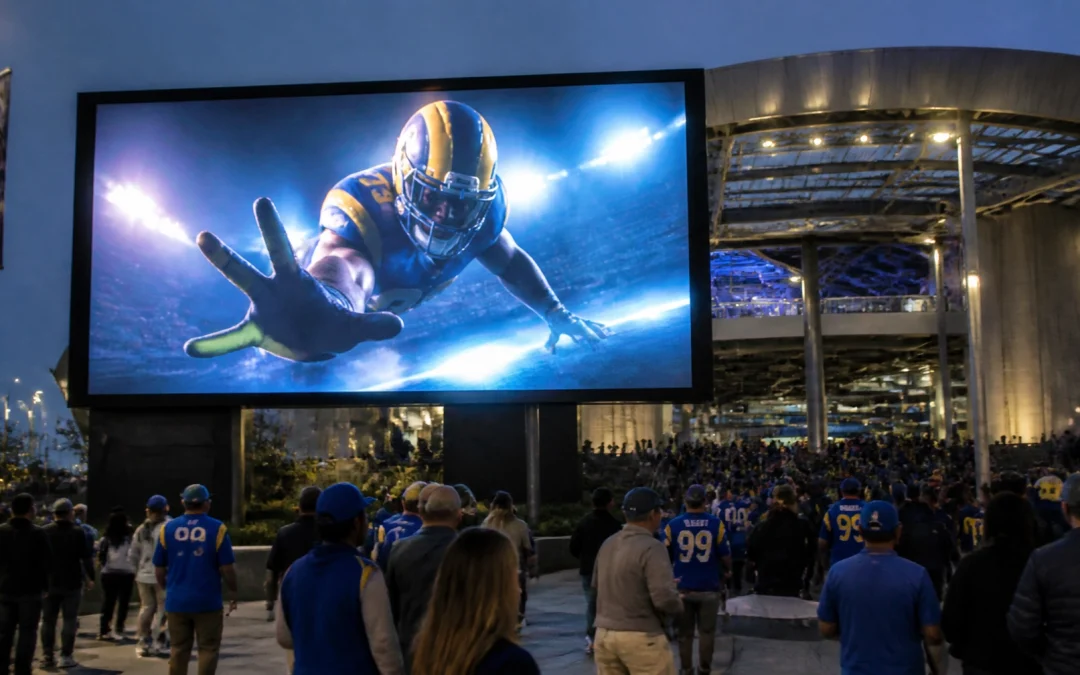
The landscape of sports marketing is undergoing a significant transformation. Traditional advertising methods are being augmented, and in some cases replaced, by sophisticated digital technologies that offer greater precision and measurable impact. For media buyers, brand managers, and chief marketing officers, staying ahead of these shifts is essential for maintaining a competitive edge. Digital Out-of-Home (DOOH) advertising has emerged as a cornerstone of this evolution, particularly within the high energy environment of professional and collegiate sports.
This shift is not merely about changing the medium from static to digital. It represents a fundamental change in how brands interact with fans throughout their entire journey. The following ten insights provide a comprehensive look at the current trends and strategic opportunities within the DOOH sports advertising industry.
1. Programmatic DOOH is the Primary Growth Engine
Programmatic buying has moved from an emerging technology to the dominant force in the Out-of-Home industry. By utilizing automated bidding and real-time inventory access, advertisers can now execute campaigns with a level of flexibility that was previously impossible. This allows for rapid adjustments based on performance data or shifting market conditions.
Recent industry data suggests that DOOH now represents a significant majority of total OOH spend. The efficiency of programmatic pipes allows brands to launch campaigns in hours rather than weeks. This speed is critical in the sports world, where news cycles and fan sentiments can change in an instant. Brands can now pivot their messaging to capitalize on a sudden victory or a high profile player trade without the delays associated with physical installations.
2. The Strategic Importance of the 10-Mile Perimeter
One of the most effective tactics in sports DOOH is the establishment of a strategic perimeter around stadiums and arenas. By targeting digital screens within a 10-mile radius of a venue, brands can reach fans at multiple touchpoints before and after a game. This hyper-local approach ensures that the brand remains top of mind during the peak periods of fan engagement.
This perimeter strategy often includes a mix of large-format billboards, transit displays, and retail screens. The goal is to create a "surround sound" effect where the brand message is consistently visible. For instance, a fan might see an ad at a transit hub on their way to the game, another on a street-level kiosk near the stadium, and a final reminder at a local sports bar after the event. This level of proximity targeting is a hallmark of successful OOH Sports campaigns.
3. Multi-Screen Integration and Omnichannel Synergy
Modern sports fans are rarely focused on a single screen. Research indicates that over half of fans use a second screen, such as a smartphone or tablet, while watching a game. Leading advertisers are capitalizing on this behavior by integrating DOOH with mobile and Connected TV (CTV) efforts.
When a fan is exposed to a DOOH ad near a stadium, the campaign can retarget that same individual on their mobile device or home television later. This consistent presence across platforms significantly increases brand recall and purchase intent. A cohesive strategy that treats every screen as a connected node in a larger ecosystem is far more effective than running isolated campaigns on separate channels.

4. AI-Driven Creative Optimization
Artificial Intelligence is playing a critical role in the planning and execution of DOOH creative. AI tools can now analyze vast amounts of data to determine which visual elements and messaging resonate most with specific audience segments. This allows for the automated generation of multiple creative variants tailored to different environments.
In the context of sports, AI can adapt creative based on live game triggers. If a local team wins, the digital screens can automatically update to display celebratory messaging and limited-time offers. This level of "strategic adaptation" ensures that the content is always relevant to the audience's current emotional state and physical location. This approach moves beyond generic advertising to provide a contextually aware experience.
5. Expansion of Place-Based Networks
While large billboards often garner the most attention, place-based digital screens in gyms, sports bars, and transit hubs are becoming increasingly valuable. These locations offer longer dwell times and a more focused audience. Fans in a sports bar are typically there for an extended period, providing multiple opportunities for a brand message to be absorbed.
Similarly, advertising in fitness centers allows brands to reach health-conscious consumers in a high intent environment. These place-based networks allow for granular segmentation based on lifestyle and behavior. By selecting specific venue types that align with the brand's target demographic, advertisers can achieve high levels of relevance and engagement.
6. Precision Measurement and Attribution
The ability to quantify the impact of a campaign is a non-negotiable requirement for modern marketers. DOOH has made great strides in measurement, moving away from simple impression estimates toward concrete attribution. By using anonymized device IDs, advertisers can track how many people who saw a DOOH ad later visited a website, downloaded an app, or made an in-store purchase.
Case studies have demonstrated the efficacy of this approach. For example, White Claw's programmatic DOOH campaign saw a 74 percent lift in purchase consideration. Another study showed that Mike’s Hard Iced Tea achieved a 119 percent lift in positive brand image through targeted programmatic DOOH. These results provide the data-driven proof that CMOs need to justify continued investment in the medium.

7. Contextual and Moment-Based Relevance
Context is everything in sports advertising. The value of an ad can fluctuate wildly based on what is happening on the field. DOOH platforms allow brands to bid on inventory based on specific triggers, such as the start of a match, a significant scoring play, or even weather conditions.
If a sudden rain delay occurs at a baseball game, a brand selling umbrellas or indoor entertainment can immediately ramp up its ad spend on nearby digital screens. This type of moment-based advertising ensures that the brand is solving a problem or meeting a need in real time. It is a highly efficient way to spend a marketing budget, as it minimizes waste by focusing on high value opportunities.
8. The Shift from Static to Video Storytelling
The industry is moving away from seeing DOOH as "digital posters" and toward viewing it as a short-form video medium. Digital screens now support high quality video content that can tell a much more compelling story than a static image. Video naturally attracts more attention in public spaces and allows for more complex messaging.
In sports, this might involve displaying high energy game highlights or dynamic animations that mirror the excitement of the arena. This shift toward video-centric content is supported by the increasing availability of high-resolution screens in both indoor and outdoor environments. Brands that utilize video effectively can create a more immersive and memorable brand experience for fans.
9. Sustainability and Digital Efficiency
Sustainability has become a major focus for many large corporations. Digital advertising offers a more environmentally friendly alternative to traditional paper-based billboards, which require physical printing, transportation, and chemical disposal. Digital screens can be updated remotely, significantly reducing the carbon footprint associated with campaign turnover.
Furthermore, digital infrastructure is becoming more energy-efficient. Modern LED screens consume less power than older models, and many networks are moving toward renewable energy sources. For brands with strict Environmental, Social, and Governance (ESG) goals, DOOH provides a way to maintain a high impact presence while aligning with corporate sustainability initiatives.
10. Lowering the Barrier for Entry
Historically, premium Out-of-Home advertising was reserved for brands with massive budgets. However, the rise of programmatic platforms and flexible buying models has made DOOH accessible to a wider range of advertisers. Smaller brands can now buy specific time slots or locations that fit their budget, rather than committing to a massive citywide campaign.
Partnerships with Demand-Side Platforms (DSPs) like StackAdapt have democratized access to premium inventory. This allows regional players and niche brands to compete for the attention of sports fans alongside major national sponsors. The ability to start small, measure results, and scale gradually makes DOOH an attractive option for brands of all sizes.

Strategic Alignment and Future Outlook
The integration of data, technology, and high value sports inventory is creating a new standard for advertising excellence. As demonstrated by the Sea-Doo digital OOH campaign, which saw a 144 percent increase in purchase consideration, the potential for driving real-world business outcomes is immense.
For media planners and brand managers, the message is clear: the most effective campaigns are those that leverage the unique strengths of DOOH while remaining deeply integrated with a broader omnichannel strategy. By focusing on programmatic efficiency, hyper-local targeting, and robust attribution, brands can navigate the complexities of the modern media landscape and secure a lasting competitive advantage.

Success in this arena requires a commitment to innovation and a willingness to embrace new technologies. As the sports ecosystem continues to grow and evolve, DOOH will remain at the forefront, providing the creative canvas and analytical precision needed to connect with fans in meaningful and measurable ways.