
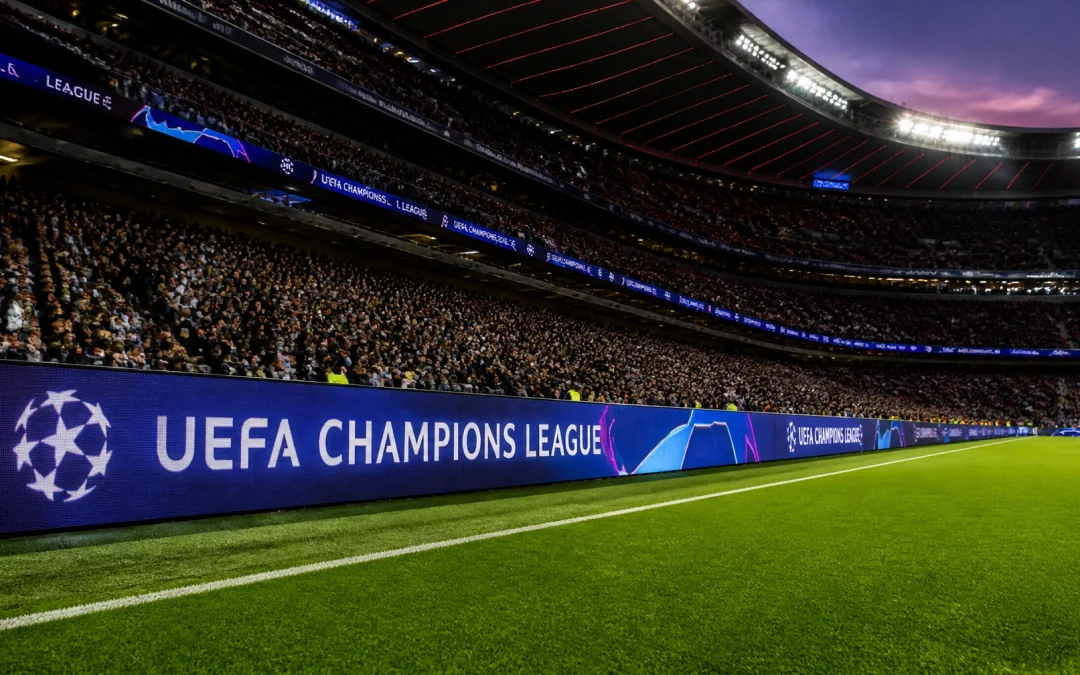
Fan engagement in the modern era has moved far beyond the boundaries of the playing field. For brand managers and creative directors, the stadium is no longer just a venue. It is the epicenter of a high-energy ecosystem that extends miles in every direction. As traditional advertising channels face increasing fragmentation, stadium perimeter advertising has emerged as a powerhouse for driving brand lift, recall, and measurable consumer action.
The strategic use of Digital Out-Of-Home (DOOH) technology allows brands to capture the undivided attention of fans at the peak of their emotional investment. This guide explores the mechanics of mastering the stadium perimeter, from hyper-local targeting to real-time programmatic execution.
Objective and Strategy: The 10-Mile Radius
The most effective stadium campaigns do not begin and end at the gate. A comprehensive fan engagement strategy views the stadium as the core of a 10-mile radius. This perimeter includes transit hubs, sports bars, retail centers, and the major arterial roads leading to the venue. By securing placements across this radius, a brand can create a sequenced narrative that follows the fan journey from the initial commute to the post-game celebration.
Research from the OAAA and The Harris Poll indicates that nearly 6 in 10 U.S. adults recall seeing out-of-home advertisements for major sporting events. More importantly, 90 percent of those who recall these ads take a real-world action, such as talking about the brand with friends or engaging on social media.
The strategy focuses on three distinct phases of the fan journey:
- The Build-Up: Utilizing large-format digital billboards on highways and transit screens to build anticipation as fans travel toward the stadium.
- The Peak: Dominating the in-stadium perimeter LED boards and concourse screens during the game when emotional engagement is at its highest.
- The Aftermath: Reinforcing messaging on digital screens in nearby entertainment districts where fans congregate after the final whistle.

Technology Partners and Programmatic Precision
The transition from static to digital perimeter advertising has been driven by advancements in programmatic DOOH. This technology enables advertisers to buy and display content with the same precision as digital display or social media ads. By leveraging specialized platforms such as StackAdapt or Vistar Media, brands can execute campaigns based on real-time data triggers.
Programmatic execution offers several logistical advantages for high-stakes sports marketing:
- Dynamic Triggers: Content can change instantly based on game events. For example, a beverage brand can trigger a specific "celebration" creative the moment a home run is hit or a touchdown is scored.
- Audience Targeting: By using anonymous mobile device IDs, campaigns can be directed at specific segments, such as "Active Sports Fans" or "High-Income Commuters," who have recently visited stadiums or sports-themed venues.
- Frequency Capping: Programmatic platforms ensure that a brand maintains a consistent presence without over-saturating the audience, optimizing the return on ad spend.
These technical capabilities ensure that the advertisement is not a static interruption but a dynamic part of the event atmosphere. Information on how these technologies are integrated into sports networks can be found on the OOH Sports Sportrons page.
Fan Engagement Tactics: Driving Interaction
Capturing attention is the first step, but the ultimate goal for most creative directors is interaction. Modern DOOH around stadiums serves as a bridge between the physical and digital worlds. Because sports fans are naturally inclined to use "second screens" (their mobile devices) during games, perimeter advertising is uniquely positioned to drive mobile engagement.
Practical tactics for driving interaction include:
- QR Code Integration: Placing QR codes on concourse screens or surrounding digital furniture allows fans to instantly access limited-time offers, enter contests, or download team-related apps.
- Social Media Amplification: Displaying fan-generated content or specific campaign hashtags on large-format screens encourages fans to share their own experiences online, effectively turning the stadium audience into a secondary marketing force.
- Real-Time Utility: Providing value-added content, such as live score updates from other games or local traffic reports, increases the dwell time and favorability of the advertisement.

According to industry data, 74 percent of mobile device users have taken at least one action on their phone after seeing a DOOH ad. This includes performing an online search for the advertiser or visiting the brand's social media page. This synergy between the large-format screen and the handheld device is a cornerstone of mastering the stadium perimeter.
Results and Measurable Impact
The success of a stadium perimeter campaign is measured through rigorous data analysis. Unlike the "spray and pray" methods of the past, modern OOH advertising provides clear metrics on brand lift and consumer behavior. Case studies from OOH Sports demonstrate the significant impact of these strategies on high-profile brands.
Key performance indicators typically include:
- Brand Lift: Studies often show a marked increase in positive brand perception. For instance, a programmatic DOOH campaign for a major tea brand saw a 119 percent lift in positive brand image.
- Purchase Consideration: Strategically placed ads near stadiums have been shown to increase purchase consideration significantly. A campaign for a leading vodka brand resulted in a 74 percent lift in this category.
- Foot Traffic Attribution: By tracking exposed mobile device IDs, advertisers can quantify the number of people who visited a retail location or restaurant after seeing a perimeter ad.
Data from the sports marketing vertical suggests that fans who attend games after seeing an OOH ad are highly likely to spend money locally. In fact, 99 percent of these fans report spending on hotels, restaurants, or transportation near the venue. This makes the stadium perimeter one of the most commercially productive environments for local and national advertisers alike.

Strategy for Execution
To master the stadium perimeter, creative and media teams must work in lockstep. The process begins with a clear definition of the target audience and the geographical boundaries of the campaign. Once the 10-mile radius is mapped, the selection of technology partners and programmatic platforms follows.
Creative assets should be designed specifically for the high-contrast environment of a sports stadium. Bold typography, high-action imagery, and minimal text are essential for ensuring readability from a distance and during fast-paced game moments. The inclusion of a clear call to action, whether digital or physical, is necessary to move the fan from a state of awareness to a state of engagement.
The final phase involves the implementation of a measurement framework. By setting benchmarks for awareness and interaction before the campaign begins, brands can accurately assess the return on investment and refine their strategies for future seasons.
Conclusion
Mastering the stadium perimeter is an exercise in strategic visibility and emotional alignment. By utilizing the 10-mile radius, leveraging programmatic DOOH, and focusing on mobile-integrated interaction, brands can create a lasting impression that extends far beyond game day. As the lines between physical advertising and digital engagement continue to blur, the stadium remains the ultimate arena for impactful storytelling.
For brands looking to explore the potential of the OOH Sports network, the path to fan engagement starts with a data-driven approach to the stadium perimeter. More information about the company's mission and history can be found on the About page, and those ready to plan their next campaign can contact the team directly.