
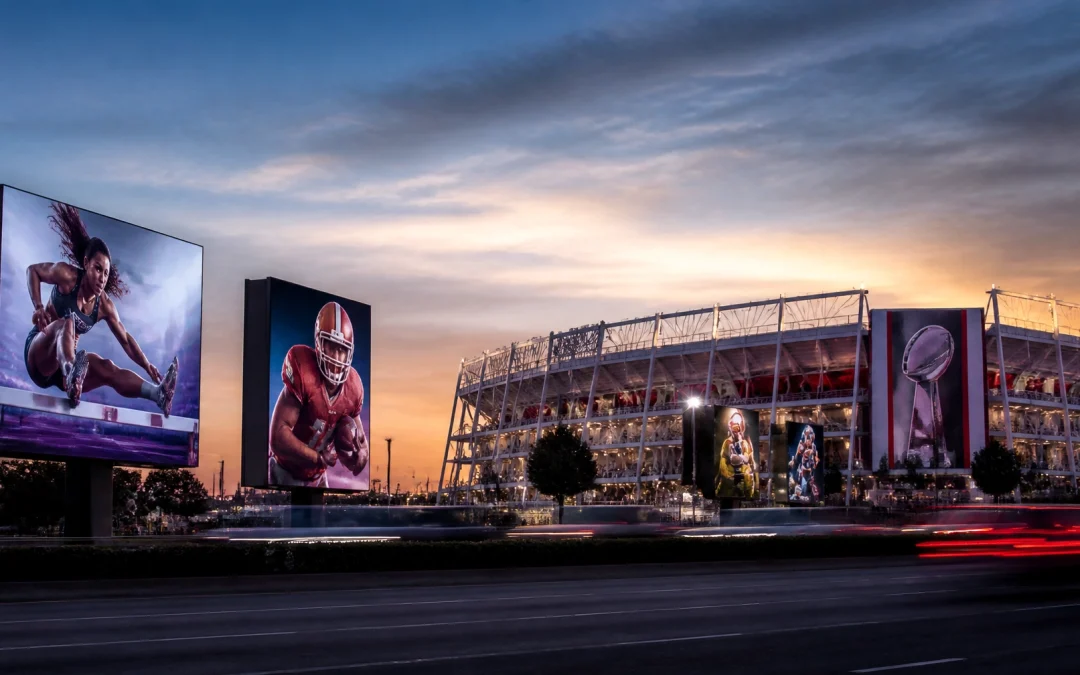
Super Bowl 2026 is scheduled to take place at Levi’s Stadium in Santa Clara, California. As the epicenter of the sporting world shifts to the San Francisco Bay Area, media buyers and brand managers face a unique challenge. Traditional advertising slots during the game are often reserved for global conglomerates with massive budgets, leaving a gap for brands looking to make a localized, authentic impact. The emergence of Name, Image, and Likeness (NIL) legislation has created a new frontier for sports marketing, allowing brands to leverage the influence of student-athletes in a way that was once impossible.
This guide explores the strategic integration of NIL platforms with digital out of home (DOOH) advertising. By connecting with a network of over 20,000 authentic student-athlete voices, brands can bridge the gap between digital social influence and physical arena presence. Success in 2026 requires a multifaceted approach that combines the precision of programmatic DOOH with the cultural relevance of college athletes.
Strategy: The NIL and DOOH Intersection
The primary strategy for Super Bowl 2026 involves a dual-layered approach. The first layer utilizes the OOH Sports digital network to saturate the physical environment surrounding Levi’s Stadium. The second layer involves mobilizing a vast network of student-athletes to generate digital engagement that mirrors the physical presence. This synergy ensures that a brand is not just seen on a billboard, but is also part of the conversation happening on social media feeds and within the local community.
Leveraging NIL for a tentpole event like the Super Bowl allows for micro-targeting. Instead of a single, high-cost celebrity endorsement, brands can deploy hundreds or thousands of "micro-influencers" who hold significant sway over specific demographics. This is particularly effective in the Bay Area, a region defined by its tech-savvy population and diverse cultural landscape.

Objective and Strategy: Building Authentic Connections
The core objective is to create a seamless fan experience that begins miles away from the stadium and continues through the final whistle. The Sporttron digital network provides access to ribbon boards, jumbotrons, and digital displays in over 780 venues nationwide, but for Super Bowl 2026, the focus narrows to the 10-mile perimeter around Santa Clara.
Targeted Reach
By focusing on a 10-mile radius, brands can reach fans as they travel to the game, stay in local hotels, and visit fan zones. This geographic targeting is enhanced by the inclusion of 20,000 student-athletes who can promote the brand to their own followers, many of whom are within the target age range of 18 to 34. This demographic often views traditional ads with skepticism but responds positively to authentic recommendations from peers and athletes they admire.
Strategic Execution
- Geofencing: Setting up digital perimeters around Levi's Stadium and the Moscone Center in San Francisco to trigger specific DOOH creative.
- NIL Activation: Coordinating student-athletes to post game-day rituals, watch-party content, and "day in the life" videos that feature the brand naturally.
- Cross-Channel Integration: Ensuring that the visuals seen on a digital billboard in Santa Clara match the aesthetic of the content being shared by athletes on TikTok and Instagram.
Understanding the Impact
To better understand how these two worlds collide, observe the following overview of the Sports Media ecosystem and its approach to modern advertising.
https://www.youtube.com/watch?v=l6J-0zileKE
The video highlights the transition from traditional billboards to a comprehensive "sporttron" network. It emphasizes that OOH Sports is part of the Sports Media Inc. family, a company with 40 years of leadership in the field. The focus remains on creating a "tangible fan experience," whether through cup holders for charity or high-touch concession platforms.
Technology Partners and the 10-Mile Perimeter
Execution at this scale requires sophisticated technology. Programmatic DOOH allows for real-time bidding and deployment of creative assets. This means a brand can adjust its messaging based on the time of day, weather conditions, or even the current score of the game.
The 10-mile perimeter is a critical component of the OOH Sports strategy. This zone includes not only the stadium but also the major transit hubs, shopping centers, and dining districts where fans congregate. By owning the environment within this radius, a brand creates a "surround sound" effect.

Key Technology Components
- Predictive Modeling: Using historical data and fan movement patterns to determine the optimal timing for ad displays.
- Fan Sentiment Analysis: Monitoring social media in real-time to adjust the tone and content of the DOOH messaging.
- Inventory Management: Accessing a diverse range of displays, from large-scale highway billboards to smaller screens in retail environments.
Logistics and Campaign Mechanics
Setting up a campaign with 20,000 student-athletes might seem like a logistical nightmare, but specialized NIL platforms streamline the process. These platforms handle contract management, compliance, and content verification. For media buyers, this means they can buy "athlete influence" with the same ease they buy programmatic display ads.
In the San Francisco Bay Area, the campaign logistics involve:
- Local University Partnerships: Engaging athletes from Stanford, UC Berkeley, and San Jose State to provide a local connection.
- Creative Syncing: Using a central hub to distribute brand assets to athletes, ensuring consistency across thousands of individual posts.
- Attribution Tracking: Utilizing device IDs exposed to DOOH displays to measure subsequent brand searches or app downloads.

Results and Performance Measurement
A successful campaign is defined by data. OOH Sports focuses on measurable outcomes rather than speculative hype. By comparing brand lift before and after the Super Bowl window, analysts can quantify the impact of the dual NIL and DOOH strategy.
Measurable Metrics
- Brand Awareness: Tracking the increase in mentions and searches for the brand during the campaign period.
- Purchase Consideration: Using surveys to measure how likely fans are to purchase the product after seeing the integrated ads.
- Engagement Rates: Calculating the total likes, shares, and comments across the 20,000-athlete network.
Previous campaigns using similar programmatic DOOH strategies have seen significant results. For instance, a campaign for a major beverage brand resulted in a 119 percent lift in positive brand image. Another case study involving a lifestyle brand showed a 144 percent increase in purchase consideration. Detailed examples can be found in the case study section of the company website.
Strategic Alignment for 2026
The Super Bowl is no longer just a game; it is a multi-week cultural festival. For brands to succeed in 2026, they must align their vision with the expertise of a specialized agency that understands both the physical and digital landscape of sports.
The integration of NIL allows for a more democratic form of sports marketing. It gives smaller and mid-sized brands the ability to compete for attention by being more creative and more authentic than the legacy sponsors. By leveraging the about us principles of OOH Sports, brands can ensure they are telling stories that resonate with the hearts of fans across America.
Final Checklist for Media Buyers
- Identify Target Demographics: Determine which segments of the 20,000-athlete network align best with the brand's goals.
- Secure DOOH Inventory: Plan ahead to lock in prime locations within the 10-mile Santa Clara perimeter.
- Develop Authentic Creative: Work with athletes to create content that feels natural and unforced.
- Monitor and Optimize: Use real-time data to tweak the campaign as the Super Bowl excitement builds.
As 2026 approaches, the brands that win will be those that recognize the power of the student-athlete voice. By combining this voice with the scale of a national digital network, advertisers can achieve a level of dominance that was previously unattainable. The future of sports marketing is not just in the stadium; it is in the hands of the athletes and on the streets where the fans live.