
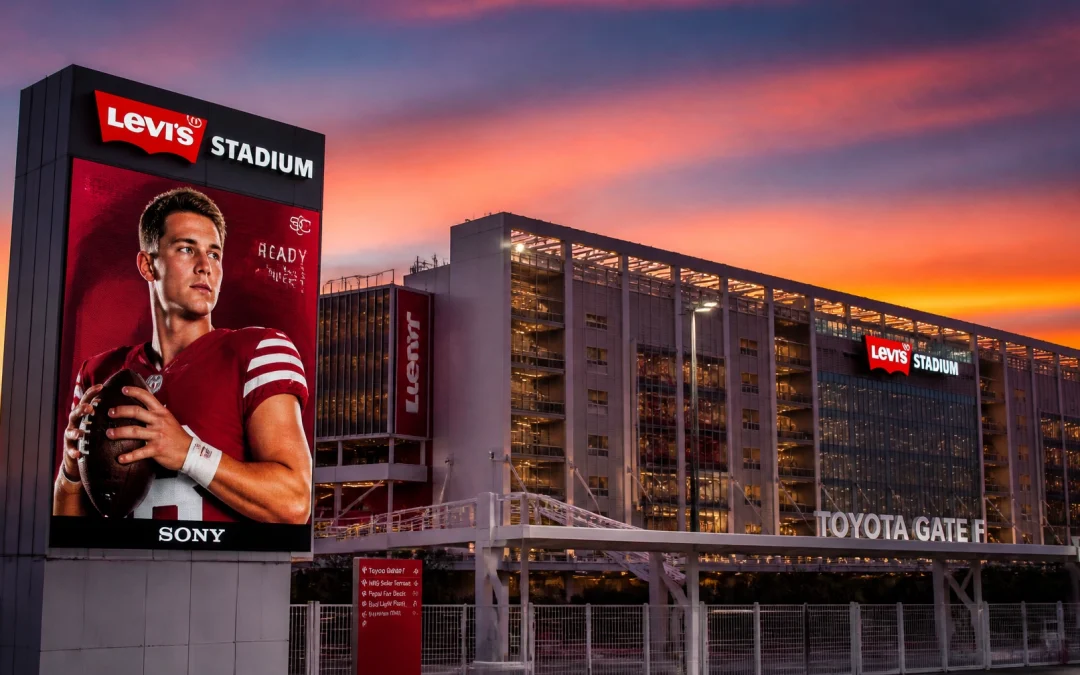
Super Bowl LX is set to take place at Levi’s Stadium in Santa Clara, California, on February 8, 2026. For media buyers and brand managers, this event represents the pinnacle of annual advertising opportunity. While the traditional 30-second broadcast spot remains a high-profile choice, the evolution of Name, Image, and Likeness (NIL) regulations and digital out-of-home (DOOH) technology has introduced more targeted, authentic ways to reach audiences.
The 2026 game in the San Francisco Bay Area provides a unique technological and cultural backdrop. Integrating NIL student-athletes into a broader Super Bowl strategy allows brands to bypass the noise of national broadcast commercials and connect directly with fans through voices they trust. By leveraging a network of over 20,000 authentic student-athlete voices, OOH Sports provides a scalable platform for regional and national brands to dominate the conversation surrounding the championship game.
Objective & Strategy
The primary objective for any Super Bowl campaign is to maximize brand visibility and consumer engagement during a period of peak media consumption. A successful strategy for 2026 involves moving beyond a single moment and creating a multi-channel presence that follows the fan journey from the digital world to the physical arena.
The core strategy revolves around the concept of "hyperlocal dominance." With the game situated in the heart of Silicon Valley, the concentration of tech-savvy fans and high-net-worth individuals is unparalleled. The strategy utilizes a dual-pronged approach:
- Digital Amplification: Utilizing 20,000+ student-athletes to create social-first content that builds anticipation and brand affinity in the weeks leading up to the game.
- Physical Proximity: Deploying digital out-of-home advertising within a 10-mile perimeter of Levi’s Stadium and key San Francisco fan zones, such as the Moscone Center.
This combination ensures that the brand remains top-of-mind whether a fan is scrolling through their social feed or navigating the streets of Santa Clara.

The Power of 20,000+ Authentic Voices
The NIL marketplace has matured from individual, one-off posts to sophisticated, long-term brand partnerships. For the 2026 Super Bowl, the focus is on scale and authenticity. Research indicates that student-athletes often possess higher engagement rates than professional celebrities due to their relatable nature and strong ties to specific communities or alumni networks.
By accessing a pool of over 20,000 student-athletes, media planners can segment audiences based on geography, sport, or demographic interest. For instance, a brand could activate athletes from West Coast powerhouses to lead the narrative in the Bay Area. These athletes serve as credible messengers, sharing "Day in the Life" content, Super Bowl predictions, and branded challenges that resonate more deeply than corporate-produced creative.
https://www.youtube.com/watch?v=l6J-0zileKE
Strategy: The 10-Mile Perimeter
Visibility during Super Bowl week is often hindered by high costs and limited inventory. OOH Sports addresses this by providing access to digital video advertising boards in every category within a 10-mile radius of the sports venue. This "perimeter strategy" captures fans during the "last mile" of their journey to the stadium.
Strategic placements include:
- Transit hubs and airports (SFO and SJC).
- Major highway corridors leading to Santa Clara.
- High-traffic retail and dining districts in San Francisco and San Jose.
- Digital displays at fan festivals and the Super Bowl Experience.
This geographic targeting ensures that impressions are not wasted on disinterested audiences but are instead focused on the high-concentration zones where fans live, work, and celebrate.

Technology Partners and Programmatic Execution
The integration of NIL and DOOH is made possible through advanced programmatic platforms. OOH Sports, as part of the Sports Media Inc. family, utilizes specialized Demand-Side Platforms (DSPs) to manage campaign delivery with precision.
Programmatic DOOH allows for real-time adjustments and data-driven triggers. For example, creative can be updated based on the time of day, current weather conditions in Santa Clara, or real-time game updates. This level of flexibility ensures that the messaging remains relevant and impactful throughout the entire Super Bowl week.
The use of mobile device ID tracking allows for retargeting. When a fan is exposed to a digital billboard featuring an NIL athlete near the stadium, that same fan can later be retargeted with social content from the same athlete on their personal device. This cross-channel synchronization creates a seamless brand experience that reinforces the message at every touchpoint. Information on how these programmatic campaigns operate can be found through various industry studies and case examples.
Logistics and Campaign Execution
Executing a campaign of this magnitude requires meticulous planning and coordination. The process involves several key steps:
- Athlete Selection and Vetting: Identifying the right mix of student-athletes from the 20,000+ available, ensuring alignment with brand values and compliance with all NCAA and state regulations.
- Creative Development: Producing high-resolution, professional assets for DOOH boards while simultaneously guiding athletes in the creation of authentic, social-first video content.
- Network Deployment: Mapping the digital billboard inventory within the 10-mile perimeter of Levi’s Stadium to maximize frequency and reach among the target demographic.
- Compliance Management: Handling all contract disclosures and ensuring that all NIL activities are documented according to university standards.
By managing these logistics centrally, OOH Sports allows brand managers to focus on the high-level strategy while the technical and legal complexities are handled by experts in the field.

Results and Measurement
The success of a Super Bowl NIL and DOOH integration is measured through a combination of digital metrics and physical attribution. Past campaigns using similar methodologies have demonstrated significant brand lift.
- Purchase Consideration: Data from previous programmatic DOOH campaigns, such as those for major beverage brands, has shown increases in purchase consideration by as much as 74 percent. Detailed results of such efforts are documented in recent case studies.
- Brand Image: Large-scale digital campaigns often result in a measurable shift in positive brand perception. For instance, some campaigns have recorded up to a 119 percent lift in brand image favorability by aligning with the high-energy environment of major sporting events.
- Engagement Rates: NIL content typically yields higher click-through and engagement rates compared to standard display ads, as fans are more likely to interact with content from athletes they follow.
For Super Bowl 2026, brands can expect to see comprehensive reporting that includes total impressions (both digital and physical), heat maps of fan density, and brand lift study results to quantify the return on investment.
Conclusion
The 2026 Super Bowl in the Bay Area is more than just a football game. It is a massive media event that requires a sophisticated, multi-layered advertising approach. By integrating the authentic voices of 20,000+ NIL student-athletes with the high-impact reach of digital out-of-home advertising, brands can create a dominant presence in the market.
OOH Sports provides the network and the technology to execute these complex campaigns flawlessly. Whether the goal is to drive immediate sales or build long-term brand equity, the combination of student-athlete influence and strategic DOOH placement offers a powerful alternative to traditional broadcast advertising. Planning for 2026 begins now, and those who leverage the scale of the OOH Sports Network will be best positioned to win the weekend.