
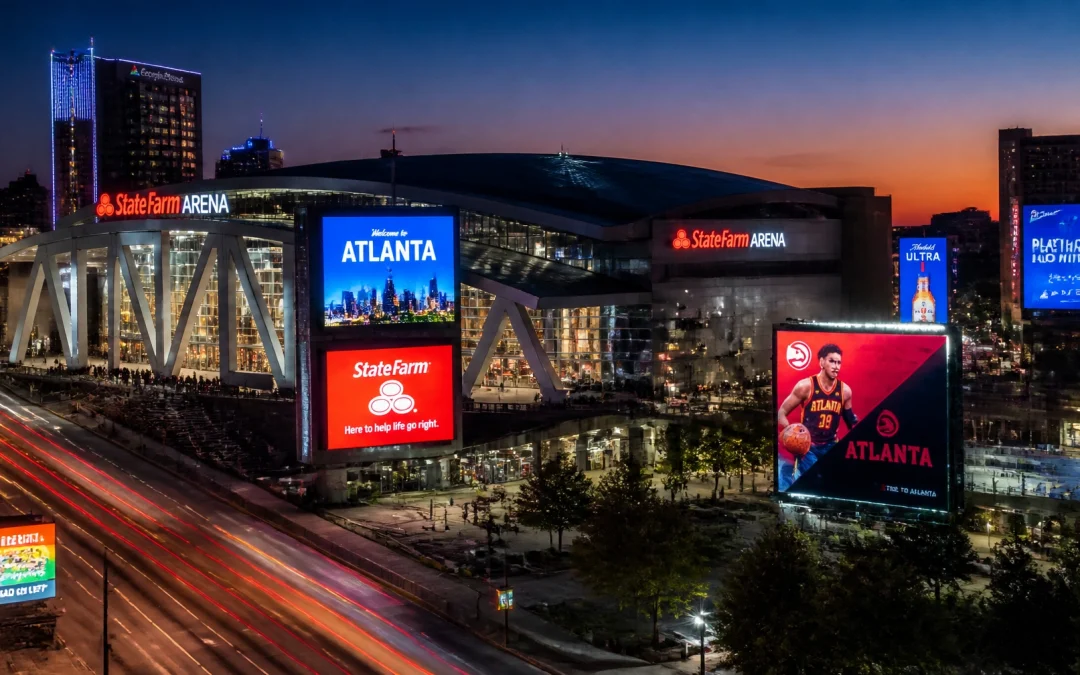
Securing a spot as an official stadium sponsor often requires a multimillion-dollar commitment and a multiyear contract. For many brands, this level of investment is prohibitive, yet the desire to reach the highly engaged audience of sports fans remains a top priority. There is a strategic alternative that allows brands to dominate the conversation without ever signing a deal with a league or a franchise. By leveraging the 10-mile perimeter around sports venues through programmatic Digital Out-of-Home (DOOH) advertising, savvy marketers can capture fan attention at a fraction of the cost.
This strategy relies on the fact that the fan experience does not begin and end at the stadium gate. It starts in the driveway, continues through the commute, and peaks in the bars, restaurants, and streets surrounding the arena. OOH Sports specializes in this "perimeter dominance," providing a way for brands to own the fan journey from start to finish.
The Strategy: Beyond the Arena Walls
The core of this approach is a shift in perspective. Instead of viewing the stadium as the only place where branding happens, it is viewed as a gravitational hub. This hub draws in thousands, or even hundreds of thousands, of people who share a common interest, a specific demographic profile, and a high state of emotional engagement.
By placing ads on digital screens within a 10-mile radius of the venue, a brand can intercept fans as they travel to and from the event. This includes highway billboards, digital urban panels, bus shelters, and screens in transit hubs. The objective is to create a "surround sound" effect where the brand becomes synonymous with the game day experience, even if it is not an official partner.
This method was famously utilized in a non-traditional way during the New York City Marathon. While not an official sponsor, certain brands successfully positioned themselves so effectively along the route and transit points that many consumers assumed they held an official title. A detailed analysis of this approach can be found in the Nike NYC Marathon strategy review.

Objective & Strategy: Owning the Fan Journey
To capture fans effectively, the campaign must be structured around the three phases of the fan journey: the Arrival, the Atmosphere, and the Afterglow.
1. The Arrival
Fans are often in a state of anticipation hours before a game begins. During this time, they are navigating traffic or using public transportation. Strategic placement on major arteries leading to the stadium ensures the first touchpoint. The goal here is high-frequency awareness.
2. The Atmosphere
The area immediately surrounding the stadium is where the "pre-game" happens. Fans congregate in sports bars, fan zones, and retail areas. Screens in these high-density pedestrian zones offer the highest engagement rates. Brands can use dynamic creative to reference the specific matchup, creating a sense of relevance and "being in the moment."
3. The Afterglow
The period after a win or a hard-fought game is an emotional peak. As fans leave the stadium and head back to their vehicles or transit stations, they are highly receptive to celebratory or "thank you" messaging. This is an ideal time to drive digital engagement, such as scanning a QR code for a post-game offer.

Technology Partners and Programmatic DOOH
The execution of a 10-mile perimeter campaign is made possible through programmatic technology. Unlike traditional OOH, which requires manual booking and long lead times, programmatic DOOH allows for real-time bidding and precision targeting.
OOH Sports utilizes sophisticated Demand-Side Platforms (DSPs) to automate the buying process. This technology allows marketers to set specific triggers for their ads. For instance, a campaign might only activate four hours before tip-off and remain active until two hours after the final whistle. This ensures that the budget is spent exclusively when the target audience is present.
Furthermore, dynamic creative optimization (DCO) allows the messaging to change based on real-time data. If the home team wins, the screens can instantly switch to a celebratory creative. If the weather changes, the ad can pivot to promote products relevant to the conditions. This level of agility was once reserved for digital banner ads but is now a standard feature of the OOH Sports network. For a deeper look at the growth of this technology, see the 7 strategies to capture DOOH market share.
Campaign Logistics and Execution
Setting up a perimeter campaign involves several technical steps to ensure maximum impact and efficiency:
- Geofencing the Venue: A digital boundary is established around the stadium and key transit routes.
- Inventory Selection: Identifying the most impactful screens, including large-format billboards for reach and street-level panels for frequency.
- Time-Parting: Scheduling ads to run during peak fan activity windows to minimize waste.
- Creative Deployment: Uploading high-resolution assets that meet the specific aspect ratios of various screen types.
- Device ID Capture: Using anonymous location data to identify mobile devices that have been exposed to the OOH ads, allowing for multi-channel retargeting.
This logistical precision ensures that a brand's message is not just seen, but is seen by the right people at the right time. It creates a presence that feels much larger than a traditional media buy.

Results: Quantifying Success with Data
The success of a perimeter branding campaign is measured through sophisticated attribution modeling. Because the screens are digital and programmatic, the impact can be quantified with a high degree of accuracy.
Brand Lift and Awareness
Case studies have shown that programmatic DOOH campaigns in the sports sector drive significant increases in brand health metrics. For example, Mike’s Hard Iced Tea saw a 119% lift in positive brand image by utilizing a targeted programmatic campaign. The data from this execution can be reviewed in the Mike's Hard brand lift case study.
Purchase Consideration
Capturing fans in a high-emotion environment also translates to intent. A campaign for White Claw saw a 74% lift in purchase consideration for their vodka launch by targeting specific high-traffic windows. Details of that campaign are available in the White Claw DOOH case study.
Attribution and Retargeting
By tracking device IDs exposed to the billboards, brands can measure "store footfall" or online conversions. If a fan sees a billboard on the way to the game and later visits the brand's website or a retail partner, that action can be attributed back to the OOH exposure. This creates a closed-loop measurement system that was previously impossible in outdoor advertising.
Conclusion: The New Playbook for Sports Marketing
The days of needing a multimillion-dollar sponsorship to be part of the "big game" are over. While official partnerships offer their own set of benefits, the perimeter dominance strategy provides a leaner, more agile, and highly data-driven alternative.
By focusing on the 10-mile radius around the stadium, brands can effectively "own" the local environment. They can reach the same fans, tap into the same excitement, and achieve measurable results without the long-term commitment of a traditional sponsorship. OOH Sports provides the network and the technology to make this possible, turning every sports venue in the country into a potential branding powerhouse.
For creative directors and CMOs looking to maximize their impact, the secret is not necessarily being inside the stadium. The secret is being everywhere else the fans are.