
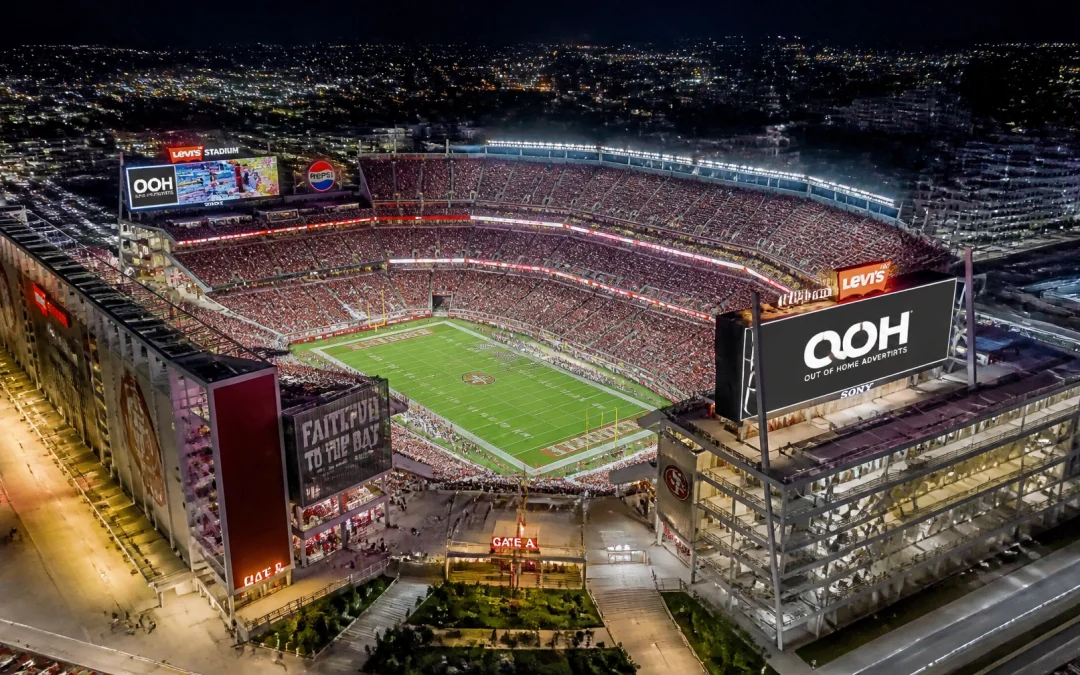
The landscape of sports advertising is shifting. For over 40 years, Sports Media Inc. has led the industry in connecting brands with the most passionate fans in the world. Now, through OOH Sports, that legacy continues with a focus on a "total venue" approach. As the 2026 season reaches its peak, the traditional methods of buying a few billboards or a single TV spot are no longer enough to win the room.
Advertising at a marquee event like the Super Bowl requires a strategy that is as dynamic as the game itself. It is about more than just being present; it is about owning the entire ecosystem surrounding the venue. From the floors fans walk on to the digital boards they see ten miles away, total venue coverage is the new gold standard for media buyers and planners who want to make a lasting impression.
A Legacy of 40 Years in Sports Marketing
Success in the sports world is not built overnight. OOH Sports stands on a foundation of four decades of leadership within the Sports Media Inc. family. This history provides a deep understanding of fan psychology and the logistics required to execute massive campaigns.
Throughout these 40 years, the mission has remained consistent: transcend traditional advertising. The goal is to bring brands to life in a way that feels organic to the sports experience. By leveraging this extensive experience, OOH Sports has developed the infrastructure to manage complex, multi-layered campaigns that span across the entire country, specifically targeting the high-traffic zones around major arenas.
The Strategy: Total Venue Coverage
The core philosophy of a modern Super Bowl campaign is "Total Venue Coverage." This strategy moves beyond the idea of isolated ad placements. Instead, it creates a visual blanket over the event.
Objective & Strategy
The primary objective is to reach the target audience at every possible touchpoint. This includes media buyers, brand managers, and chief marketing officers who are attending the game or monitoring the surrounding area. The strategy involves a three-pronged approach:
- Indoor Dominance: Utilizing non-traditional spaces like floor graphics and concourse displays.
- Outdoor Impact: Dominating the digital video advertising boards within a 10-mile perimeter of the stadium.
- Digital Integration: Using programmatic DOOH to sync messaging across all screens.

Dominating the Perimeter
One of the most effective tactics in the OOH Sports playbook is the 10-mile perimeter. While the stadium itself is the epicenter, the journey begins much further out. By securing access to every digital video advertising board within this radius, a brand can achieve a frequency of exposure that is impossible to ignore.
This approach ensures that whether a fan is driving to the stadium, taking a shuttle, or walking through the surrounding entertainment districts, the brand remains front and center. This geographic targeting is precise, allowing planners to reach the exact demographic attending the Super Bowl without the waste associated with broad national buys.
Innovative Tactics: From Floors to Billboards
The 2026 Super Bowl at Levi's Stadium has highlighted the need for creative thinking in asset placement. High-impact visuals are no longer restricted to the sky.
Floor Graphics and Ambient Media
In-stadium advertising has evolved. Some of the most valuable real estate is now right under the fans' feet. Floor graphics in high-traffic concourses or luxury suites provide a unique, unavoidable viewpoint. These assets are particularly effective for brands looking to establish a "premium" feel. When a fan looks down to check their phone or navigate the crowd, they are met with a crisp, vibrant brand message.

Programmatic DOOH and Real-Time Flexibility
Technology is the engine behind total venue coverage. Through partners like StackAdapt, OOH Sports enables programmatic digital out-of-home (DOOH) buying. This allows for:
- Dynamic Creative: Changing the ad copy based on the score of the game or the weather.
- Dayparting: Targeting specific times of day when foot traffic is highest.
- Retargeting: Collecting device IDs exposed to the billboards and following up with mobile ads later.
For a deeper look at how this technology is revolutionizing the industry, view the overview below:
https://www.youtube.com/watch?v=l6J-0zileKE
Measuring Success: Data and Results
A campaign is only as good as its measurable impact. OOH Sports focuses on providing data-backed results that satisfy the requirements of the most analytical media planners.
Proven Brand Lift
The success of these strategies is evident in previous major campaigns. For instance, campaigns focusing on programmatic DOOH have seen significant results:
- Purchase Consideration: Some beverage brands have seen a 74% lift in purchase consideration after a concentrated DOOH campaign, as seen in the White Claw vodka launch.
- Brand Image: Major players like AB InBev have reported a 119% lift in positive brand image by integrating these high-frequency tactics during peak sports seasons.
- ROI Comparison: Recent data suggests that programmatic DOOH can deliver superior ROI compared to traditional, static stadium ads by offering more flexibility and better targeting.
The 10-Mile Halo Effect
By analyzing device IDs and foot traffic data, OOH Sports can quantify the "halo effect" of venue-wide coverage. During the 2026 Super Bowl, the estimated reach for a 10-vehicle mobile fleet combined with fixed digital boards reached upwards of 700,000 impressions in a single day. This saturation leads to a measurable increase in brand searches and social media mentions throughout the weekend.

Strategy for Media Buyers and Planners
Planning for the Super Bowl is a year-round process. Creative directors and CMOs must consider how their brand story fits into the fast-paced environment of a championship game.
- Start Early: Securing the best digital video advertising boards around the 10-mile perimeter requires early planning.
- Think Three-Dimensionally: Do not just look at billboards. Consider the Sportrons and floor graphics that put your brand in the line of sight of every attendee.
- Leverage Data: Use brand lift studies to justify the spend. The move from traditional to programmatic DOOH allows for much clearer attribution.
- Omnichannel Approach: Ensure the OOH creative is aligned with the social media and TV spots to create a seamless story.
The Future of Sports Marketing
The 2026 Super Bowl was a turning point. It proved that the "one-size-fits-all" approach to advertising is over. Total venue coverage allows brands to be as big as the game itself. By combining 40 years of experience with the latest in digital out-of-home technology, OOH Sports provides the network and the expertise to own the moment.
Whether the goal is to increase purchase consideration by 144%, like Sea-Doo's first DOOH campaign, or to simply ensure that every media buyer in the city sees your logo, the total venue strategy is the most effective way to win in 2026 and beyond.
For more information on how to build your digital out of home network, visit the OOH Sports marketing page or contact the team to start planning your next big play.