
Objective and Market Overview
The landscape of sports advertising is undergoing a significant transformation. Traditional static placements are being replaced by dynamic, data-driven digital out-of-home (DOOH) solutions that offer unparalleled precision and impact. For media buyers, planners, and chief marketing officers, understanding the shift toward a more connected and measurable environment is essential. Digital out-of-home in the sports sector has evolved from simple billboard placements near arenas into a sophisticated, programmatic, and omnichannel infrastructure. This evolution allows brands to engage fans not just inside the stadium, but throughout their entire journey.
By 2026, programmatic DOOH spend in the United States is projected to reach approximately $1.22 billion. This growth reflects a broader industry trend where flexibility, real-time updates, and audience targeting take precedence over long-term, static commitments. The following insights outline the critical shifts and strategic considerations for brands looking to maximize their presence in the sports marketing arena.
10 Critical DOOH Insights for Sports Marketing
1. The Centrality of DOOH in Sports Strategy
Digital out-of-home is no longer a secondary support channel. It has become a primary pillar in modern sports marketing. Research indicates that nearly 60 percent of adults in the United States recall seeing OOH advertisements for major sporting events. Furthermore, approximately 90 percent of those exposed to such ads take a subsequent action, such as watching the game, discussing it with peers, or posting on social media. This level of recall and activation makes DOOH a cornerstone for any campaign aiming for high visibility and fan engagement.
2. The Rise of Programmatic DOOH (pDOOH)
Programmatic platforms have automated the DOOH buying process, enabling real-time bidding and flexible scheduling. This technology allows advertisers to buy specific moments rather than just physical locations. For sports marketing, this means purchasing inventory during pre-game commutes, peak game windows, or immediate post-game celebrations. The ability to pivot based on live variables ensures that marketing budgets are allocated to the highest-impact periods. Detailed comparisons between programmatic and traditional stadium ads highlight the superior ROI provided by these automated systems.
3. Precision Targeting through Fan Journeys
Strategic planning now revolves around the "fan journey." By utilizing anonymized mobility and location data, brands can target distinct fan segments as they move from their homes or offices to the venue, transit hubs, and surrounding entertainment districts. This journey-based approach ensures a continuous brand presence. For example, a brand might deploy pre-game offers to commuters near a stadium and then retarget those same audiences at sports bars or quick-service restaurants after the event.

4. Real-Time Dynamic Creative Execution
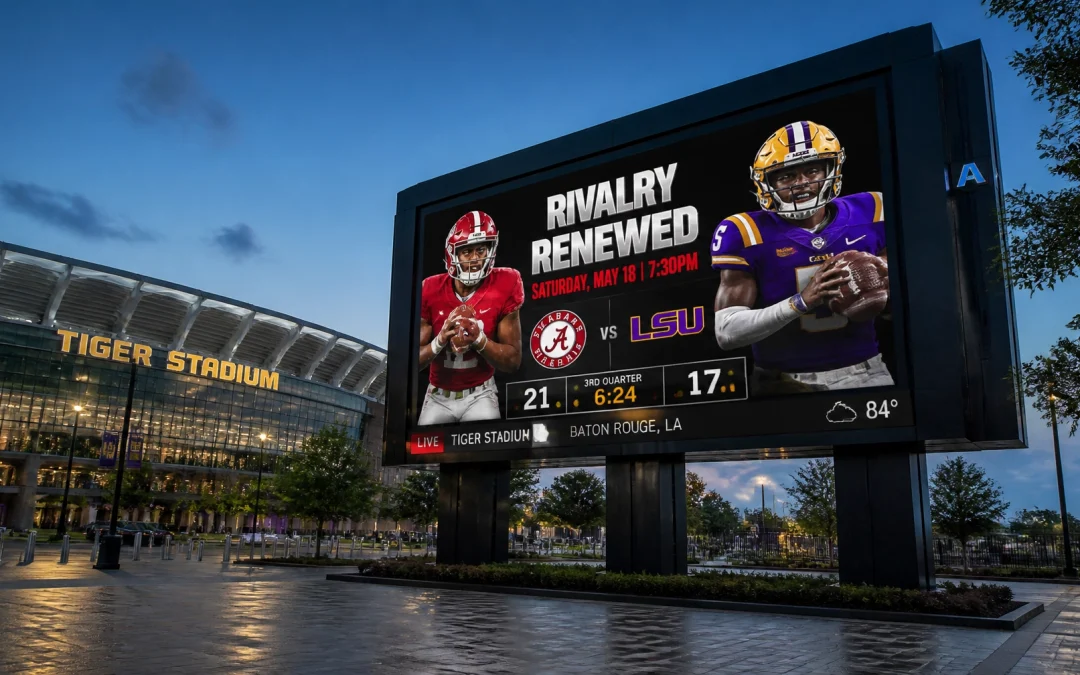
Static creative is increasingly viewed as insufficient in the fast-paced sports environment. DOOH infrastructure now supports creative content that updates in real-time based on external data feeds. This includes live scores, game clocks, weather conditions, and even trending social media hashtags. Dynamic creatives can change instantly to reflect a win or a loss, offering tailored promotions that resonate with the immediate emotional state of the fan base.
5. Seamless Omnichannel Integration
DOOH is most effective when integrated into a broader omnichannel campaign. Exposure to a large-scale digital screen in a public space is often followed by reinforcement on mobile devices. This allows for tactics such as retargeting exposed mobile IDs with ticket offers, app downloads, or betting opportunities. Integrating DOOH with social challenges and connected TV (CTV) creates a unified narrative that follows the fan across multiple screens.
6. Advanced Measurement and Attribution Standards
The industry has moved toward transparent measurement and attribution that rivals digital online channels. Sports campaigns are now measured by specific outcomes, such as footfall lift at retail locations, increases in stadium attendance, or spikes in app engagement. Brands can track the direct impact of their DOOH spend on local economic activity around venues. For instance, recent studies showed that 99 percent of fans who attended a game after seeing an OOH ad spent money at local businesses.
7. Interactive and Experiential Engagement
As fans seek more immersive experiences, interactive and experiential OOH is gaining momentum. This includes augmented reality (AR) activations, live social walls, and gamified screens in fan zones. These elements transition sponsorship from passive logo exposure to active fan participation. High-traffic areas near arenas are ideal for these interactive touchpoints, which significantly increase brand sentiment and dwell time.

8. AI-Driven Creative and Planning Optimization
Artificial intelligence is now a standard tool for both planning and creative execution in DOOH. AI algorithms analyze vast datasets, including traffic patterns, weather forecasts, and historical engagement, to identify the optimal time and placement for an ad. Additionally, generative AI allows for the rapid creation of player-specific or team-specific creative variations, ensuring that the content remains relevant to the local audience at scale.
9. Capturing the Local Sports Ecosystem
The impact of sports marketing extends far beyond the stadium walls. DOOH allows brands to target the entire local ecosystem, including gyms, retail centers, and transportation networks. By utilizing programmatic triggers, local advertisers can leverage the massive audiences drawn to major sporting events with highly localized and time-sensitive messaging. This approach is explored further in discussions regarding industry shifts every media planner should know.
10. Prioritizing Sustainability and Brand Safety
The latest generation of digital screens utilizes high-resolution LED technology that is both energy-efficient and highly visible. As sustainability becomes a corporate priority, choosing DOOH networks that demonstrate green practices is essential. Furthermore, DOOH provides a brand-safe environment, free from the risks of user-generated content often found on social media platforms. This ensures that premium sports brands maintain a high-quality image in high-traffic, regulated spaces.
Technology Partners and Strategic Execution
Successful DOOH campaigns require coordination between specialized technology partners and strategic planners. The use of supply-side platforms (SSPs) and demand-side platforms (DSPs) facilitates the programmatic buying process, while data providers offer the necessary insights for audience clustering. Execution involves setting specific triggers, such as "only display ad if the home team is leading in the fourth quarter," which ensures relevance and efficiency.
For brands looking to see these technologies in action, this overview video provides a visual demonstration of how digital networks are deployed around major sports venues. The integration of high-definition video and real-time data feeds represents the current gold standard in the industry.

Results and Measurable Impact
The effectiveness of these strategies is supported by significant data from recent campaigns. For example, a programmatic DOOH campaign for White Claw resulted in a 74 percent lift in purchase consideration during a product launch. This was achieved by targeting high-affinity audiences in proximity to retail locations and social hubs.
Similarly, AB InBev's campaign for Mike's Hard Iced Tea saw a 119 percent lift in positive brand image. By leveraging programmatic DOOH to reach fans during key social moments, the brand successfully improved sentiment and drove consumer action. These results demonstrate that when DOOH is used strategically, it delivers measurable growth in both brand health metrics and bottom-line sales.
Conclusion
The transition toward a more digital, data-informed, and programmatic sports advertising environment is complete. Brands that utilize these ten insights will find themselves better positioned to capture the attention and loyalty of modern sports fans. By focusing on the fan journey, utilizing real-time dynamic creatives, and prioritizing measurable outcomes, advertisers can ensure their messages resonate in the crowded sports marketplace.
For more information on how to implement these strategies within a specific network, planners are encouraged to review the latest case studies and technological updates available through the OOH Sports platform. The future of sports marketing is not just about being seen. It is about being seen at the right moment, by the right audience, with the right message.