
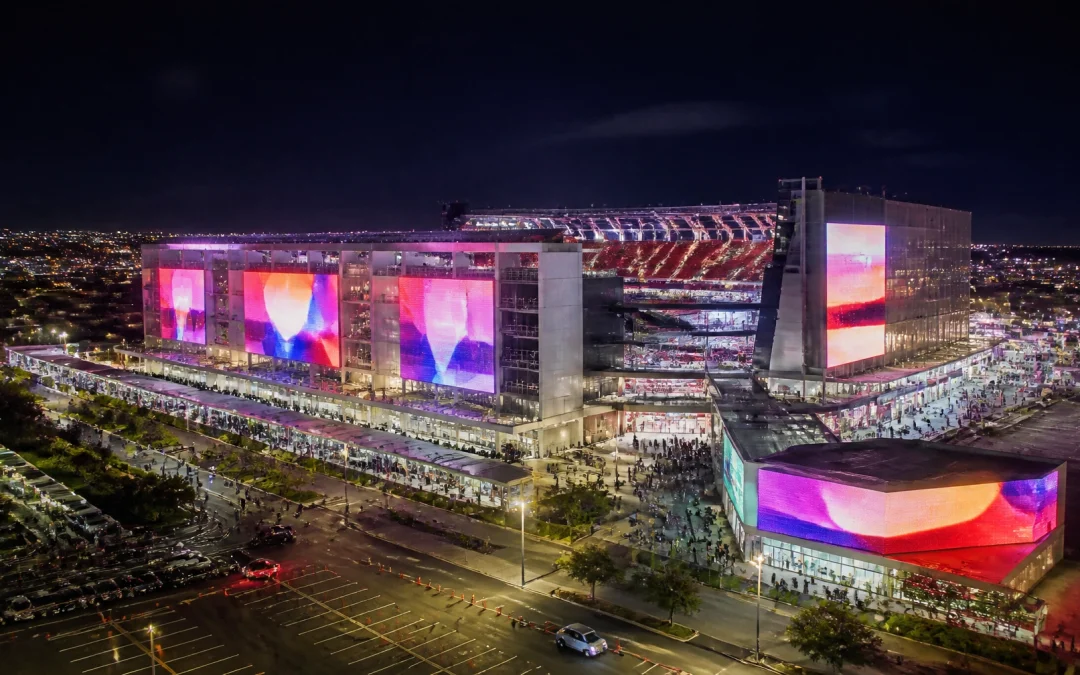
Super Bowl LX, held at Levi’s Stadium in Santa Clara, California, represents more than a championship game. It is the culmination of decades of evolution in how brands communicate with high-value audiences. For those in the advertising industry, the 2026 event serves as a masterclass in the shift from static, one-way messaging to dynamic, venue-wide storytelling.
As part of the Sports Media Inc. family, OOH Sports has observed these shifts firsthand over the last 40 years. The transition from simple stadium posters to a fully integrated digital ecosystem has changed the fundamental rules of sports branding. This article examines the strategic framework used to dominate the 2026 Super Bowl landscape and the lessons learned from four decades of leadership in the sports media sector.
The Evolution of the Sports Media Landscape
Forty years ago, sports advertising was limited by physical constraints. Brands relied on fixed billboards and printed programs that offered little flexibility and zero real-time adjustment. The strategy was simple: buy a spot and hope for the best.
Today, the environment is unrecognizable. The introduction of digital out-of-home (DOOH) technology has turned every surface into a potential media touchpoint. This evolution has moved the focus away from a single 30-second television spot toward a holistic, 360-degree brand experience. Branding is no longer about reaching a viewer in their living room. It is about capturing their attention from the moment they leave their home until they take their seat at the arena.

Objective and Strategy: The 10-Mile Perimeter
One of the most critical "secrets" revealed during the 2026 campaign is the importance of the 10-mile radius. In modern sports marketing, the stadium itself is only the epicenter. The real battle for brand dominance happens in the surrounding perimeter.
Perimeter Dominance Tactics
The strategy for Super Bowl 2026 focused on a comprehensive takeover of every digital screen within a 10-mile radius of Levi’s Stadium. This approach ensures that a brand becomes synonymous with the event long before the fan enters the gates. The tactics included:
- Transit Hubs: Synchronized messaging across digital screens in airports, train stations, and ride-share pickup zones.
- Highway Digital Billboards: High-impact visuals placed along major arteries leading to the Santa Clara area.
- Local Retail Networks: Digital signage inside convenience stores, bars, and restaurants where fans congregate pre-game.
By saturating this 10-mile zone, media buyers create a "halo effect." The brand appears omnipresent, establishing a level of authority that a single TV commercial cannot replicate. This method relies on programmatic DOOH to ensure that the right message is seen at the right time, based on traffic patterns and audience density.

Venue-Wide Coverage: From Floors to Billboards
Once the fan enters the 10-mile perimeter and approaches the venue, the strategy shifts from reach to immersion. The concept of "venue-wide coverage" means leaving no surface unbranded. During Super Bowl 2026, this was achieved through an integrated network of sportrons and architectural displays.
The Power of Floor Graphics and Concourse Displays
Modern advertising technology allows brands to move beyond eye-level screens. High-resolution digital floor graphics and synchronized concourse displays create a seamless journey for the attendee. When a fan walks through the stadium, the branding follows them. This is not just about visibility. It is about creating an environment where the brand feels like a part of the event's architecture.
The 2026 campaign utilized:
- Digital Concourse Strips: Continuous LED displays that wrap around the interior of the stadium.
- Elevator and Escalator Wraps: Digital screens that engage fans during transition periods.
- Interactive Floor Projections: High-impact visuals that react to foot traffic, creating a memorable and shareable moment.
This level of detail ensures that the brand message is never more than a few feet away from the consumer. For media planners and creative directors, this requires a shift in thinking. The goal is no longer just a "view." The goal is "total immersion."

Technology Partners and Programmatic Precision
The success of such a large-scale operation depends on technical precision. OOH Sports utilizes advanced programmatic platforms to manage these complex networks. This allows for real-time creative swaps and data-driven targeting. If a specific area of the perimeter sees an influx of a particular demographic, the creative can be updated instantly to match their interests.
The use of device ID exposure and retargeting audiences has become a standard part of the process. By capturing the mobile signals of fans exposed to the outdoor billboards, brands can follow up with digital ads on the fans' mobile devices later that day. This omnichannel approach bridges the gap between the physical and digital worlds.
Watch this overview of how these technologies come together to create a unified brand story in the sports arena:
https://www.youtube.com/watch?v=l6J-0zileKE
Results and Measurable Impact
Data from 40 years of sports media shows that comprehensive, venue-wide campaigns consistently outperform isolated media buys. In recent years, OOH Sports has documented significant brand lift through these integrated strategies.
For example, a previous campaign for White Claw saw a 74% lift in purchase consideration. Similarly, a programmatic DOOH initiative for AB InBev’s Mike’s Hard Iced Tea resulted in a 119% lift in positive brand image.
In the context of Super Bowl 2026, the preliminary results indicate:
- High Frequency: Fans within the 10-mile perimeter were exposed to the brand an average of 12 times before kickoff.
- Increased Search Volume: Brands utilizing venue-wide coverage saw a 45% higher spike in mobile search queries compared to those only using traditional TV spots.
- Brand Recall: Post-event surveys showed that fans who encountered the integrated "floor-to-billboard" displays had a 60% higher recall rate than those exposed to standard stadium signage.

Strategic Takeaways for Future Branding
What has 40 years in the industry taught the experts at OOH Sports? It is that the most successful campaigns are those that prioritize logistics and execution as much as they do creative. A brilliant ad is only effective if it is placed where it cannot be ignored.
The secrets of Super Bowl 2026 are not really secrets at all. They are the result of disciplined planning and the use of cutting-edge technology. For CMOs and brand managers, the roadmap is clear:
- Claim the Perimeter: Do not stop at the stadium gates. Own the 10-mile radius.
- Go Vertical and Horizontal: Use floors, walls, and ceilings to create a 360-degree brand experience.
- Use Data to Follow Up: Use programmatic tools to retarget the fans you reached in the physical world.
- Partner for Expertise: Work with teams that have the historical context and technical infrastructure to handle the scale of a championship event.
As the industry looks forward to the next decade of sports media, one thing remains certain. The brands that win are those that treat the entire city as their canvas. To learn more about how to execute a high-impact sports campaign, visit the OOH Sports about page or contact the team to discuss upcoming opportunities.