
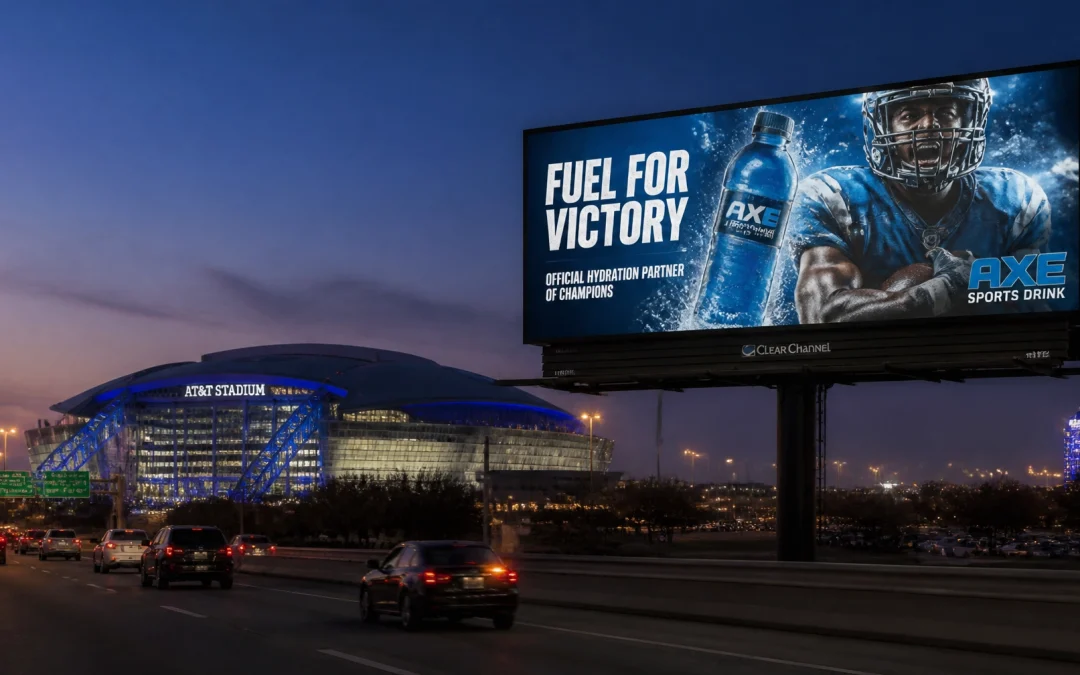
The landscape of sports marketing is undergoing a significant transformation as traditional boundaries between in-stadium and out-of-home advertising dissolve. Media buyers and brand managers now have access to a more integrated, scalable ecosystem designed to follow the fan journey with precision. The recent expansion of the OOH Sports network represents a pivotal development in this space, offering a comprehensive digital out-of-home (DOOH) infrastructure that extends far beyond the arena walls.
By moving beyond static placements and isolated buys, this expanded network allows brands to maintain a continuous presence in the lives of sports enthusiasts. The strategy centers on a multi-touchpoint approach, ensuring that messaging remains relevant from the moment a fan leaves their home until they return.
The 10-Mile Perimeter Strategy
The core of the network expansion is the strategic implementation of a 10-mile perimeter around major stadiums and arenas across North America. This radius is not arbitrary. It is engineered to capture the high-density movement patterns of fans as they commute, shop, dine, and celebrate.
While traditional stadium advertising captures the attention of those inside the venue, the 10-mile strategy addresses the broader ecosystem. This includes:
- Transit Hubs: Capturing fans at airports, train stations, and bus terminals during high-dwell-time periods.
- Hospitality and Social Spaces: Reaching audiences in sports bars, restaurants, and hotels where pre-game and post-game activities occur.
- Path-to-Purchase Locations: Influencing last-minute buying decisions at convenience stores, quick-service restaurants (QSRs), and retail centers.
- High-Traffic Roadways: Utilizing large-format digital billboards on highways and urban arteries leading directly to the venue.
This surround-sound presence ensures that a brand is not just a fleeting image on a scoreboard but a recurring element of the entire game-day experience.

Objective and Strategy: Unified National Scaling
One of the primary challenges for media planners has been the fragmentation of the DOOH market. Scaling a national sports-themed campaign often required managing dozens of local vendors and disparate reporting formats. The OOH Sports expansion addresses this by providing a unified, national network of over 25,000 digital screens.
The objective is to allow brands to execute hyper-local campaigns at a national scale. Whether a brand wants to target fans of a specific NFL team or execute a blanket campaign across all major league baseball markets, the infrastructure supports rapid deployment and centralized management. This streamlined approach reduces the administrative burden on creative directors and media buyers, allowing them to focus on strategic alignment and performance optimization.
For a deeper look at how programmatic adoption is driving this shift, the industry analysis on programmatic DOOH vs. traditional stadium ads provides a detailed comparison of ROI and delivery mechanics.
Technology Partners and Programmatic Integration
The expansion is built on a foundation of sophisticated technology. The network is fully integrated with leading programmatic DOOH (pDOOH) platforms, such as StackAdapt, which enables automated buying and real-time optimization.
Programmatic integration offers several tactical advantages:
- Flexible Flighting: Advertisers can activate or pause campaigns instantly based on performance or external triggers.
- Rule-Based Triggers: Campaigns can be set to run only when a specific team is playing at home, or ramp up significantly during the playoffs.
- Dynamic Content: Creative assets can update in real-time to reflect live scores, game countdowns, or even weather conditions near the stadium.
- Budget Control: CPM-based pricing, typically ranging from $5 to $30, allows for precise budget allocation across different markets and screen types.
A notable feature of this system is the automatic rainout protection. For outdoor venues, campaigns are automatically paused during weather-related cancellations, ensuring that ad spend is never wasted on empty streets or closed gates.

Data-Driven Targeting and Retargeting
Modern media buying demands accountability and data-backed insights. The OOH Sports network expansion leverages anonymized device IDs to bridge the gap between physical screen exposure and digital engagement.
When a fan’s mobile device is in proximity to an active OOH Sports screen, a digital footprint is established. This data allows brands to:
- Measure Attribution: Track if people exposed to the OOH advertisement later visited a website, downloaded an app, or made a purchase at a retail location.
- Execute Retargeting: Deliver follow-up advertisements to the same audience on their mobile devices or social media feeds. This creates a powerful cross-screen narrative that reinforces the initial OOH impression.
- Analyze Footfall: Quantify the increase in store visits within the 10-mile perimeter during and after the campaign flight.
Case studies have demonstrated the efficacy of this approach. For example, a campaign for White Claw utilized programmatic DOOH to achieve a 74 percent lift in purchase consideration, highlighting the power of reaching consumers in contextually relevant environments.
Creative Execution and Engagement
The expanded network supports a wide array of creative formats, from high-impact video on highway spectaculars to interactive eye-level panels in urban centers. In social environments like sports bars and gyms, the dwell time is significantly higher than traditional roadside OOH. This allows for more detailed messaging and stronger brand storytelling.

Inside the venues, the network integrates with Sportrons, a specialized platform of digital screens located in concourses, food courts, and high-traffic fan areas. This integration ensures that the brand message remains visible even when the fan has entered the stadium. The ability to coordinate messaging across the 10-mile perimeter and the Sportrons network creates a truly immersive experience that is difficult to ignore.
Performance Results and Measurement
Success in the expanded network is measured through standardized metrics that align with broader digital marketing goals. The use of third-party measurement partners ensures that the data is objective and verifiable. Key performance indicators typically include:
- Brand Lift: Measuring changes in awareness, favorability, and purchase intent through survey-based studies.
- Incremental Reach: Identifying how many unique viewers were reached outside of traditional TV or social media channels.
- Conversion Rate: Calculating the percentage of the exposed audience that took a desired action, such as redeeming a mobile offer or visiting a physical store.
Data shows that fans reached through this multi-touchpoint strategy are 60 percent more likely to take action compared to those exposed to a single, isolated advertisement. This reinforces the necessity of a holistic network approach for brands looking to scale effectively in the sports sector.
Logistics and Execution Processes
Launching a campaign on the expanded network follows a structured process designed for speed and precision.
- Targeting Definition: Media buyers select specific stadiums, markets, or demographics within the 10-mile radii.
- Platform Selection: Choosing between direct buys or programmatic execution via preferred DSPs.
- Creative Integration: Uploading dynamic assets that can respond to game-day data feeds.
- Real-Time Monitoring: Using a centralized dashboard to track impressions, spend, and engagement metrics as they happen.
The logistical framework is built to accommodate both long-term brand building and short-term tactical bursts around major sporting events. This flexibility is essential in an industry where schedules and momentum can shift rapidly.
Conclusion
The expansion of the OOH Sports network offers media buyers a scalable, data-rich platform to connect with fans throughout the entire sports experience. By combining a vast inventory of 25,000 screens with a strategic 10-mile perimeter and advanced programmatic technology, the network transforms traditional out-of-home advertising into a precise digital tool.
As brands seek more meaningful ways to engage with audiences in the physical world, the ability to scale campaigns across North America with a single, unified network becomes a competitive advantage. The integration of data, technology, and premium locations ensures that every impression contributes to a measurable and impactful brand story.
