
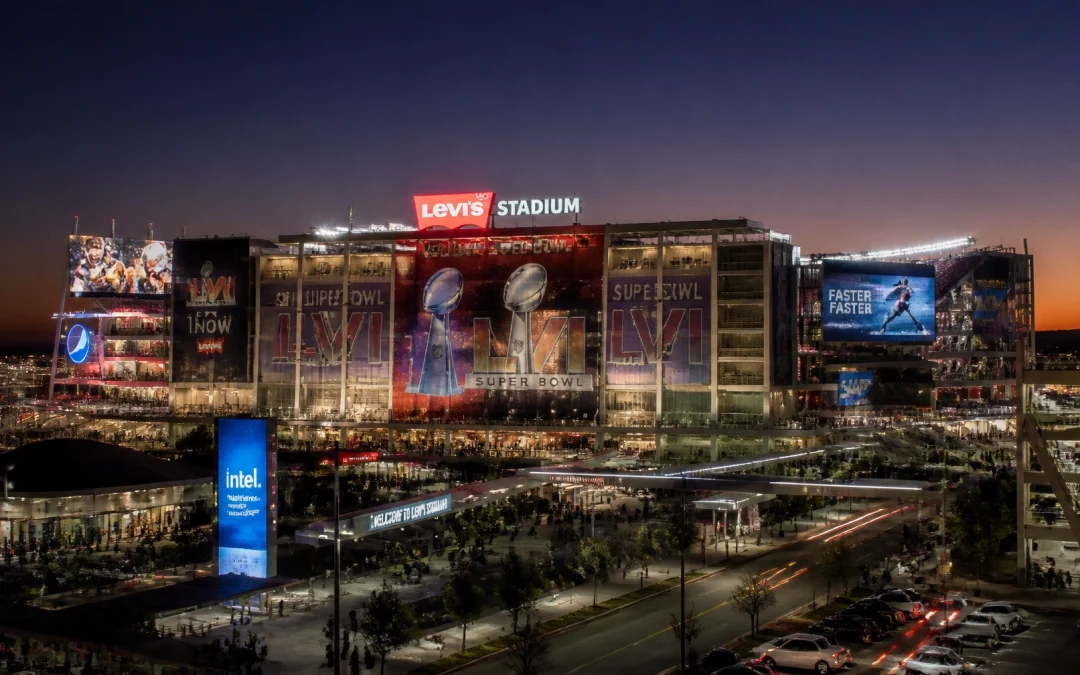
The Super Bowl remains the pinnacle of American advertising, and as the 2026 game approaches at Levi’s Stadium in Santa Clara, the stakes for brand visibility have never been higher. With 40 years of leadership in sports media, OOH Sports provides a blueprint for total venue dominance that extends far beyond a 30-second television spot. This guide explores how decades of expertise in out-of-home advertising have evolved into an integrated, venue-wide strategy that captures fan attention from the highway to the sidelines.
The Objective and Strategy: Dominating the Fan Journey
The primary goal for any major brand during Super Bowl week is to achieve "unavoidable visibility." While traditional broadcast ads offer massive reach, they are fleeting. The OOH Sports strategy focuses on the "physical spine" of the event, ensuring that a brand is the first thing fans see when they leave their homes and the last thing they remember as they exit the stadium.
The core of this strategy is the 10-mile perimeter. By controlling every digital video advertising board within a 10-mile radius of the venue, a campaign can follow the fan journey through every phase of the game-day experience. This includes roadside billboards, transit screens, and digital displays in retail environments. This geographic saturation ensures that the brand message is reinforced dozens of times before the kickoff even begins.
40 Years of Sports Media Evolution
Four decades of experience in the industry have seen the transition from static scoreboards to AI-powered digital ecosystems. In the 1980s, stadium advertising was largely fixed and unchangeable. Today, OOH Sports leverages dynamic creative that can respond in real-time to game events, weather changes, or social media trends. This legacy of innovation allows for a unique blend of nostalgia and cutting-edge technology. For Super Bowl 2026, many brands are looking backward to bridge generations, using historic stadium imagery paired with modern, high-definition digital delivery.

Floor Graphics: The Secret Weapon of Broadcast Visibility
One of the most effective yet frequently overlooked tools in the venue dominance toolkit is the floor graphic, often referred to as "cam carpets." These branded graphics are placed strategically on or around the playing surface. Because they sit directly in the line of sight for both stadium attendees and television cameras, they become a permanent part of the broadcast frame.
Unlike rotating LED ribbon boards, cam carpets provide a steady, persistent presence during live play and replays. For a high-stakes event like the Super Bowl, these graphics ensure that a brand logo is captured in every iconic highlight reel. When integrated into the broader 10-mile perimeter strategy, floor graphics serve as the "anchor" of the campaign, grounding the digital noise in the physical reality of the game itself.

Strategy: The 10-Mile Perimeter Execution
Executing a 10-mile perimeter strategy requires precise logistics and deep inventory access. The process begins months in advance by mapping out the most high-traffic routes leading to Levi's Stadium.
- Phase One: Pre-Game Priming. Two to three weeks before the game, digital billboards on major California highways begin seeding the campaign. This phase builds the narrative and establishes the visual language of the brand.
- Phase Two: Near-Venue Saturation. As fans enter Santa Clara, the density of placements increases. Screens in bars, restaurants, and transit hubs are synchronized to show a cohesive message.
- Phase Three: In-Venue Dominance. Once inside the stadium, the campaign shifts to LED perimeter boards, video walls, and the previously mentioned floor graphics.
- Phase Four: Post-Game Retention. As fans leave the stadium, messaging transitions to celebratory or consolatory content. This keeps the conversation going and can drive immediate digital actions, such as app downloads or retail redemptions.

Technology Partners and Programmatic DOOH
The success of a modern sports marketing campaign relies heavily on advanced technology partners. Programmatic Digital Out-of-Home (DOOH) has revolutionized how brands buy stadium-adjacent media. By using platforms like StackAdapt, advertisers can target specific audience segments with surgical precision.
The use of device ID exposure data allows brands to retarget fans who were physically present within the 10-mile perimeter. If a fan saw a billboard on their way to the game and a floor graphic during the second quarter, they can be reached with a tailored mobile advertisement the next day. This omnichannel approach ensures that the high-impact physical impressions from the Super Bowl are converted into measurable digital engagement.
For more information on how programmatic DOOH is driving results, visit the OOH Sports blog.
Case Study: Visualizing the Impact
To understand the power of venue-wide branding, one only needs to look at the success of previous large-scale sports campaigns. For instance, when brands synchronize their in-stadium assets with external digital boards, brand lift metrics typically see a significant increase.
- Brand Awareness: Campaigns using a 10-mile perimeter approach often report a substantial lift in top-of-mind awareness compared to those using isolated placements.
- Purchase Consideration: By following the fan journey, brands can increase purchase consideration by providing multiple touchpoints throughout a high-emotion event.
- Media Value: The combined value of broadcast-visible floor graphics and high-frequency DOOH often provides a more favorable ROI than the multi-million dollar cost of a single television commercial.
Results and Projections for 2026
For Super Bowl 2026, the expectations are centered on data-driven results. Preliminary analysis of the Santa Clara market suggests that a comprehensive OOH strategy will reach millions of unique visitors during game week.
- Estimated Reach: Over 500,000 fans are expected to travel through the 10-mile perimeter in the days leading up to the game.
- Frequency of Exposure: An integrated campaign is projected to deliver an average of 12-15 exposures per fan before they even take their seats.
- Television Impressions: Floor graphics are estimated to generate hundreds of millions of "background" impressions globally during the live broadcast and subsequent social media clips.
By leveraging 40 years of experience, OOH Sports ensures that brands don't just participate in the Super Bowl: they dominate it. From the floor to the sky, the strategy is built for total visibility.
Watch this video to see how these strategies come to life in the stadium:
https://www.youtube.com/watch?v=l6J-0zileKE
Conclusion
The Super Bowl is more than a game; it is a cultural phenomenon that demands a sophisticated advertising approach. The combination of a 10-mile digital perimeter, strategic floor graphics, and four decades of industry expertise creates an unbeatable formula for brand dominance. As the 2026 game approaches, those who master the physical environment of the stadium will be the ones who win the battle for consumer attention.
For those ready to plan their 2026 strategy, more details on available inventory and stadium assets can be found at OOH Sports.