
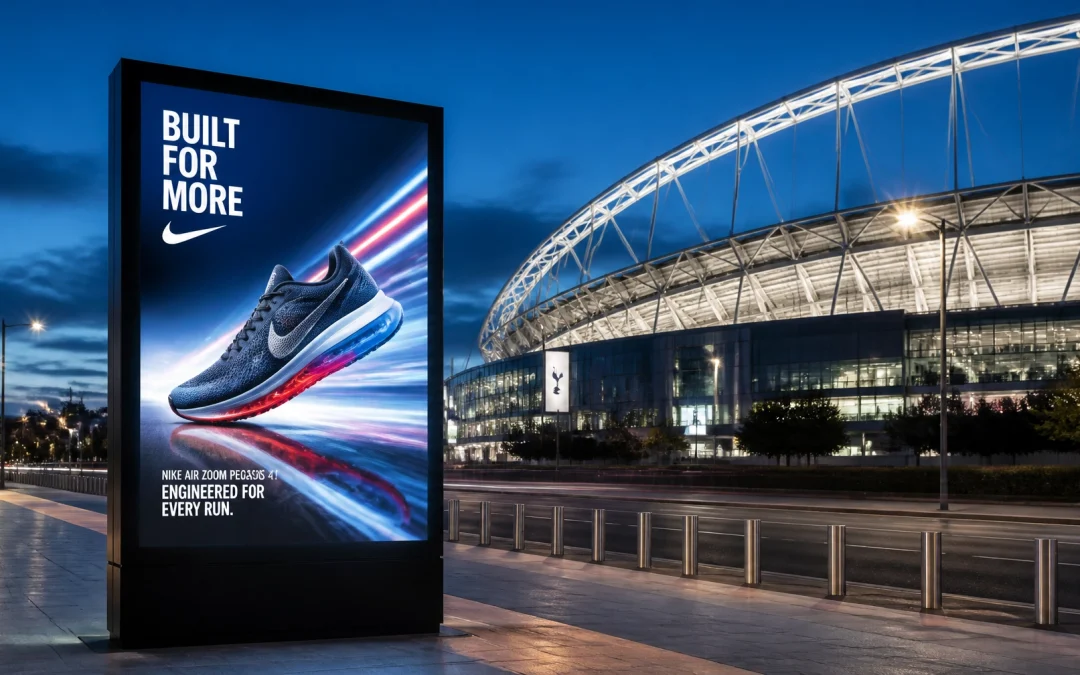
Traditional stadium advertising has long been a staple for brand managers looking to capture the attention of passionate fans. However, the reliance on static banners and one-day event cycles often leaves significant ROI on the table. As the media landscape shifts toward data-driven decision-making, many organizations find that their conventional sports marketing tactics are failing to deliver measurable business outcomes.
Digital Out of Home (DOOH) innovation provides a technical and strategic framework to address these shortcomings. By shifting from a static, event-based model to a dynamic, audience-centric approach, brands can maintain a presence that extends far beyond the stadium walls. This analysis outlines ten primary reasons why traditional stadium strategies underperform and how OOH Sports and programmatic DOOH technology resolve these issues.
Strategy: Moving Beyond the "Game Day Only" Model
The most common failure in sports-related advertising is the episodic nature of the campaign. When a brand only appears on a ribbon board for three hours on a Saturday, the window for consumer engagement is incredibly narrow.
1. Episodic vs. Always-On Exposure
Traditional stadium ads are restricted to game days. If a brand only engages fans during the match, it misses the opportunity to build long-term memory. DOOH innovation allows for an "always-on" strategy. Through the OOH Sports network, brands can reach fans in the three-mile radius surrounding the stadium throughout the entire week. This includes high-traffic locations like gyms, casual dining restaurants, and transit hubs.
2. Lack of Contextual Relevance
Static signs cannot change based on real-time events. If a game is delayed by rain or a team clinches a major victory, a static banner remains frozen. DOOH supports dynamic creative that responds to live data. Advertisers can automatically update messaging to reflect the current score, weather conditions, or post-game celebrations, ensuring the brand remains relevant to the fan’s immediate experience.
3. High Clutter and Visual Fatigue
Modern arenas are saturated with logos. When every surface is covered in branding, the human brain begins to filter out the noise. Programmatic DOOH avoids this clutter by placing ads on high-impact digital screens where the brand has a higher share of voice. Using screens in urban panels and transportation hubs allows a message to stand out without competing with fifty other sponsors simultaneously.
4. Poor Geographic Precision
Standard billboards or stadium signs are fixed. They reach whoever happens to be in that specific seat. DOOH utilizes geo-fencing and mobile data to target specific neighborhoods or transit corridors that fans travel through on their way to the game. This precision ensures that the media spend is concentrated where the target audience is most active.
5. Static Creative Limitations
A vinyl banner cannot tell a story. In contrast, digital screens support video and motion, which are proven to capture attention more effectively than static images. Brands can use video assets to demonstrate product features or share high-energy sports footage that resonates with the audience's mood.

Objective & Strategy: Targeting the Fan Journey
A successful marketing strategy must account for the entire fan journey, from the morning commute to the post-game celebration. Relying solely on in-stadium assets ignores 90% of the fan's day.
6. Disconnection from Point of Purchase
Stadium ads are often located miles away from where a consumer actually makes a purchase. By integrating hyperlocal sports DOOH campaigns, brands can place messages in Quick Service Restaurants (QSRs) or retail environments near the arena. This places the "buy" trigger exactly where the transaction can occur.
7. Inability to A/B Test
Traditional out of home advertising is "one and done." Once the sign is printed and hung, it stays there for the duration of the contract. Digital innovation allows for real-time optimization. If one creative execution is underperforming, it can be swapped out within hours via a Demand Side Platform (DSP), allowing for a level of agility previously reserved for digital web advertising.
8. Rigid Commitment Structures
Many stadium sponsorships require multi-year contracts with high upfront costs. Programmatic DOOH offers a more flexible alternative. Media buyers can purchase inventory on a CPM (cost per mille) basis, allowing for smaller tests or seasonal bursts that align with specific marketing objectives without the burden of long-term, inflexible commitments.
9. Siloed Media Channels
Stadium advertising often lives in a vacuum, disconnected from a brand's social or mobile strategy. Innovation in the DOOH space allows for omnichannel synchronization. Using device IDs exposed to a digital billboard, brands can retarget those same fans on their mobile devices or social media feeds, creating a cohesive, multi-touch experience.
10. Lack of Quantifiable Attribution
Perhaps the biggest reason traditional stadium strategies fail is the inability to measure results. If 50,000 people see a sign, there is no way to know how many actually visited a store or bought a product. DOOH fixes this through attribution studies. By tracking foot traffic lift and website visits from exposed audiences, brand managers can finally prove the ROI of their sports marketing spend.

Technology Partners: Building the Integrated Network
The success of a modern sports marketing campaign depends on the technology stack used to execute it. OOH Sports provides access to a specialized ecosystem designed to bridge the gap between outdoor environments and digital precision.
One key component is the Sportrons network, which features digital screens located directly inside over 700 stadiums and arenas nationwide. These screens are placed in high-dwell areas such as concourses and food courts, ensuring that the brand remains visible even when fans leave their seats.
To manage these complex buys, many media planners utilize advanced DSPs. Collaborating with partners like StackAdapt allows for the seamless integration of DOOH into a broader programmatic strategy. This technology enables automated bidding on inventory near stadiums, ensuring that ads only run when and where they are most likely to be effective.
Furthermore, the OOH Sports platform includes a "Rainout Protection" feature. For outdoor venues, campaigns can be automatically paused during weather delays or rainouts. This technical safeguard ensures that advertising budgets are not wasted on empty venues, a level of efficiency that traditional static signage cannot offer.
Results: Data-Driven Success Metrics
The shift toward DOOH is not just a trend; it is backed by significant performance data. Unlike traditional signage, digital campaigns provide granular logs of every impression delivered.
Case studies across various industries highlight the impact of this approach:
- Brand Preference Rating: Campaigns utilizing targeted DOOH near sports venues have seen significant lifts in positive brand image. For example, beverage brands have reported up to a 119% lift in brand perception by aligning their messaging with the high-energy environment of a game day.
- Purchase Consideration: Integration of programmatic DOOH has driven up to a 74% increase in purchase consideration for new product launches. By reaching fans at multiple touchpoints: bars, gyms, and transit: brands can move consumers through the funnel more effectively than a single stadium placement.
- Actionable Attribution: In several documented campaigns, brands have achieved over 140% increases in purchase consideration by combining DOOH with mobile retargeting. This demonstrates that the synergy between physical screens and digital devices is the most potent way to influence fan behavior.
By focusing on measurable metrics such as store visit lift and conversion rates, media buyers can move away from "visibility for visibility's sake" and toward a model that prioritizes bottom-line growth.

Conclusion
Stadium advertising is evolving. The traditional model of static, event-only placements is being replaced by a more sophisticated, data-driven approach that values flexibility, measurement, and contextual relevance. By addressing the ten failure points of conventional strategies, DOOH innovation allows brands to engage fans more deeply and efficiently.
Through the OOH Sports network and Sportrons infrastructure, media buyers and brand managers can now reach their target audience throughout the entire game-day journey and beyond. This integrated strategy ensures that every impression is accounted for and every dollar of the marketing budget is optimized for maximum impact.
To learn more about how to modernize your sports marketing strategy, explore our recent case studies or contact our team to discuss your next campaign.
#Motivation #Branding #Strategy #Marketing #AdvertisingAndMarketing #digitalmarketing #Innovation #Sports
Dan Kost, CEO
www.oohsports.com
AI Receptionist: +1 (970) 578-4652