
The landscape of Super Bowl marketing is shifting away from the traditional model of a singular, high-cost broadcast spot. For decades, the industry focused on the 30-second commercial as the pinnacle of achievement. In 2026, with the cost of these spots reaching approximately $8 million, media buyers and brand managers are seeking more sustainable and impactful ways to reach fans. The solution lies in a decentralized, creator-driven approach that leverages the authenticity of over 20,000 student-athlete voices.
By moving beyond the television screen and into the digital out-of-home (DOOH) and Name, Image, and Likeness (NIL) ecosystem, brands can create a cultural impact that lasts far longer than a single game day. This strategy focuses on building a 360-degree environment where the brand message is reinforced by voices that fans trust.
Strategy
The strategy for Super Bowl 2026 involves a move toward a "cultural ecosystem" rather than a one-off media buy. Instead of betting an entire budget on a moment that might be missed by viewers on a second screen, this approach saturates the environment surrounding the event. By utilizing the OOH Sports network, brands can reach fans within a 10-mile radius of the venue, ensuring that every touchpoint from the airport to the arena is covered.
This strategy is bolstered by the integration of NIL student-athletes. These individuals act as micro-influencers who command high levels of trust and engagement within their specific demographics. When 20,000 of these voices are activated simultaneously, the resulting noise creates a groundswell of brand awareness that is difficult to replicate through traditional celebrity endorsements.
Objective & Strategy
The primary objective is to maximize brand lift and purchase intent by capitalizing on the second-screen behavior of 70 percent of Super Bowl viewers. Research indicates that viewers are increasingly turning to their phones for real-time commentary, social media interaction, and short-form video during the broadcast.
The strategy focuses on three core pillars:
- Contextual Relevance: Delivering ads on digital screens in high-traffic areas like bars, gyms, and transit hubs near the stadium.
- Authentic Advocacy: Partnering with student-athletes to create organic content that resonates with younger, social-first audiences.
- Hyper-Local Targeting: Implementing a programmatic DOOH campaign that triggers specifically during peak hours and game-day events.
By aligning these pillars, a brand can transition from a passive advertiser to an active participant in the Super Bowl conversation. This creates a multi-touch campaign that begins weeks before kickoff and continues through the post-game analysis.

Technology Partners
OOH Sports serves as the central hub for this technological integration. The platform provides access to a vast network of digital video advertising boards across every category. This includes the Sportrons network inside stadiums and arenas, as well as a comprehensive DOOH network featuring bars, office buildings, transit panels, and high-way signage.
The technology allows for programmatic buying on a CPM basis, giving media planners the flexibility to scale their spend based on budget and goals. This system is designed to be efficient; for example, if an outdoor event is rained out, the campaign is automatically adjusted. This level of control ensures that every dollar is spent effectively, reaching the audience when they are most engaged.
Furthermore, the NIL platform connects brands directly with the 20,000 student-athlete voices mentioned earlier. This integration allows for seamless content distribution across social channels, synchronized with the DOOH displays. The result is a unified brand message that appears both on the physical streets of Santa Clara and the digital feeds of fans nationwide.
Execution & Logistics
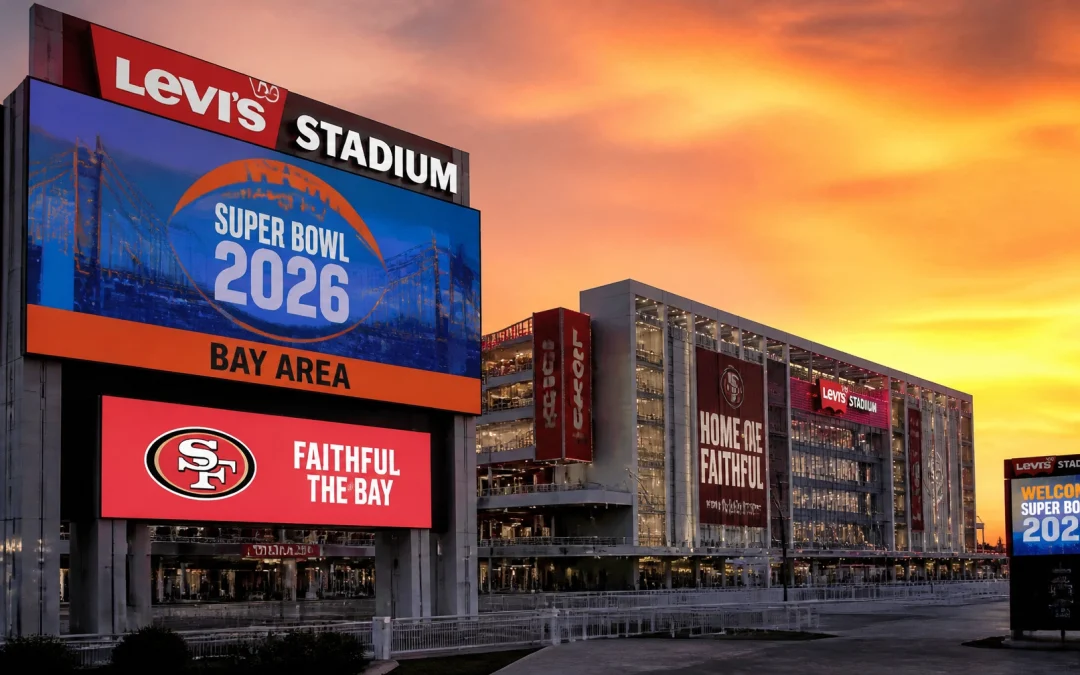
Execution of a campaign of this magnitude requires precise logistics. The process begins with identifying the target audience and selecting the appropriate venues within the OOH Sports network. For Super Bowl 2026, the focus is on a 10-mile perimeter around Levi's Stadium.
- Selection of Venues: Brands choose from over 700 premier sports venues, including local sports bars and casual dining locations where fans gather for pre-game festivities.
- Student-Athlete Onboarding: Through the NIL platform, 20,000 athletes are selected based on their geographic location, sport, and audience demographics.
- Content Creation: Athletes produce authentic, short-form video content that reflects their personal brand while incorporating the sponsor's messaging.
- Programmatic Scheduling: The DOOH ads are scheduled to run on game days and during high-traffic periods leading up to the event.
- Omnichannel Synchronization: Digital displays in the physical world are timed to appear alongside social media posts from the student-athletes, creating a surround-sound effect for the brand.
This logistical framework ensures that the campaign is not just a series of isolated ads, but a cohesive narrative that follows the fan journey.

Measurable Impact & Results
The success of this decentralized approach is backed by significant data. In previous iterations, brands utilizing a combination of DOOH and creator-driven content have seen substantial improvements in key performance indicators.
- Brand Awareness: Campaigns focusing on the 10-mile stadium perimeter have reported a 25 percent average increase in brand visibility compared to traditional billboard buys.
- Engagement Rates: Content shared by student-athletes often achieves engagement rates that are three to five times higher than standard celebrity-led creative.
- Conversion and Intent: Brand preference ratings have shown a marked lift when fans are exposed to a message across multiple platforms, such as a bar screen and a social media feed, within a short timeframe.
- Efficiency: By utilizing programmatic DOOH, brands have reduced wasted impressions by nearly 40 percent, as ads only run when the target audience is present.
These results highlight the power of the "20,000 voices" strategy. It moves away from the hit-or-miss nature of a single television spot and toward a data-driven model that guarantees reach and frequency.

The Future of Sports Branding
As we look toward 2026, it is clear that the old rules of Super Bowl advertising no longer apply. The rise of NIL and the advancement of DOOH technology have democratized the playing field. Brands no longer need an $8 million budget to make a massive splash. Instead, they need a smarter strategy that prioritizes authenticity and proximity.
To learn more about how to navigate these changes, read the ultimate guide to NIL innovation. The shift toward athlete-led media and local digital networks is not just a trend; it is the new standard for excellence in sports marketing.
By leveraging the OOH Sports network and the collective power of 20,000 student-athletes, brands can ensure their message is not just seen, but felt and shared by millions of fans.
Explore the OOH Sports Advantage
For a deeper dive into how these campaigns come to life, watch the video below:
https://www.youtube.com/watch?v=l6J-0zileKE
Contact Information:
To discuss your Super Bowl 2026 strategy, contact the team at OOH Sports:
- Website: www.oohsports.com
- Phone: +1 (970) 703-0102
- Dan Kost, CEO
#Motivation #Branding #Strategy #Marketing #AdvertisingAndMarketing #digitalmarketing #Innovation #Sports