
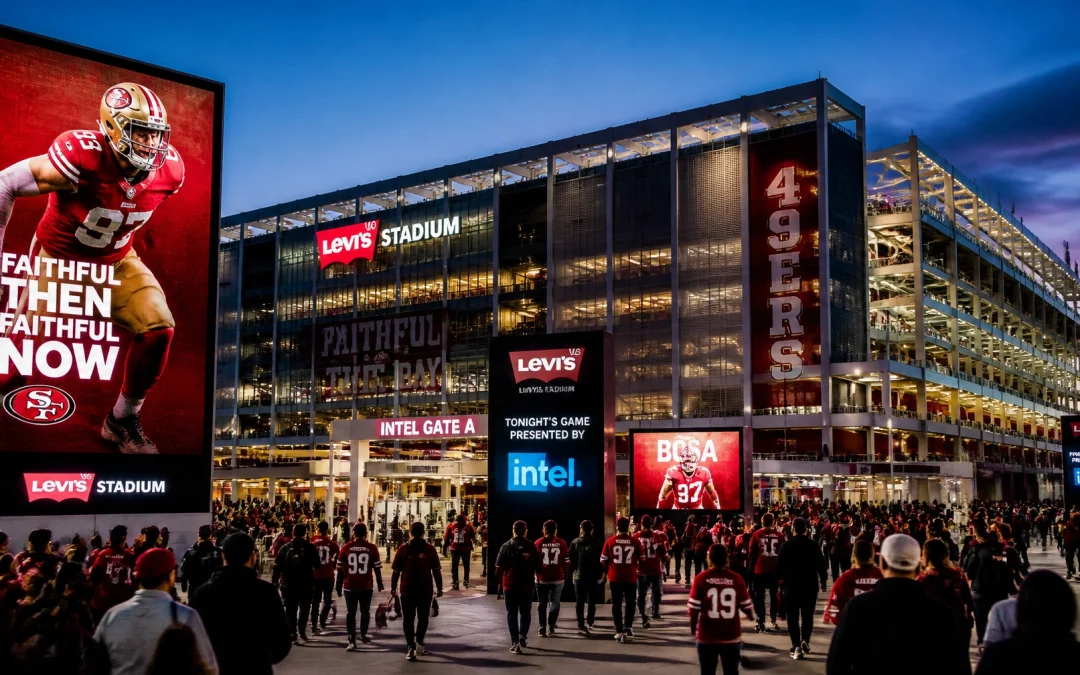
The landscape of sports marketing is undergoing a significant transformation as the industry prepares for Super Bowl 2026 at Levi’s Stadium in Santa Clara. With over 40 years of leadership in the sports media sector, the evolution from static signage to dynamic Digital Out of Home (DOOH) networks has redefined how brands engage with fans. Selecting the optimal placement for digital assets requires a data-driven approach, comparing the high-intensity engagement of stadium gates with the broad reach of transit hubs.
Strategy: Venue-Wide Coverage for Super Bowl 2026
The strategy for a major sporting event like Super Bowl LX involves more than just a single billboard or a 30-second television spot. Successful campaigns leverage a venue-wide approach that starts miles away from the stadium and follows the fan journey to the very seat. This comprehensive coverage includes everything from large-format digital billboards and transit displays to intricate floor graphics and concourse screens.
OOH Sports provides access to a sophisticated network of digital video advertising boards in every category, spanning a 10-mile radius around major sports venues. This perimeter strategy ensures that the brand message is reinforced multiple times before the fan even reaches the ticket turnstile. For the 2026 event in the Bay Area, this involves coordinating assets across Santa Clara, San Jose, and San Francisco.
Objective and Strategy: Stadium Gates for High-Impact Activation
Stadium gates represent the "last mile" of the fan journey. At this stage, the audience is highly concentrated, emotionally charged, and focused on the immediate event.
Tactics at the Gates
- High-Traffic Digital Screens: Positioning screens directly at entry points ensures 100% visibility as fans wait for security checks and ticket scanning.
- Unblockable Floor Graphics: Digital and static floor graphics in high-traffic concourse areas are impossible to ignore, cutting through the visual clutter of traditional eye-level signage.
- Contextual Messaging: Gate placements allow for creative that reacts to the immediate atmosphere, such as countdowns to kickoff or team-specific welcomes.
Performance and Results
The effectiveness of gate-area DOOH is often measured by immediate digital actions. Campaigns focused on this "last mile" show a strong correlation with higher rates of app downloads, social media follows, and on-site promotion redemptions. Because fans are in a state of high intent, they are more likely to scan a QR code or respond to a call to action than they are while commuting.

Objective and Strategy: Transit Hubs for Reach and Frequency
While gates offer intensity, transit hubs offer scale. For Super Bowl 2026, the movement of fans across the Bay Area will rely heavily on regional transit systems including Caltrain, BART, and the VTA Orange Line.
Tactics at Transit Hubs
- Route Domination: Placing digital ads along the primary corridors from San Francisco International Airport (SFO) to Santa Clara allows a brand to "own" the fan's travel path.
- Extended Dwell Time: Unlike the quick transition through a stadium gate, fans often spend 10 to 20 minutes in transit hubs, providing a significantly longer exposure window for detailed video content.
- Broader Demographics: Transit hubs reach a mix of ticketed fans, local residents, and hospitality guests who may not be attending the game but are still influenced by the Super Bowl atmosphere.
Performance and Results
Transit and perimeter DOOH are primary drivers for brand awareness and recall. Research indicates that integrating these placements with national television spots can raise brand recall by 30 percent to 40 percent compared to isolated TV campaigns. The repeated exposure over several days builds a narrative that gate-only advertising cannot achieve.

Comparison: Gates vs. Transit Hubs
The choice between these two environments depends on the specific goals of the media plan. The following table highlights the strategic differences:
| Metric | Stadium Gates & Concourses | Transit Hubs & Perimeter |
|---|---|---|
| Primary Goal | Immediate Activation / Conversion | Reach and Brand Frequency |
| Audience State | High Intensity / Focused | Passive / Commuting |
| Exposure Time | Short and Repeatable | Long Dwell Times |
| Creative Focus | Simple Call to Action | Narrative and Brand Story |
| Success Metric | App Installs / Social Engagement | Brand Lift / Total Impressions |
Venue-Wide Coverage: From Floors to Billboards
One of the most innovative aspects of modern sports marketing is the use of high-impact floor graphics. Often overlooked in traditional media planning, these assets provide a unique touchpoint within the stadium concourse. When combined with traditional digital billboards, they create a 360-degree brand environment.
The 40 years of advertising leadership behind OOH Sports have demonstrated that the most successful campaigns do not choose one placement over the other. Instead, they utilize a layered approach. A fan might see a brand on a digital board at the airport, encounter it again on a Caltrain platform, see a countdown on a stadium gate screen, and finally walk over a vibrant floor graphic in the concourse. This repetition etches the brand into the fan's experience.

Technology Partners and Measurement
Modern DOOH is no longer a "post and pray" medium. Through partnerships with advanced technology platforms, OOH Sports provides detailed attribution and measurement for every campaign.
Methodology for Measurement
- Exposed Device IDs: Tracking the mobile device IDs of fans who pass within the vicinity of a DOOH screen.
- Retargeting Audiences: Using those IDs to serve follow-up digital ads on social media or mobile apps, closing the loop between physical exposure and digital conversion.
- Brand Lift Studies: Conducting post-event surveys to measure the increase in brand preference and awareness among those exposed to the venue-wide network.
The ability to treat out of home advertising as a measurable digital channel allows media buyers and CMOs to justify the investment in high-profile events like the Super Bowl.
40 Years of Sports Media Excellence
OOH Sports is part of the Sports Media Inc. family, a veteran-owned agency with a four-decade history in the industry. This legacy provides a unique advantage in navigating the complexities of stadium rights, municipal advertising regulations, and fan behavior patterns. Since the early days of basic stadium signage, the company has stayed at the forefront of innovation, transitioning into a leader in programmatic DOOH and smart venue technology.
As the industry looks toward 2026, the focus remains on storytelling that matches the passion of the sports themselves. The expertise gained over 40 years ensures that every placement, whether it is a gate screen or a transit board, is optimized for maximum impact.
For a deeper look into the history and capabilities of the network, view the following overview:
https://www.youtube.com/watch?v=l6J-0zileKE
Execution and Logistics for Super Bowl 2026
Planning for the 2026 event requires a long lead time. The logistical process involves several critical steps to ensure a seamless execution:
- Venue Mapping: Identifying every digital touchpoint within a 10-mile radius of Levi’s Stadium.
- Creative Optimization: Adapting brand assets for different screen formats, from vertical transit boards to wide-format scoreboard displays.
- Network Syncing: Ensuring that messaging is consistent across all programmatic and direct-buy channels.
- Attribution Setup: Finalizing the tracking parameters with technology partners to ensure every impression is accounted for in the final report.
Summary: Making the Right Choice
The decision between stadium gates and transit hubs is not binary. For brands seeking to maximize their presence at Super Bowl 2026, the most effective strategy is an integrated one. Use transit hubs to build the narrative and achieve broad frequency across the Bay Area. Use stadium gates and concourse floor graphics to drive immediate fan engagement and digital actions at the point of peak emotion.
By leveraging the venue-wide coverage and 40 years of industry leadership provided by OOH Sports, brands can ensure their message is not just seen but remembered long after the final whistle.
Explore more about our services and previous successes at OOH Sports. For specific details on our technology and venue options, visit the Sportrons page or check our About section for company history.