
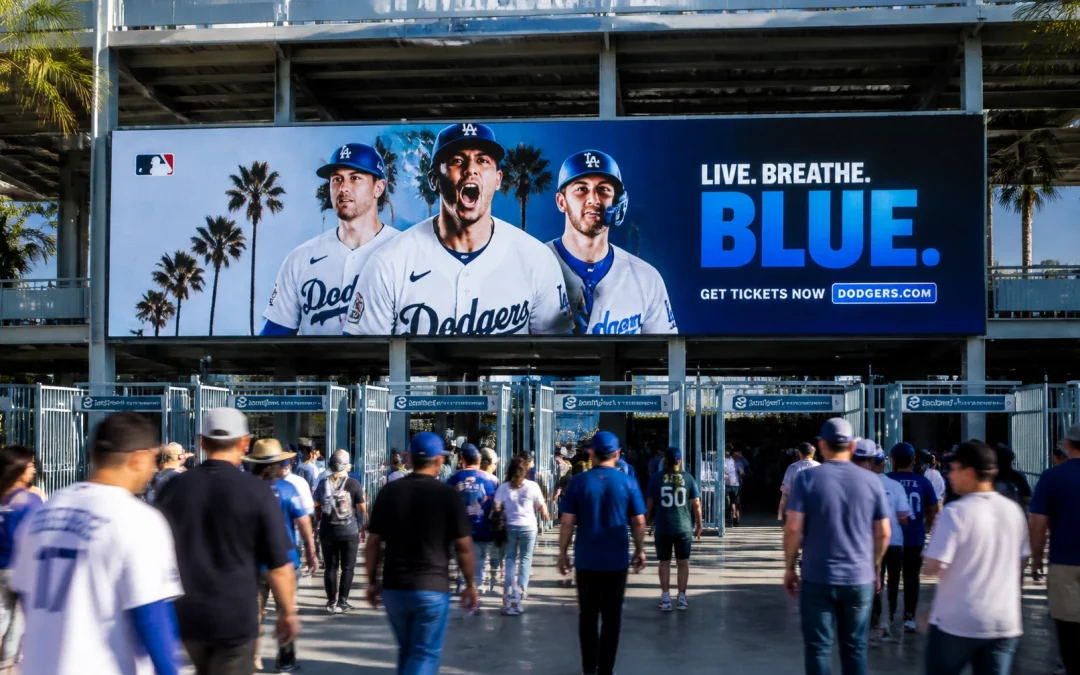
Digital Out of Home (DOOH) advertising has transformed from static billboards into a dynamic, data-driven ecosystem. For media buyers and brand managers, the challenge is no longer just finding a screen, but finding the right screen at the right moment. Two of the most high-traffic environments for DOOH are stadium gates and transit hubs. While both offer massive reach, they serve different strategic purposes.
Choosing between a stadium gate and a transit hub depends on the specific objectives of the campaign. Whether the goal is high-intensity brand association or consistent, repetitive frequency, understanding the nuances of these placements is essential for a successful sports marketing strategy.
Objective & Strategy
The primary objective of any DOOH campaign is to intersect with the consumer during their daily journey or during high-emotion experiences. Stadium gates and transit hubs represent two distinct types of intersections.
- Stadium Gates: These placements focus on a specific, high-intent audience. The strategy here is often built around the "Big Game" atmosphere, leveraging the emotional state of fans to drive immediate action or long-term brand affinity.
- Transit Hubs: These placements prioritize reach and frequency. The strategy revolves around catching commuters in a functional mindset where they are exposed to the brand multiple times per week.
A well-rounded media plan might use both, but a limited budget requires a calculated choice based on the desired outcomes.
Stadium Gates: The Passion Play
Stadium gates serve as the threshold between the ordinary world and the high-energy environment of a sporting event. When fans pass through these gates, they are in a state of heightened awareness. This environment is ideal for brands looking to capitalize on "The Sportron Effect," where digital video advertising boards capture the excitement of the crowd.
High-Intent Audience
The audience at a stadium gate is there for a reason. They have invested time and money to attend an event. This demographic is often more willing to spend on concessions, merchandise, or related services like sports betting. Because the audience is self-selected, brands can target specific fan bases with high precision.
Dwell Time and Queuing
Dwell time at stadium gates is unique. Unlike a roadside billboard that a driver passes in seconds, fans often spend minutes in line at the gates. This "wait time" is a prime opportunity for engagement.
- Fans often check their phones while waiting, allowing for omnichannel strategies.
- Large-format digital screens provide entertainment and information, such as game-day updates, which keeps eyes on the display.
- High engagement rates are frequently recorded through QR code scans and app downloads initiated during the entry process.

Transit Hubs: The Frequency Machine
Transit hubs, including subway stations, airports, and bus terminals, are the workhorses of the DOOH world. They offer a level of consistency that is hard to match in other environments.
Scale and Reliability
The volume of traffic in a major city transit hub is staggering. For a brand manager looking for raw impressions, transit hubs are often the first choice. The audience is a diverse mix of professionals, students, and travelers.
- Reach: Exposure to thousands of unique individuals per hour.
- Frequency: Commuters see the same ads twice a day, five days a week, building deep brand familiarity.
- Geographic Targeting: Brands can target specific neighborhoods by choosing stations in those areas.
Functional Mindset
Unlike the emotional state of a sports fan, a commuter is in a functional mindset. They are focused on their journey. DOOH in these areas works best when it provides a helpful distraction or a relevant solution to a daily problem. For example, a food delivery service or a banking app performs exceptionally well in a transit environment where the user is already thinking about their schedule.
Strategic Comparison: Head-to-Head
To better understand which placement fits a specific campaign, it is helpful to compare them across key metrics.
| Feature | Stadium Gates | Transit Hubs |
|---|---|---|
| Audience Mindset | High-energy, leisure, passion-driven | Functional, routine, task-oriented |
| Exposure Type | Event-based peaks | Continuous daily flow |
| Primary Goal | Engagement, conversion, affinity | Awareness, reach, frequency |
| Best For | Sports brands, betting, F&B | FMCG, tech, financial services |
| Dwell Time | High (queuing/security) | Moderate (waiting for transport) |
Engagement vs. Awareness
Stadium gates are "engagement" heavy. The goal is often to get the fan to do something right now. This might include signing up for a loyalty program or visiting a specific concession stand. Transit hubs are "awareness" heavy. They are designed to keep the brand top-of-mind so that when the consumer is finally in a store or on their computer later that day, they recognize the product.

Technology Partners and Targeting
Modern DOOH is powered by sophisticated technology that allows for more than just a rotating loop of images. OOH Sports utilizes programmatic platforms to ensure that ads are shown to the right people at the right time.
The 10-Mile Perimeter Strategy
A key innovation in sports marketing is the perimeter strategy. This involves placing digital advertising not just at the stadium, but within a 10-mile radius of the venue.
- Stadium Gates: Act as the "bullseye" of the campaign.
- Surrounding Transit Hubs: Act as the supporting layer, reaching fans as they travel toward the stadium.
By combining these two placements, a brand can dominate the entire "fan journey" from the moment a person leaves their home until they sit in their seat.
Mobile Retargeting and Device IDs
One of the most powerful tools in the DOOH arsenal is the ability to retarget audiences on their mobile devices. When a fan or commuter is exposed to a digital screen at a gate or station, their anonymized device ID can be captured.
- This allows for follow-up ads to appear on the user's social media feeds or mobile apps later that day.
- It bridges the gap between physical advertising and digital conversion.
- This methodology is a cornerstone of current case studies showing high ROI.

Measuring Results: Data and Attribution
In the past, outdoor advertising was difficult to measure. Today, data is the foundation of every campaign. Success is no longer guessed; it is calculated.
Metrics for Stadium Gates
When evaluating a campaign at a stadium entrance, analysts look for:
- Sales Lift: A direct comparison of in-venue sales before and after the campaign.
- Interaction Rate: The percentage of fans who interacted with a digital element (e.g., a QR code).
- Brand Recall: Surveys conducted with fans after the event to measure how well they remember the advertiser.
Metrics for Transit Hubs
In transit environments, the focus shifts to:
- Walk-in Rate: Using mobile location data to see if people who saw the ad subsequently visited a physical store nearby.
- Online Conversions: Tracking spikes in website traffic or app installs that correlate with the ad's run time in specific stations.
- Reach and Frequency Models: Standardized industry metrics that estimate the total unique audience reached over a set period.
Conclusion
Choosing between stadium gates and transit hubs is not about which is "better," but about which is more effective for a specific goal. Stadium gates offer a concentrated, emotional environment that is perfect for driving engagement and associating a brand with the passion of sports. Transit hubs offer the scale and repetitive exposure necessary to build long-term brand awareness and maintain a constant presence in the consumer's life.
By utilizing a combination of Sportrons at the gates and strategic placements in transit corridors, brands can achieve a comprehensive market presence. The integration of 10-mile perimeter targeting and mobile retargeting ensures that the message is not just seen, but acted upon. In the evolving world of DOOH, the most successful campaigns are those that understand the unique value of each location and deploy technology to bridge the gap between the screen and the consumer.