
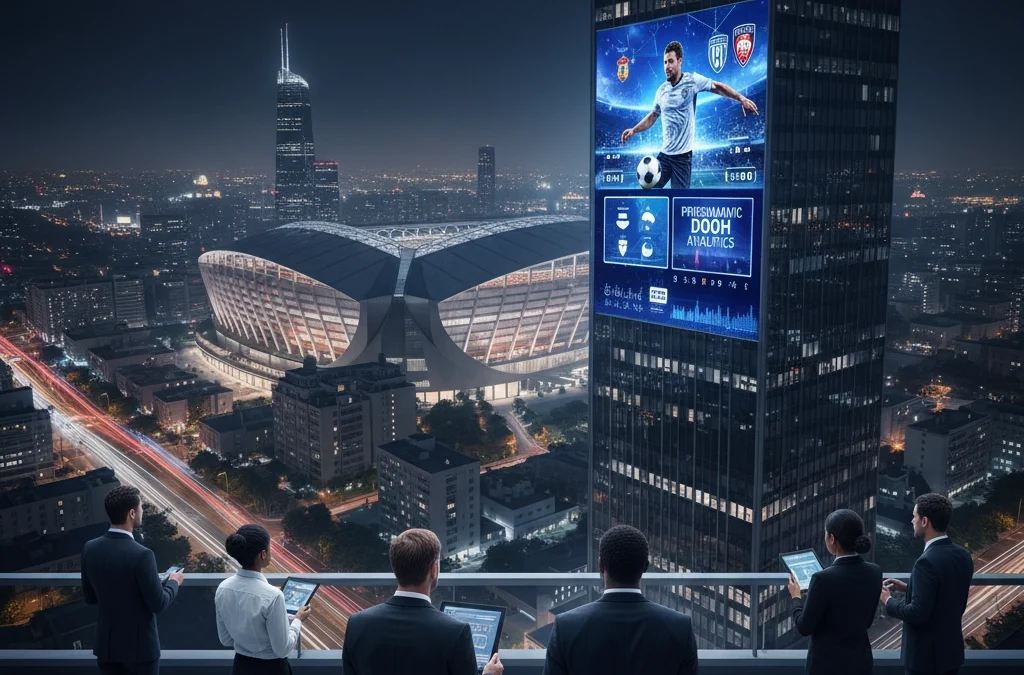
Programmatic Digital Out-of-Home (DOOH) advertising has transformed sports marketing, yet many campaigns fail to unlock its full potential. While industry leaders achieve remarkable results, specific strategies and optimization techniques remain underutilized by mainstream marketers. Understanding these advanced approaches can dramatically improve campaign performance and return on investment.
Real-Time Sports Data Integration Drives Performance
The most successful programmatic DOOH campaigns leverage real-time sports data to trigger dynamic creative content. This approach extends beyond basic game scores to incorporate player statistics, weather conditions, betting odds, and fan sentiment analysis.
Leading sports marketers integrate live API feeds from ESPN, The Score, and official league databases to automatically adjust messaging based on game developments. When a star player scores, related product advertisements appear instantly on nearby digital billboards. Rain delays trigger promotions for indoor entertainment venues. Overtime periods activate food delivery campaigns targeting fans leaving venues.

This real-time responsiveness creates contextual relevance that static campaigns cannot match. The technology utilizes demand-side platforms (DSPs) equipped with sports data connectors, enabling millisecond creative updates across entire digital networks. Campaign performance improves measurably when advertisements align with live sporting events and fan emotions.
Advanced Geofencing Beyond Stadium Perimeters
Standard programmatic DOOH campaigns target audiences within stadium vicinity, but sophisticated marketers deploy multi-layered geofencing strategies that capture broader fan behaviors. These approaches identify sports bar clusters, team merchandise retailers, and fan gathering locations to create comprehensive targeting networks.
Elite campaigns establish concentric geofencing zones extending up to 50 miles from venues, each triggering different creative messaging. Zone one (0-5 miles) features immediate call-to-action content for game attendance. Zone two (5-15 miles) promotes team merchandise and fan experiences. Zone three (15-50 miles) builds brand awareness among broader sports enthusiasts.
Historical attendance data and season ticket holder databases inform these targeting strategies. Marketers analyze fan travel patterns from previous seasons to predict optimal placement timing and creative rotation schedules. This precision targeting approach typically increases campaign efficiency by 40-60% compared to broad demographic targeting.
Dynamic Creative Optimization Using Fan Sentiment
Programmatic DOOH platforms now integrate social media sentiment analysis to optimize creative content in real-time. Advanced campaigns monitor Twitter, Instagram, and Reddit conversations to gauge fan emotions and adjust messaging accordingly.
When social sentiment indicates frustration with team performance, campaigns pivot toward community solidarity messaging. Positive sentiment triggers celebration-themed content and merchandise promotions. Controversial referee decisions activate humorous or empathetic creative variations that resonate with fan emotions.

This sentiment-driven optimization requires sophisticated natural language processing tools and automated creative management systems. The most effective implementations utilize machine learning algorithms trained on sports-specific emotional indicators, enabling campaigns to respond appropriately to nuanced fan reactions.
Cross-Platform Attribution and Measurement
Advanced programmatic DOOH campaigns implement comprehensive attribution models that track fan journey progression across multiple touchpoints. These systems connect initial DOOH exposure to subsequent online behaviors, in-store purchases, and venue attendance.
Modern measurement frameworks utilize device ID matching, geolocation tracking, and purchase correlation analysis to quantify campaign impact. Attribution windows extend up to 30 days post-exposure, capturing delayed conversion behaviors common in sports marketing contexts.
Leading practitioners implement control group methodologies comparing exposed and non-exposed audiences to isolate DOOH campaign effectiveness. This approach provides clear ROI calculations and justifies budget allocations based on measurable performance metrics rather than traditional reach estimates.
Weather-Triggered Campaign Automation
Sophisticated programmatic DOOH campaigns integrate weather data to automatically adjust creative content and targeting parameters. Rain forecasts trigger indoor entertainment promotions, while sunny conditions activate outdoor event marketing and sports equipment advertisements.
Temperature fluctuations prompt seasonal merchandise campaigns, with cold weather generating apparel promotions and heat waves driving beverage marketing. Wind speed data influences placement selection, prioritizing protected digital displays during adverse conditions.

These weather integration systems utilize multiple meteorological data sources, including National Weather Service APIs and hyperlocal weather monitoring services. Campaign automation rules consider both current conditions and extended forecasts to optimize creative rotation schedules and budget allocation timing.
Competitive Event Scheduling Intelligence
Elite sports marketers monitor competing events and activities to optimize programmatic DOOH campaign timing and placement. This intelligence includes rival team schedules, major entertainment events, and local festivals that could impact target audience availability.
Campaign scheduling algorithms automatically increase bid prices during low-competition periods and reduce spending when multiple events compete for fan attention. Creative messaging adapts to acknowledge competing entertainment options while reinforcing campaign value propositions.
This competitive intelligence extends to media buying strategies, with automated systems identifying optimal inventory purchasing windows based on predicted demand fluctuations. Advanced practitioners achieve 20-30% cost efficiency improvements through strategic timing optimization.
Advanced Audience Suppression Techniques
Programmatic DOOH campaigns implement sophisticated audience suppression methods to improve targeting precision and reduce wasteful impressions. These techniques exclude existing customers, competitor loyalists, and demographically inappropriate audiences from campaign targeting parameters.
First-party customer databases integrate with programmatic platforms to suppress advertisements from reaching existing fans, focusing budget allocation toward prospect acquisition. Competitor venue geofencing data identifies opposing team supporters for strategic exclusion or alternative messaging approaches.

Behavioral suppression utilizes purchase history analysis and engagement tracking to identify low-probability conversion audiences. These refinements typically improve campaign conversion rates by 25-40% while reducing overall impression costs through improved targeting efficiency.
Integration with Broadcast and Streaming Schedules
Advanced campaigns synchronize programmatic DOOH placements with television broadcast schedules and streaming platform content delivery. Advertisement timing aligns with commercial breaks, halftime periods, and post-game programming to amplify message frequency and reinforce brand recall.
This synchronization extends to streaming platform integration, with campaigns tracking when fans consume sports content across Netflix, Hulu, and ESPN+ to optimize complementary DOOH placement timing. Cross-platform message coordination creates cohesive brand experiences that improve overall campaign effectiveness.
Campaign management systems monitor broadcast rating data and streaming viewership metrics to automatically adjust DOOH spending intensity based on predicted audience attention patterns. This approach maximizes campaign impact during peak engagement periods while controlling costs during low-attention windows.
Performance Optimization Through Machine Learning
Leading programmatic DOOH campaigns implement machine learning algorithms that continuously optimize targeting parameters, bid strategies, and creative selection based on performance feedback. These systems analyze thousands of campaign variables to identify improvement opportunities human analysts might overlook.
Automated optimization considers factors including time of day performance variations, creative element effectiveness, placement location impact, and audience characteristic correlations. Machine learning models predict optimal campaign modifications weeks before human analysis would identify similar patterns.
The most sophisticated implementations utilize reinforcement learning techniques that automatically test campaign variations and implement successful strategies across broader inventory networks. This continuous optimization approach typically improves campaign performance by 30-50% over six-month periods.
Dan Kost, CEO of OOH Sports, emphasizes the importance of leveraging these advanced programmatic DOOH strategies to stay competitive in the evolving sports marketing landscape. The combination of real-time data integration, sophisticated targeting, and automated optimization creates unprecedented opportunities for meaningful fan engagement.
Sports marketers who implement these advanced programmatic DOOH techniques position themselves ahead of competitors still relying on basic demographic targeting and static creative approaches. The technology infrastructure exists to support these sophisticated strategies, making adoption primarily a matter of strategic commitment and technical implementation.
For sports brands ready to unlock the full potential of programmatic DOOH advertising, the opportunity has never been greater. Contact OOH Sports at +1 (970) 703-0102 to explore how these advanced strategies can transform campaign performance and drive measurable business results.
Ready to revolutionize your sports marketing campaigns with advanced programmatic DOOH strategies? Visit OOH Sports to discover how data-driven outdoor advertising can amplify your brand's impact and connect with fans like never before.
Share this article: LinkedIn | Facebook | Instagram | X
For more insights on sports marketing innovation, visit oohsports.com or call our AI Receptionist at +1 (970) 703-0102.
#Motivation #Branding #Strategy #Marketing #AdvertisingAndMarketing #digitalmarketing #Innovation #Sports