
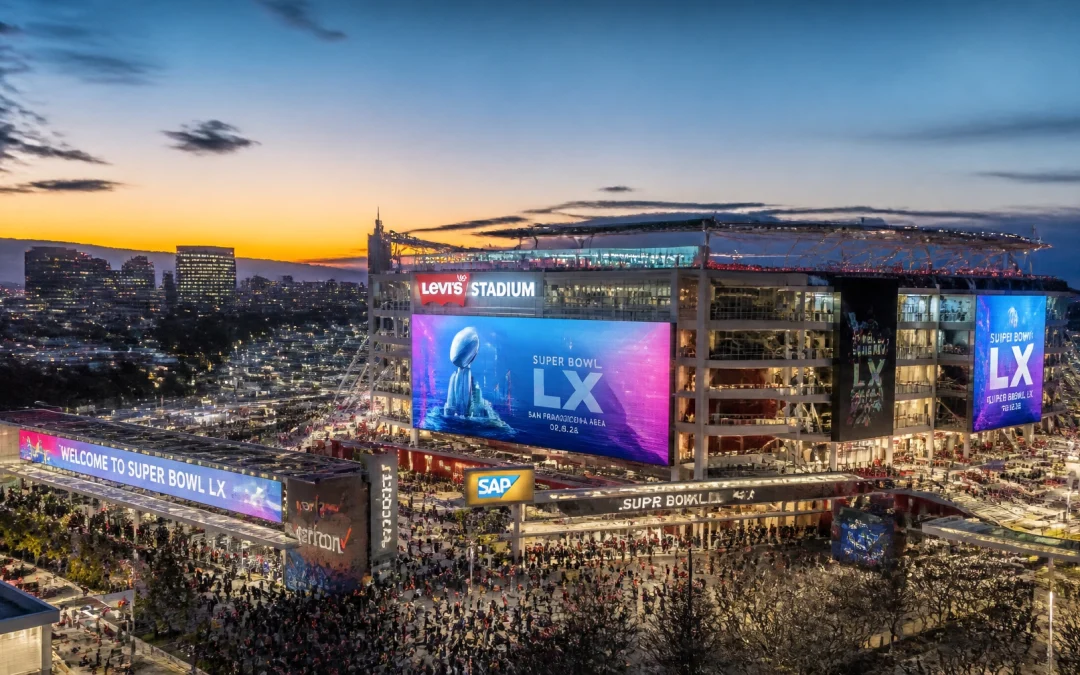
The landscape of sports marketing reached a fever pitch in February 2026. As Levi’s Stadium in Santa Clara hosted Super Bowl LX, the world witnessed more than just a championship football game. It was a masterclass in modern attention management. With 30-second television spots reportedly commanding upward of $10 million, the question for every media buyer and brand manager remains the same: is the investment in venue-wide advertising actually worth it in an age of digital distraction?
The truth about fan attention in 2026 is that it is no longer localized to a single screen. It is a multi-dimensional experience that begins miles away from the stadium and continues long after the final whistle. For companies like OOH Sports, which has spent the last four decades leading the charge in sports media, the answer is a resounding yes. But the "how" has changed significantly.
40 Years of Sports Media Evolution
The journey to the sophisticated advertising ecosystem of 2026 did not happen overnight. Sports Media Inc. has spent 40 years at the forefront of this evolution, transitioning from static wooden signs to the high-definition, programmatic digital out-of-home (DOOH) networks seen today. In the mid-1980s, venue advertising was simple. It was about placement and persistence.
Fast forward to the present, and the "floors to billboards" philosophy has become the industry standard. This approach ensures that a brand is not just a background detail but an integral part of the fan's physical journey. Whether it is a digital floor graphic in the concourse or a massive 3D-effect billboard overlooking the parking lot, the goal is total immersion. This 40-year legacy of leadership has provided the data necessary to prove that physical presence in a digital world creates a unique psychological anchor for consumers.
Why Venue-Wide Coverage Still Wins
In 2026, the average sports fan is bombarded with thousands of digital impressions daily. However, the physical environment of a stadium offers something a smartphone cannot: shared emotional context. When a fan sees a brand message while celebrating a touchdown, that brand becomes associated with a high-dopamine moment.

The "venue-wide" strategy focuses on every category of digital video advertising board. It is not just about the big screen in the end zone. It includes the transit screens, the elevator displays, the concourse headers, and even the digital kiosks. By saturating the environment, a brand eliminates the competition for attention within that specific physical space. This strategy is particularly effective for reaching chief marketing officers and creative directors who are looking for high-impact, unskippable formats.
The 10-Mile Perimeter Strategy
One of the most significant shifts in sports advertising over the last decade is the expansion of the "venue" itself. At OOH Sports, the venue is defined as the stadium plus a 10-mile radius surrounding it. This perimeter targeting allows brands to engage with fans as they travel to the game, stay in nearby hotels, and visit local sports bars.

Using programmatic DOOH, media planners can sync their messaging across various platforms within this 10-mile zone. This ensures that the brand story is consistent. If a fan sees a billboard on the highway, a digital screen at a gas station, and then a floor graphic inside Levi's Stadium, the frequency and recency of the message are maximized. This level of coordination is what makes DOOH sports advertising a powerhouse in 2026.
The Power of Programmatic Integration
The integration of technology partners has turned traditional billboards into smart assets. By leveraging StackAdapt and other DSPs, OOH Sports can now offer precision targeting that was previously impossible. Campaigns are no longer just "broadcast." They are "delivered" to specific audiences based on real-time data and movement patterns.
The process involves identifying device IDs exposed to the venue-wide advertisements. Once a fan’s device is tagged within the 10-mile perimeter or inside the stadium, that fan can be retargeted across their mobile devices and social feeds later. This omnichannel approach ensures that the high-impact physical impression is followed up with a direct-response digital opportunity.
Watch the Impact: OOH Sports in Action
To understand the scale of what is possible in 2026, one must see the execution in real-time. The following video highlights how venue-wide coverage transforms a standard sporting event into a brand-led experience.
https://www.youtube.com/watch?v=l6J-0zileKE
Measurable Outcomes and Brand Lift
Success in the 2026 advertising landscape is measured by data, not just anecdotes. Recent case studies have shown the immense power of this venue-wide and perimeter-based approach.
For example, a major beverage brand using programmatic DOOH saw a 74% lift in purchase consideration. Another campaign for an iced tea brand reported a 119% lift in positive brand image after saturating the sports network. These results are driven by the fact that fans are in a highly receptive state during live sports.
Results by the Numbers:
- Brand Image: 119% increase for brands utilizing full-venue digital saturation.
- Purchase Consideration: 74% to 144% lift observed across various beverage and lifestyle categories.
- Fan Engagement: Higher recall rates compared to traditional television ads, as the physical presence is perceived as more "authentic" to the event experience.
Capturing the Truth About Fan Attention
As we look toward the future, the truth about fan attention is clear. It is fragmented but fiercely loyal to the live experience. Brands that want to win must move beyond the "one-off" ad buy and embrace a comprehensive venue-wide strategy. This means owning the space from the street to the seat.

With over 40 years of experience, OOH Sports continues to provide the Sportrons and digital networks necessary to dominate the sports media landscape. Whether it is the Super Bowl or a regular-season game, the fans are there, and their attention is waiting to be captured. The question is no longer if venue-wide advertising matters, but how quickly a brand can move to claim its territory.
For media buyers and planners looking to build their digital out-of-home sports network, the infrastructure is ready. The era of the "10-mile stadium" is here, and it is reshaping everything we know about the ROI of sports marketing.