
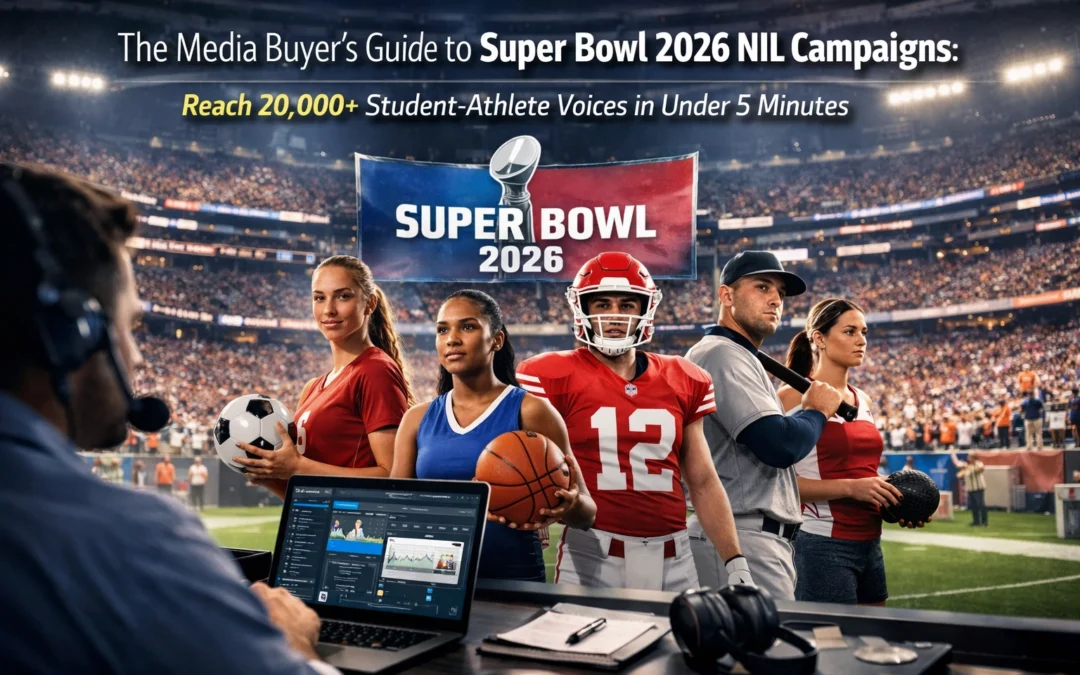
Super Bowl LX is set for February 8, 2026, and media buyers are already mapping out strategies that extend far beyond traditional commercial slots. The emergence of NIL (Name, Image, Likeness) platforms has introduced a powerful new channel: authenticated student-athlete voices that reach highly engaged audiences at scale.
For brands targeting the 18-34 demographic, NIL campaigns represent an opportunity to activate thousands of micro-influencers simultaneously, creating genuine peer-to-peer advocacy during the biggest marketing moment of the year.

The Strategic Value of Student-Athlete Networks
Student-athletes occupy a unique position in the marketing ecosystem. They command authentic local followings, generate consistent engagement rates that exceed traditional influencer averages, and represent aspirational figures within their campus communities.
During Super Bowl week, when cultural conversation reaches peak intensity, coordinated student-athlete campaigns can amplify brand messaging across hundreds of campuses simultaneously. This creates a distributed marketing effect that traditional celebrity endorsements cannot replicate at similar price points.
The data supports this approach. Studies indicate that Gen Z consumers demonstrate 67% higher trust in recommendations from micro-influencers compared to celebrity endorsements. Student-athletes, with follower counts typically ranging from 2,000 to 50,000, fall precisely within this trusted micro-influencer category.
Platform Capabilities: Activating 20,000+ Voices
Modern NIL platforms have evolved from simple marketplace directories into sophisticated campaign execution engines. Media buyers can now access networks exceeding 20,000 verified student-athletes across NCAA Division I, II, and III programs, with filtering capabilities by sport, geographic market, audience demographics, and engagement metrics.
The platform infrastructure allows for:
- Centralized campaign brief distribution to thousands of athletes simultaneously
- Automated compliance checking to ensure NCAA and institutional policy adherence
- Content approval workflows that maintain brand standards while preserving authentic athlete voice
- Performance tracking across multiple social platforms with unified reporting
- Payment processing that handles individual athlete contracts at scale
This infrastructure eliminates the traditional bottlenecks that made large-scale influencer campaigns operationally prohibitive for time-sensitive activations like Super Bowl week.

Execution Framework: Five-Minute Campaign Deployment
The promise of sub-five-minute campaign launches relies on pre-established platform relationships and streamlined workflow design. Media buyers following this framework can achieve rapid activation:
Minute 1-2: Campaign Parameters
Define core creative requirements, target audience specifications, and geographic priorities. Select athlete filters including sport categories, follower count ranges, engagement rate minimums, and demographic alignment with brand objectives.
Minute 3: Budget Allocation
Set total campaign budget and per-athlete compensation rates. Platform algorithms automatically calculate reach potential and distribute budget across optimal athlete selection to maximize impression delivery within specified parameters.
Minute 4: Creative Brief Distribution
Deploy standardized creative brief to matched athletes through platform interface. Brief includes key messaging points, required hashtags, content format specifications, and any brand-mandated disclaimers or FTC compliance requirements.
Minute 5: Approval Process Initiation
Activate content approval workflow where athlete-submitted drafts route through brand review queue. Auto-approval rules can fast-track content meeting predefined criteria while flagging outliers for manual review.
Post-launch, athletes receive notifications, create content within specified timeframes (typically 24-48 hours), and submit for approval before publishing across their social channels.
Strategic Considerations for Super Bowl Week
Super Bowl campaigns require precise timing coordination. Content should begin publishing 72 hours before kickoff to build momentum, peak during game day itself, and extend 24-48 hours post-game to capture sustained conversation.
Media buyers should structure athlete briefs around specific campaign objectives:
Awareness Objectives: Deploy maximum athlete count with broad creative flexibility. Focus on reach metrics and impression volume. Student-athletes post casual game-watching content featuring product placement or brand mentions.
Engagement Objectives: Select athletes with demonstrated high interaction rates. Require interactive content formats including polls, questions, or calls-to-action that drive follower participation.
Conversion Objectives: Partner with athletes who have proven e-commerce track records. Include trackable promotional codes or affiliate links. Prioritize athletes whose audience demographics match target customer profiles.
Geographic targeting proves particularly valuable during Super Bowl week. Brands can concentrate athlete activation in host city markets (Los Angeles for LX), team home markets (Philadelphia and Kansas City in recent years), or nationally distributed for broad awareness plays.

Technology Integration and Performance Measurement
NIL platforms integrate with standard marketing technology stacks to provide unified performance visibility. Media buyers can track campaign performance through:
- Real-time impression tracking across Instagram, TikTok, Twitter/X, and Facebook
- Engagement metrics including likes, comments, shares, and saves aggregated by athlete, content type, and posting time
- Audience demographic reports showing actual reached populations versus targeted parameters
- Conversion tracking through UTM parameters, promo code redemptions, or affiliate link performance
- Brand lift measurement through pre- and post-campaign survey deployment to exposed audiences
Attribution modeling becomes crucial for calculating ROI. Best practice involves establishing baseline brand awareness and consideration metrics 7-10 days before campaign launch, then conducting follow-up measurement 3-5 days post-campaign to isolate lift attributable to athlete activations.
https://www.youtube.com/watch?v=l6J-0zileKE
Compliance and Risk Management
NIL campaigns operate within evolving regulatory frameworks. Media buyers must ensure compliance across multiple jurisdictions:
NCAA policy requires student-athletes to disclose NIL activities to their athletic departments. Institutional policies vary significantly, with some schools requiring pre-approval of all commercial arrangements. Platform providers typically handle compliance checking, but ultimate responsibility rests with the brand and agency.
FTC guidelines mandate clear disclosure of commercial relationships. All athlete posts must include conspicuous disclosures such as "#ad" or "#sponsored" positioned early in captions where they remain visible before "see more" truncation.
State laws governing NIL deals differ substantially. California, Texas, and Florida maintain relatively permissive frameworks, while other states impose restrictions on certain industries (alcohol, gambling, adult content) or require specific contract provisions.
Risk mitigation strategies include requiring athletes to submit content for brand approval before publication, maintaining comprehensive insurance coverage for endorsement liability, and establishing clear termination clauses if athletes become involved in conduct that conflicts with brand values.

Cost Analysis and Budget Optimization
NIL campaigns deliver cost efficiencies that traditional influencer marketing cannot match. Student-athletes typically command compensation ranging from $100 to $2,500 per post depending on follower count, sport profile, and content requirements.
A $50,000 budget can activate 200-500 student-athletes, generating combined reach of 2-10 million impressions at CPMs substantially below traditional digital advertising rates. For Super Bowl week, when commercial inventory costs reach historic peaks, NIL campaigns provide accessible entry points for brands without eight-figure media budgets.
Budget allocation strategies should account for:
- 60-70% toward athlete compensation for content creation and posting
- 15-20% toward platform fees and campaign management
- 10-15% reserved for top-performing athlete content amplification through paid social
- 5-10% allocated to performance measurement and reporting
The most sophisticated media buyers layer NIL campaigns with complementary tactics. Student-athletes create authentic content that gets amplified through the brand's owned channels, repurposed in paid digital campaigns, and integrated into broader omnichannel strategies including programmatic DOOH placements near campus locations.
Results Documentation and Future Scaling
Successful Super Bowl NIL campaigns generate case study materials that inform subsequent activations. Media buyers should document:
- Total impressions delivered versus projected reach
- Engagement rate performance compared to brand's owned social benchmarks
- Cost-per-engagement metrics relative to other influencer tiers
- Sentiment analysis of comment sections and audience reactions
- Conversion data tied to athlete-specific promo codes or links
- Brand lift measurements showing changes in awareness, consideration, or preference
These data points establish performance baselines for optimizing future campaigns. The most effective approach involves treating Super Bowl activation as an annual testing ground, with learnings applied to year-round NIL programs that maintain consistent athlete relationships and build sustained brand presence within college sports culture.

Implementation Pathway
Media buyers seeking to execute NIL campaigns for Super Bowl LX should begin planning 90 days before game day. This timeline allows for platform relationship establishment, athlete vetting processes, legal review of contracts and compliance procedures, and creative development that balances brand guidelines with authentic athlete expression.
The shift toward student-athlete marketing represents a fundamental change in how brands access passionate, demographically valuable audiences during premium cultural moments. As NIL platforms mature and student-athletes develop increasingly sophisticated content creation skills, the channel will continue growing in strategic importance for media buyers allocating Super Bowl marketing investments.
For brands willing to embrace distributed influencer models over singular celebrity plays, NIL campaigns offer scalable, measurable, and cost-efficient pathways to Super Bowl conversation dominance. The opportunity to activate 20,000+ authentic voices in minutes transforms what was previously operationally impossible into strategically routine.
Media buyers should evaluate NIL platforms as essential infrastructure, not experimental tactics. The brands that master student-athlete marketing during Super Bowl LX will establish competitive advantages that extend throughout the sports marketing calendar. Visit OOH Sports to explore how integrated campaigns combining NIL activations with strategic out-of-home placements can amplify reach across digital and physical environments.