
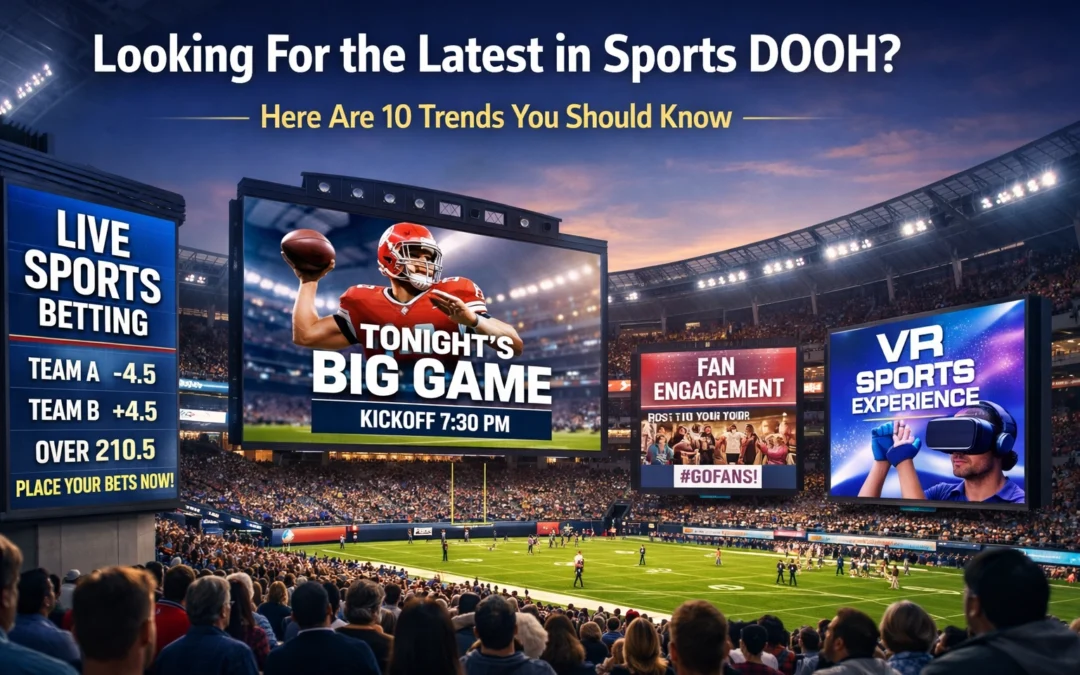
The world of sports advertising is moving faster than a championship breakaway. For years, the industry relied on static banners and pre-planned television spots. However, the rise of Digital Out-of-Home (DOOH) technology has completely rewritten the playbook. Marketing in the sports arena is no longer about just being seen, it is about being relevant in the exact moment a fan is most engaged.
At OOH Sports, we see how these shifts affect brands of every size. Whether it is a local campaign or a global sponsorship, the objective remains the same: capture attention when the adrenaline is high. Today, we are diving into the ten most significant trends shaping the future of sports DOOH. These insights will help you navigate the landscape and ensure your media spend delivers maximum impact.

1. Dynamic Creative Optimization (DCO) in Real Time
Static ads are becoming a thing of the past. One of the most powerful trends in sports DOOH is Dynamic Creative Optimization. This technology allows ads to update instantly based on live game data. If a team scores a goal, the creative on digital screens around the city can change to celebrate that specific moment within seconds.
This level of responsiveness ensures that messaging stays relevant. If a match ends in an unexpected upset, your ad can pivot from a generic brand message to a congratulatory note that resonates with the local fan base. By reacting to match events, weather shifts, or even crowd movements, brands can maintain a high level of contextual relevance that static media simply cannot match.
2. Geofencing and Behavioral Targeting
Modern sports marketing has moved beyond fixed screen placement. Advertisers are now reaching audiences based on actual movement patterns. This strategy focuses on high intent zones such as airports, transit hubs, and entertainment districts where fans congregate before and after a big event.
By utilizing geofencing, brands can activate DOOH screens precisely when and where engagement is highest. For example, a campaign might target screens near a stadium two hours before kickoff and then shift to city center bars once the game ends. This behavioral approach ensures that your brand is a constant companion throughout the fan journey. You can learn more about these strategies at OOH Sports.

3. Interactive DOOH Elements
Interactive elements are transforming out-of-home advertising from a passive experience into an active one. Features like QR codes, mobile prompts, and live polls are being integrated into digital screens to bridge the gap between the physical and digital worlds.
When a fan scans a QR code on a digital billboard to enter a contest or receive a discount, it does more than just drive a sale. It allows the brand to collect valuable first-party data. In an era where privacy regulations are tightening, having a direct line to your audience through interactive DOOH is a significant competitive advantage.
4. Convergent TV and Streaming Integration
The way people watch sports has changed. Fans are no longer tethered to traditional cable. They are watching on streaming platforms, social media clips, and athlete-run channels. This fragmentation makes multi-platform integration essential.
Research has shown that streaming-exclusive sports content can deliver up to 66% stronger ad effectiveness than traditional broadcast averages. By aligning DOOH campaigns with these streaming moments, brands can create a surround-sound effect. When a fan sees an ad on their mobile device and then sees a consistent message on a large format digital screen on their way to the game, the brand recall improves significantly. Platforms like StackAdapt are making it easier to manage these omnichannel campaigns through programmatic buying.
5. Athlete and Personality-Based Sponsorships
Younger audiences often feel a stronger connection to individual athletes than they do to specific teams. This shift has led brands to move beyond traditional team-based sponsorships. Instead, they are partnering with the athletes and personalities that fans follow across social media and digital platforms.
This trend allows for more personal and authentic storytelling. Even when a brand is not an official sponsor of a major event, they can achieve high visibility by aligning with the right personalities. For instance, Nike demonstrated this effectively during the NYC Marathon by focusing on the spirit of the runners rather than the official sponsorship slots.

6. AI-Generated Virtual Advertising
Artificial intelligence is making it possible to insert brands into sports content in ways that were previously impossible. AI-generated virtual advertising allows for dynamic overlays and product placements that do not disrupt the viewing experience.
Imagine a digital screen that displays different brand logos based on the geographic location of the viewer. Or virtual signage on the field that appears only on the digital broadcast. This technology enables brands to secure premium placement without the logistical hurdles of physical installations. It is a cleaner, more efficient way to maintain a presence within the heart of the action.
7. Closed-Loop Attribution and Measurement
For a long time, out-of-home advertising was criticized for a lack of measurable ROI. That is no longer the case. New measurement capabilities now connect in-game exposure to specific downstream actions. Advertisers can track app installs, retail footfall, and even direct purchase conversions.
This closed-loop attribution provides the proof of impact that modern marketers demand. For example, programmatic campaigns have shown massive lifts in purchase consideration. White Claw saw a 74% lift in purchase consideration for a product launch through strategic DOOH placement. Similarly, Sea-Doo saw a 144% increase in consideration by targeting specific high-traffic corridors.

8. Mixed Reality for Culturally Scaled Moments
Mixed reality is creating "event-sized" moments that live long after the physical event is over. By using augmented reality (AR) and faux-OOH (FOOH) techniques, sponsors can appear much bigger than their actual media weight.
These digital installations are designed to be shared. When a massive 3D digital display appears to interact with a city skyline or a stadium roof, fans capture it on their phones and share it on social media. This turns a single DOOH placement into a viral marketing asset, extending the reach of the campaign far beyond the people standing in front of the screen.
9. Content Ecosystem Integration
Simply placing a logo in a stadium is no longer enough to win the hearts of fans. Brands are now moving toward content ecosystem integration. This means integrating messaging into the entire fan experience, including pre-game podcasts, live digital broadcasts, and always-on digital experiences.
The goal is to move from being a "distraction" to being a part of the entertainment. By providing helpful content, such as live score updates or fan-centric utility, brands can build deeper loyalty. Choosing between fan-centric and brand-centric approaches is a critical strategic decision that defines the success of modern campaigns.
10. Always-On Multi-Moment Activation
Fans move through a specific journey during a sports event. It starts with planning and travel, moves into the excitement of the stadium or fan zone, and concludes with the post-game commute. The trend is now to activate across all these moments rather than just focusing on the game itself.
Programmatic DOOH provides the flexibility to activate screens closer to these key moments. Instead of buying a billboard for a month, a brand can buy specific hours across hundreds of screens. This approach reduces waste and ensures the message is seen when it is most likely to influence behavior. Understanding stadium perimeter targeting is essential for brands looking to master this multi-moment strategy.

Staying Ahead of the Game
The sports DOOH landscape is evolving quickly, but the underlying principle remains constant: the fan comes first. By embracing real-time data, better measurement, and interactive technology, brands can create experiences that fans actually enjoy.
Whether you are looking to drive a 119% lift in brand image like Mike's Hard Iced Tea or simply want to ensure your message reaches the right audience at the right time, these ten trends offer a clear roadmap for success. The future of sports advertising is digital, it is data-driven, and it is happening right now on screens across the globe.