
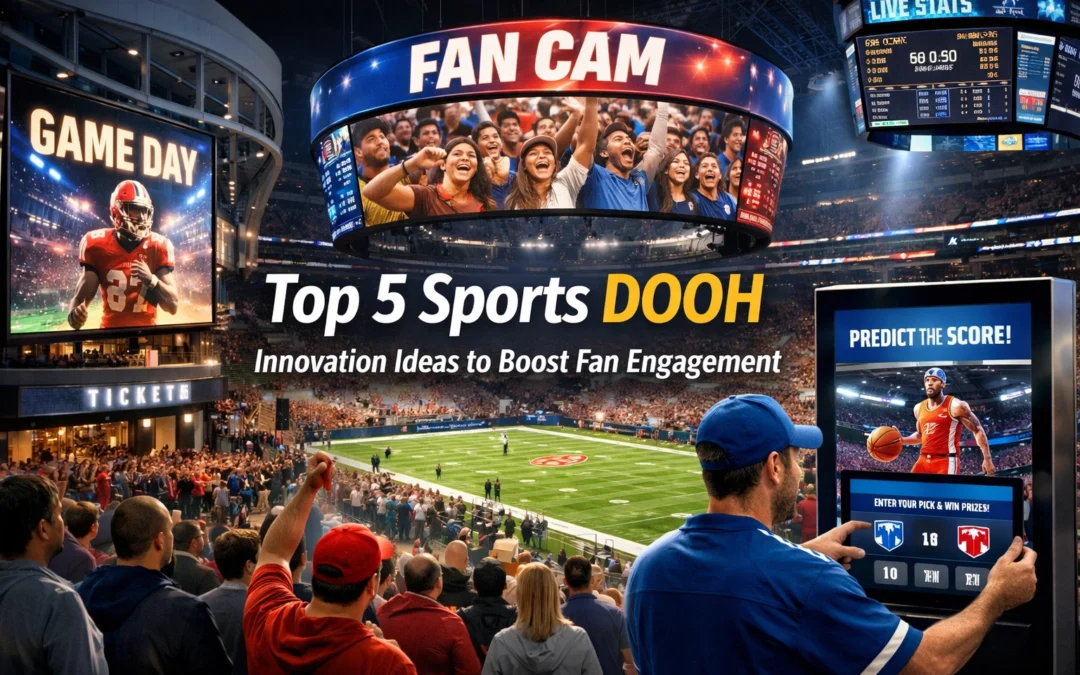
The landscape of sports marketing is undergoing a significant transformation. While traditional stadium signage and television spots once dominated the scene, a new era of fan engagement has emerged through Digital Out of Home (DOOH) advertising. For media buyers and brand managers, the challenge is no longer just about visibility, it is about creating meaningful, real time connections with a highly distracted audience.
The sports environment offers a unique psychological state for consumers. Fans are emotionally invested, attentive, and often gathered in high density groups. Leveraging this energy requires more than static images. It requires innovation. As the industry moves toward a future where DOOH sports advertising is projected to reach massive scales, understanding the latest technological capabilities is essential for maintaining a competitive edge.
1. Dynamic Creative Optimization (DCO)
Dynamic Creative Optimization, or DCO, is perhaps the most powerful tool in the modern sports marketer’s arsenal. It allows creative content to change automatically based on external data triggers. In the context of sports, this means the message on a digital billboard can update in real time based on the score of a game, the time remaining on the clock, or even specific player statistics.
When a brand uses DCO, the advertising ceases to be a background element and becomes part of the live event. For example, a beverage brand might display a celebratory creative the moment a home team scores a goal. This level of agility ensures that the brand is participating in the fan’s emotional journey.
The strategy behind DCO is rooted in relevance. Studies have shown that contextually relevant ads drive significantly higher engagement. A programmatic DOOH campaign for White Claw, for instance, demonstrated how targeted, timely messaging can result in a 74 percent lift in purchase consideration. By aligning the creative with the immediate atmosphere, brands move from being intruders to being participants.

2. Interactive Elements and QR Activation
The bridge between the physical world and the digital world is often a simple QR code. However, in sports DOOH, the innovation lies in how these codes are integrated into the fan experience. Interactive elements transform a passive viewing experience into an active engagement opportunity.
By placing QR codes on large format screens in fan zones or near stadium entrances, brands can facilitate immediate actions. These actions might include:
- Entering a real time sweepstakes.
- Accessing exclusive "behind the scenes" digital content.
- Downloading a mobile app for venue specific discounts.
- Participating in live polls that display results on the screen in seconds.
This strategy is particularly effective for gathering first party data. In an era of increasing privacy regulations, the ability to have a fan voluntarily scan a code and provide their information is invaluable. This direct response mechanism also provides clear attribution. Marketers can track exactly how many scans occurred, where they happened, and what the resulting conversion rate was. This shift toward interactivity has been a primary driver in increasing purchase consideration across various categories.
3. Real Time Score Updates and Live Integration
Fans are often moving between different areas during a game day. They move from transit hubs to parking lots, and from concession stands to their seats. Maintaining the "thread" of the game is a service that fans deeply appreciate. DOOH screens that provide live score updates, countdowns to kick off, or weather updates serve a functional purpose.
When a brand provides this utility, it builds positive brand equity. The screen is no longer just selling a product, it is providing a service. This strategy is often referred to as "utility marketing." By being the source of truth for game information, the brand gains the undivided attention of the fan.
The execution involves connecting DOOH platforms to live data feeds via APIs. This ensures that the information is accurate to the second. Imagine a fan walking through an airport or a transit center and seeing a digital screen that not only shows a brand message but also the current live score of the game they are missing. That brand is now associated with the relief and excitement of that information.

4. Augmented Reality (AR) and Shareable Moments
Social media is the primary way fans share their sports experiences. Innovation in DOOH now allows brands to create "shareable moments" through Augmented Reality (AR) and high tech displays. AR enabled billboards allow fans to point their smartphones at a screen and see 3D animations, holographic players, or interactive games overlaying the physical world.
The objective here is to extend the reach of the OOH placement far beyond the physical location. When a fan records a video of a holographic basketball player "jumping" out of a billboard and shares it on Instagram or TikTok, the brand receives organic, high value impressions.
Large format LED screens with high refresh rates also allow for "forced perspective" 3D content. These visuals create the illusion of depth and movement that can stop foot traffic in its tracks. For brands, this is a premium strategy used to signal dominance and innovation in a crowded market. This type of high impact creative is a hallmark of successful omnichannel campaigns in the modern era.

5. Geofencing and Behavior Based Targeting
The final innovation is not about what is on the screen, but where and to whom the screen is showing. Geofencing and location intelligence allow brand managers to activate DOOH screens based on actual fan movement and behavior.
Instead of buying a static billboard for a month, programmatic DOOH allows for "perimeter targeting." Ads can be triggered only when mobile device density reaches a certain threshold or when specific audience segments are detected in the vicinity. For example, a brand might choose to only activate screens within a five mile radius of a stadium three hours before and two hours after a game.
This precision reduces "waste" in the advertising budget. Rather than paying for impressions from people who have no interest in sports, the budget is concentrated on high intent fans. This strategy is especially useful for brands that want the prestige of a stadium association without the multi million dollar price tag of an official sponsorship. Smart brands are now using perimeter DOOH to scale their presence for significantly less investment than traditional sponsorships would require.
Measuring the Impact of Innovation
Innovation is only as good as the results it produces. One of the most significant shifts in the industry is the ability to measure DOOH success with the same granularity as digital display ads. Through the use of device IDs and location data, brands can now track:
- Footfall Attribution: How many people saw the ad and subsequently visited a retail location or the stadium itself.
- Brand Lift Studies: Measuring the change in brand perception and purchase intent among those exposed to the DOOH creative.
- Online Conversion: Linking OOH exposure to website visits or app downloads.
For instance, AB InBev’s use of programmatic DOOH resulted in a 119 percent lift in positive brand image. These numbers prove that when technology and creative strategy align, the impact on the bottom line is measurable and significant.

Strategic Implementation
To successfully implement these innovations, media buyers should follow a structured approach:
- Define the Trigger: Determine which live data points (scores, weather, time) will trigger the creative changes.
- Select the Technology Partner: Work with platforms that offer robust API integrations and real time bidding capabilities.
- Optimize for the Location: A screen in a quiet transit corridor requires a different creative approach than a screen in a loud, high energy fan zone.
- Test and Learn: Use programmatic flexibility to A/B test different calls to action or interactive elements to see what resonates most with the specific fan base.
Avoiding common mistakes in sports DOOH often comes down to timing and targeting. The most innovative creative will fail if it is shown to the wrong audience or at a time when the fan's attention is elsewhere.
The Path Forward
The future of fan engagement lies in the seamless integration of technology and emotion. As digital screens become more ubiquitous and data feeds more sophisticated, the opportunities for innovation will only grow. By embracing DCO, interactivity, live data, immersive tech, and precision targeting, brands can ensure they are not just seen, but remembered.
For brand managers and media buyers, the goal is to create a campaign that feels like a natural extension of the game itself. When advertising adds value to the fan experience, engagement follows naturally. In the competitive world of sports marketing, these DOOH innovations are no longer just "nice to have," they are the new standard for success.