
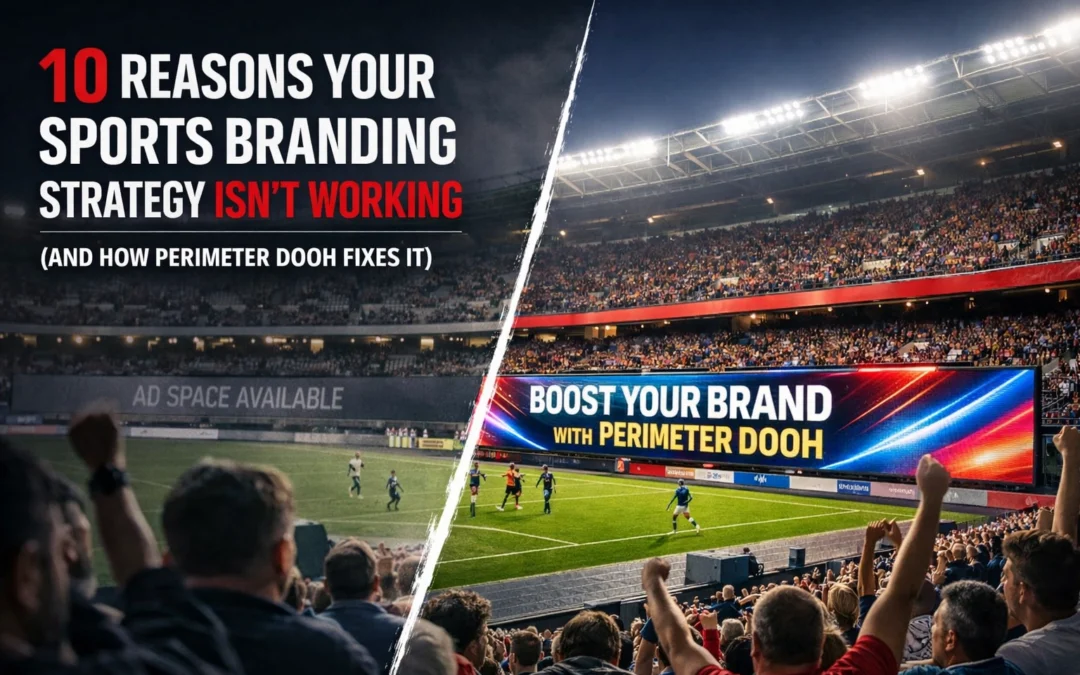
Sports marketing is an environment of high stakes and high emotions. For Creative Directors and CMOs, the stadium represents one of the final frontiers of truly captive, live attention. However, many brands find that despite significant investment, their sports branding fails to move the needle on purchase consideration or brand loyalty.
The gap between a high-priced sponsorship and actual fan engagement often stems from outdated methods. Traditional stadium advertising is often static, expensive, and difficult to measure. Digital Out-Of-Home (DOOH), specifically perimeter targeting, offers a modern solution to these persistent branding failures.
Here are ten reasons why sports branding strategies often fail and how Perimeter DOOH provides the necessary fix.
1. Cultural and Market Misalignment
Many brands deploy a one-size-fits-all creative strategy across different regions. A message that resonates with a football fan in London may fall flat with a basketball fan in New York. Cultural nuances, local slang, and regional values dictate how fans perceive a brand. Perimeter DOOH allows brands to swap creative assets instantly based on the specific venue and audience demographics. By using geographically targeted DOOH, marketers can ensure the tone and imagery align with the local culture, boosting engagement by significant margins.
2. Lack of Authentic Differentiation
It is common for brands to fall into the trap of generic messaging. When a brand focuses only on price or general category benefits, it fails to distinguish itself from competitors. In the crowded stadium environment, a brand must communicate a unique value proposition. Programmatic DOOH enables brands to run multiple creative iterations that highlight specific brand differentiators rather than just "selling the category." This helps move the brand from being just another logo on a wall to a distinct entity with a clear purpose.
3. Loss of Authentic Storytelling
Fans connect with the sacrifice, struggle, and perseverance of athletes. When branding becomes too focused on commercial success and loses the human element, the emotional connection breaks. Perimeter DOOH allows for dynamic storytelling. Instead of a single static image, brands can use sequential messaging that evolves throughout the game. This keeps the narrative fresh and aligns the brand with the unfolding drama on the field.

4. Static Messaging in a Dynamic Environment
A live game is unpredictable. A last-minute goal or a sudden injury changes the energy of the crowd. Traditional static banners cannot react to these shifts. Perimeter DOOH fixes this through real-time triggers. If a specific team scores or a game hits halftime, the creative can update automatically to reflect the current state of play. This level of relevance ensures the brand feels like a participant in the event rather than a bystander.
5. High Barriers to Entry
For a long time, stadium advertising was reserved for brands with multi-million dollar budgets. Traditional season-long sponsorships are often cost-prohibitive for growing brands. Perimeter DOOH changes the financial landscape. By using programmatic platforms, brands can buy space by the impression or by specific game times. This lowers the entry cost and allows smart brands to scale with perimeter DOOH for significantly less than traditional sponsorships.
Are 2m Stadium Sponsorships Dead?
6. The "Sponsorship Moat" and Lack of Agility
Traditional contracts often lock brands into long-term commitments with no room for adjustment. If a campaign is not performing, the brand is stuck. DOOH provides the agility to pivot. If data shows that a specific creative is not resonating, it can be swapped out mid-campaign. This flexibility is essential for maintaining a high ROI in a fast-moving market.

7. Poor Cross-Channel Integration
Sports branding often exists in a vacuum, disconnected from the brand's digital or social media presence. Perimeter DOOH bridges this gap. By utilizing mobile retargeting, brands can identify fans exposed to the perimeter screens and follow up with digital ads on their mobile devices. This omnichannel approach reinforces the brand message across multiple touchpoints, ensuring the stadium exposure is not a one-off event.
8. Measurement and Attribution Gaps
One of the biggest frustrations for CMOs is the inability to prove the impact of stadium ads. Traditional signage offers "estimated impressions" with no way to track actual consumer behavior. Modern DOOH platforms use AI-powered analytics and device ID tracking to measure brand lift and purchase consideration. Brands can now see exactly how an in-stadium ad influenced a consumer's decision to visit a website or make a purchase.
7 Mistakes with Sports DOOH Measurement
9. Over-Reliance on "Category" Marketing
Many sports ads promote the sport itself more than the brand. For example, a sports drink ad that simply shows someone running might remind a fan they are thirsty, but it doesn't necessarily make them want that specific drink. Perimeter DOOH allows for highly specific call-to-actions. By integrating real-time data, brands can offer specific promotions or highlight unique product features that drive brand-specific preference.
10. Visual Fatigue
In a three-hour game, a static sign becomes part of the background. The human brain is wired to ignore unchanging stimuli. Perimeter DOOH uses motion and light to break through this visual fatigue. Digital screens are naturally more eye-catching, and the ability to cycle through different creatives ensures that the audience remains attentive to the brand's message throughout the duration of the event.
Objective and Strategy
The primary objective of a perimeter DOOH strategy is to maximize brand impact through high-frequency, contextually relevant exposure. Unlike traditional placements, the strategy focuses on the "golden circle" of the field of play. This area receives the most camera time during broadcasts and the most direct eye contact from fans in the stands.
The strategy involves three main pillars:
- Contextual Relevance: Aligning the creative with the specific sport, team, and game-day atmosphere.
- Data-Driven Targeting: Using audience insights to select the right games and time slots.
- Dynamic Execution: Leveraging programmatic technology to update messaging in real-time based on game events.

Technology Partners and Execution
Executing a high-level perimeter DOOH campaign requires a sophisticated technology stack. OOH Sports utilizes programmatic platforms like the StackAdapt DSP to drive adoption and ensure seamless delivery across thousands of digital screens.
Spotlight on StackAdapt DSP
The execution process follows a structured path:
- Audience Mapping: Identifying the target demographic within the stadium and broadcast audience.
- Asset Integration: Uploading dynamic creative assets to the programmatic platform.
- Real-Time Trigger Setup: Establishing the parameters for live updates (e.g., changing the ad when a goal is scored).
- Network Deployment: Launching the campaign across a curated network of stadium perimeter screens.
By utilizing a network of over 25,000 digital screens, brands can achieve massive scale while maintaining the precision of a digital campaign.
The Power of 25,000 Digital Screens
Results and Impact
The shift from traditional to digital perimeter advertising has yielded measurable success across various industries. Data indicates that programmatic DOOH campaigns consistently outperform static placements in key performance indicators.
- Purchase Consideration: Research into recent beverage campaigns showed a 74% lift in purchase consideration for new product launches when using programmatic DOOH.
White Claw's Programmatic DOOH Results - Brand Image: In the consumer goods sector, brands have seen a 119% lift in positive brand image by utilizing the dynamic capabilities of digital perimeter screens.
- Fan Engagement: Geographically targeted campaigns have reported an increase in fan engagement of up to 90%, as the messaging feels more personal and relevant to the local audience.

Strategic Conclusion
The era of "set it and forget it" sports sponsorship is ending. For a sports branding strategy to work in the modern landscape, it must be agile, data-driven, and authentic. Perimeter DOOH removes the traditional barriers of high cost and lack of measurement, allowing brands to connect with fans in a way that is both impactful and efficient.
By addressing the common failures of cultural misalignment, static messaging, and poor attribution, DOOH transforms stadium advertising from a passive expense into a dynamic growth engine. As more media planners shift their budgets toward digital sports environments, those who embrace perimeter DOOH will find themselves with a significant competitive advantage in capturing fan attention and driving long-term brand loyalty.