
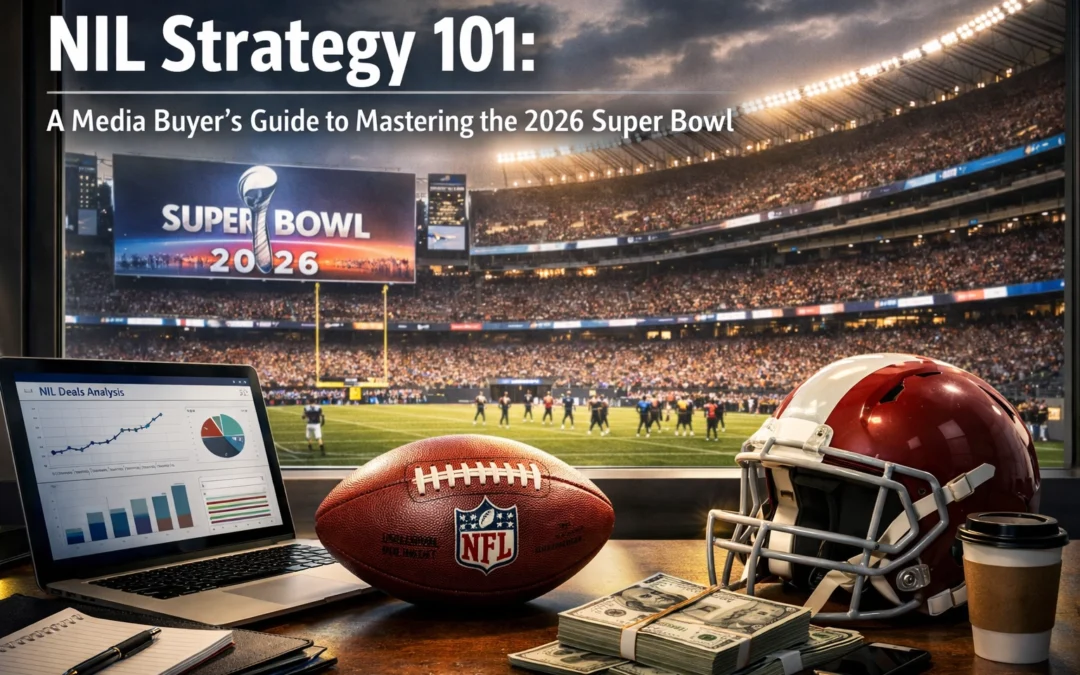
The countdown to the 2026 Super Bowl has officially started. For media buyers, this is the ultimate arena. But as we look toward the 2026 season, the old playbook of putting every single cent into a single 30-second television spot is changing. While the big screen still matters, the real magic is happening in the palms of the fans' hands through Name, Image, and Likeness (NIL) partnerships.
At OOH Sports, we have seen the shift firsthand. Brands are no longer just looking for a celebrity endorsement. They want authenticity. They want a connection that lasts longer than a bathroom break during the second quarter. This is why mastering your NIL strategy is the most important thing you can do for your 2026 Super Bowl campaign.
The New Reality of Sports Advertising
In the past, the Super Bowl was a high-stakes gamble. You spent millions on production and millions more on a time slot, hoping that your creative would "go viral." Today, the game has changed. Media buyers are now looking for ways to sustain engagement throughout the entire playoff season and into the off-season.
NIL partnerships with college athletes provide a unique opportunity. These athletes aren't just faces on a poster. They are content creators with deeply loyal, niche audiences. By tapping into a platform like OOH Sports, which connects you with over 20,000 authentic student-athlete voices, you can create a groundswell of support that a traditional ad just can't match.

Why 20,000 Voices Are Better Than One
Many media buyers make the mistake of chasing the one "star" athlete. While having a household name is great, the real power of NIL in 2026 lies in the volume and the variety of voices. When you have 20,000 athletes talking about your brand, you aren't just buying an ad. You are buying a cultural movement.
These athletes represent different sports, different regions, and different demographics. A star quarterback in Texas has a different kind of influence than a champion gymnast in California. By spreading your budget across a diverse portfolio of athletes, you reduce your risk and increase your reach. This "portfolio approach" ensures that your brand is visible in thousands of different social circles simultaneously.
It is about moving from "interruption" marketing to "integrated" marketing. When an athlete shares how they use your product during their Super Bowl watch party, it feels real. It doesn't feel like a commercial. It feels like a recommendation from a friend.
Watch: The Future of Sports Media
Before we dive into the specific phases of a winning Super Bowl campaign, take a look at how the landscape is shifting. This video outlines the power of modern sports marketing and why the integration of digital and physical media is the winning play for 2026.
https://www.youtube.com/watch?v=l6J-0zileKE
The Three-Phase Campaign Strategy
A successful Super Bowl NIL strategy isn't just about what happens on game day. It is about the weeks leading up to the event and the weeks that follow. Here is how you should structure your media buy.
Phase 1: The Pre-Game Build-Up (Mid-January to Early February)
This is where you set the stage. During this phase, your 20,000+ athletes should be creating "hype" content. This isn't the time for a hard sell. It is the time for storytelling.
Athletes can share their preparation routines, their favorite game day snacks, or their predictions for the playoffs. This builds a retargeting pool of engaged fans who are already familiar with your brand before the Super Bowl even starts. It is a cost-effective way to drive awareness while everyone else is still waiting for the big day to launch their campaigns.
Phase 2: Game Day Execution
When the coin flips, the world is watching. But they aren't just watching the TV. They are on their phones. This is the moment for real-time engagement. Your NIL partners should be posting their live reactions to the game, the halftime show, and, most importantly, the conversation surrounding your brand.
Authenticity is the winner here. You don't want polished, studio-quality videos. You want raw, "in-the-moment" content. When an athlete posts a video of themselves cheering after a big play while wearing your brand's gear, that is a gold mine for engagement.
Phase 3: The Post-Game Sustain
Most Super Bowl ads are forgotten by Monday morning. An NIL strategy allows you to keep the conversation going. Use the days following the game to have athletes recap their favorite moments or discuss the "winning" feeling. This phase ensures that your investment continues to deliver ROI long after the trophies have been handed out.

Integrating NIL with Out-of-Home (OOH) Advertising
One of the most powerful ways to use NIL is to pair it with physical advertising. This is where OOH Sports really shines. Imagine a fan walking through a stadium or a shopping mall and seeing a digital screen featuring the same student-athlete they just saw on their Instagram feed.
This cross-channel consistency is what builds brand trust. We’ve seen how programmatic DOOH can drive massive lifts in purchase consideration. When you combine the scale of 25,000 digital screens with the authenticity of 20,000 athletes, you create an unbeatable media mix.
By the year 2030, DOOH sports advertising is expected to hit $50 billion. Getting ahead of this trend now for the 2026 Super Bowl will give your brand a significant competitive advantage.
Practical Tips for Media Buyers
If you are ready to start planning your 2026 NIL campaign, here are a few simple rules to follow:
- Trust the Athlete: Don't give them a script. Give them a goal. Let them use their own voice to talk to their fans. If it sounds like a corporate press release, the audience will tune it out.
- Focus on Engagement, Not Just Followers: An athlete with 5,000 highly active followers is often more valuable than an athlete with 100,000 passive followers. Look for comments, shares, and real interaction.
- Use Data to Pivot: One of the best things about NIL is that it's digital. You can see what content is working in real-time. If one type of post is getting 10x the engagement, shift your focus there for the rest of the campaign.
- Think Beyond the Stadium: The Super Bowl isn't just happening in one city. It’s a national event. Use NIL to reach fans in every corner of the country, not just the ones lucky enough to have a ticket to the game.
The ROI of NIL Partnerships
We know that every media buyer has to answer to a budget. The good news is that NIL partnerships often deliver a much better ROI than traditional sponsorships. Instead of a one-time fee for a billboard or a TV spot, you are building a library of content that can be repurposed across your own social channels, your website, and even your omnichannel campaigns.
In fact, many media planners are already shifting their budgets toward these types of activations. A recent study showed that 67% of media planners are shifting their budgets toward sports DOOH and NIL by 2026. If you aren't at the table yet, now is the time to pull up a chair.
Final Thoughts for the 2026 Season
The 2026 Super Bowl will be a landmark event for the advertising industry. It will be the year where the line between "traditional" and "digital" completely disappears. As a media buyer, your job is to find the most efficient and authentic way to get your brand in front of the right eyes.
With OOH Sports, you have access to a platform that makes this easy. By leveraging 20,000 student-athlete voices, you can tell a story that is bigger than any single game. You can build a brand that fans actually care about.
Don't wait until the playoffs start to get your strategy in order. The most successful campaigns are being planned right now. Let’s make 2026 the year your brand takes the lead.
For more information on how to integrate NIL into your next big campaign, check out our site map or explore our latest case studies.