
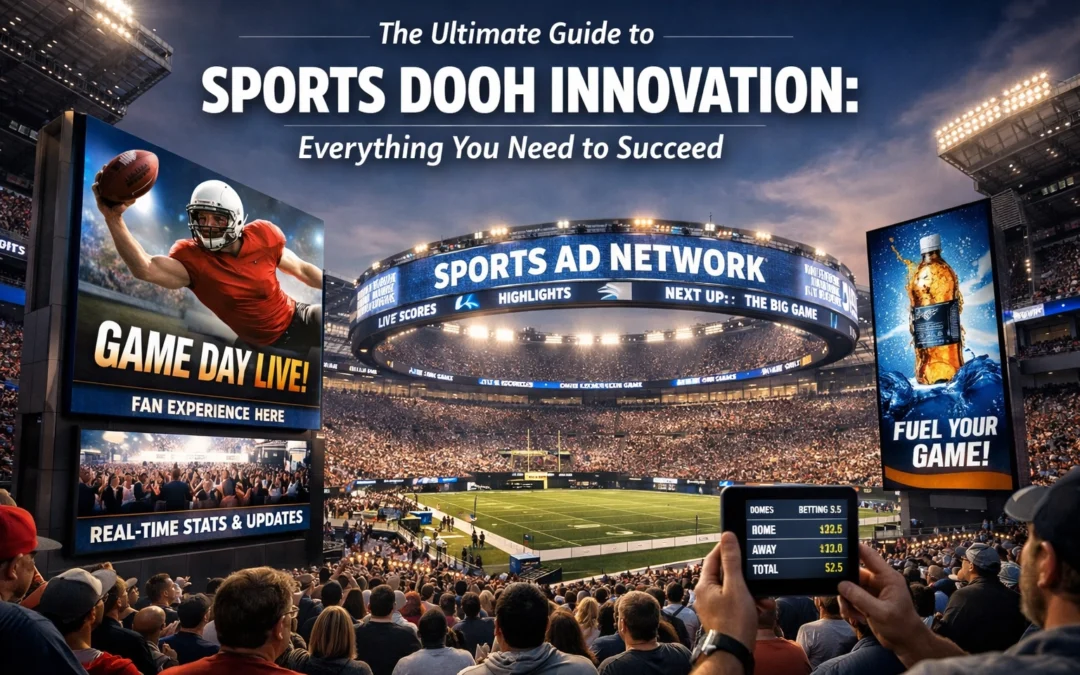
Digital Out-of-Home (DOOH) advertising has transitioned from a supporting medium to a primary driver of sports marketing success. For media buyers and brand managers, the goal is no longer just securing a spot on a stadium jingle or a static billboard. Success in the modern era requires a shift toward routine-based strategies that reach fans wherever they live, work, and socialize.
By leveraging real-time data, programmatic buying, and dynamic creative, brands can now maintain a presence throughout the entire fan journey. This guide explores the strategies, technologies, and measurement frameworks necessary to excel in the evolving landscape of sports DOOH innovation.
The Strategic Shift: From Location to Fan Routine
Traditional sports marketing often focused heavily on the venue itself. While stadium sponsorships offer high visibility, they are limited by the physical boundaries of the arena and the duration of the event. Modern DOOH innovation solves this by following the fan routine.
Research indicates that 81 percent of consumers feel more positively toward brands that sponsor the sports they love. To capitalize on this sentiment, advertising must extend beyond the four walls of the stadium. DOOH serves as the mechanism that transforms sports marketing into a constant presence in the spaces where fans naturally congregate.
This approach targets the consumer during their daily commute, at the office, and in social "watch spaces" like sports bars and casual dining restaurants. By placing ads in these high-dwell-time environments, brands create a communal emotional connection that mirrors the stadium experience.
Mapping the Fan Journey: A Phase-Based Approach
Effective sports DOOH campaigns are structured around the specific timing of the sporting event. Each phase of the game day requires a different creative focus and placement strategy.
The Pre-Game Phase: Building Anticipation
The window of 48 hours leading up to a kickoff or tip-off is defined by logistics and excitement. During this time, fans are planning their viewing experience or traveling to the venue.
DOOH screens in transit hubs, urban centers, and office lobbies are most effective during this period. The objective is to provide utility and build hype. Successful tactics include:
- Displaying live countdown clocks to the start of the event.
- Sharing broadcast schedules or "where to watch" information.
- Integrating live betting lines to prompt early engagement.
The During-Game Phase: Real-Time Engagement
When the game is live, the focus shifts to "watch spaces." Sports bars and quick-service restaurant lobbies become the primary touchpoints. In these environments, fans are highly engaged and emotionally invested.
This is where Dynamic Creative Optimization (DCO) becomes essential. Rather than running a static loop, ads can react to the live action. If the home team scores, the creative can instantly update to a celebratory message. If the game goes into halftime, the ad can pivot to a "refill your drink" call to action. This level of relevance significantly increases the impact of the ad spend.

The Post-Game Phase: Conversion and Reinforcement
The period following a game is often overlooked, yet it offers a prime opportunity for conversion. Whether fans are celebrating a win or commiserating a loss, their emotional state remains high. DOOH placements near retail locations or on commute routes back home can trigger immediate action, such as ordering food or purchasing team apparel.
Key Technologies Driving Innovation
The rapid adoption of DOOH in sports marketing is fueled by several technological advancements that allow for greater precision and flexibility than traditional out-of-home methods.
Programmatic Buying and Real-Time Triggers
Programmatic DOOH allows media buyers to purchase screen inventory in real-time based on specific triggers. This is particularly useful for sports betting platforms. Instead of buying a broad schedule, a brand can set a trigger to launch ads only when certain game conditions are met, such as a close score in the final minutes.
For brands looking to optimize their spend, programmatic DOOH delivers a distinct ROI advantage over traditional stadium ads by reducing wasted impressions and ensuring the message reaches the right audience at the right time.
Dynamic Creative Optimization (DCO)
DCO technology enables brands to deploy hundreds of creative variations based on external data feeds. In the sports context, this includes:
- Live Score Updates: Transforming an ad into a utility by providing real-time game information.
- Weather Triggers: An apparel brand might switch from promoting t-shirts to promoting rain gear if a storm begins at the stadium.
- Location-Based Personalization: Customizing the creative based on the specific neighborhood or city where the screen is located to appeal to local fan bases.
AI-Powered Analytics
Artificial Intelligence is now used to analyze fan behavior patterns and predict engagement. By processing vast amounts of data, AI helps brands determine the best times and locations to reach specific fan segments. This removes the guesswork from campaign planning and ensures that every placement is backed by data.

Omnichannel Reinforcement
DOOH does not exist in a vacuum. Its greatest strength is its ability to amplify other marketing channels. When a fan see a 30-second television spot during a broadcast and then encounters a shorter, high-impact version of that same ad on a digital urban panel the next morning, the memory structure is strengthened.
This "priming effect" makes every advertising dollar more efficient. By coordinating DOOH with streaming platforms, mobile apps, and traditional broadcasts, brands ensure they are top-of-mind throughout the fan's entire week, not just on game day. This cross-platform integration is a hallmark of the most successful sports marketing strategies.
Proven Results: Case Studies in Sports DOOH
The effectiveness of these strategies is supported by significant performance data from major brand campaigns.
- White Claw: By using programmatic DOOH for a vodka launch, the brand saw a 74 percent lift in purchase consideration. The campaign targeted key social environments where consumers were likely to be in a "purchasing mindset."
- AB InBev (Mike’s Hard Iced Tea): A programmatic DOOH campaign resulted in a 119 percent lift in positive brand image. The success was attributed to the ability to reach consumers in high-energy, communal settings.
- Sea-Doo: The brand’s first digital OOH campaign focused on specific geographic regions and fan behaviors, leading to a 144 percent increase in purchase consideration.
These examples demonstrate that the precision of DOOH leads to measurable shifts in consumer behavior and brand perception.
Measurement and ROI Optimization
One of the biggest hurdles in traditional out-of-home advertising has been measurement. Modern DOOH innovation has addressed this by providing sophisticated analytics that prove campaign success.
Attribution Analysis
Through the use of device IDs and location data, brands can now connect DOOH impressions to downstream digital conversions. This means a media buyer can track if a person who was exposed to a digital screen later visited a website or made a purchase on a mobile app.
Brand Lift Studies
By comparing a group of fans exposed to the DOOH ads with a control group that was not, brands can quantify the impact on awareness, favorability, and purchase intent. These studies provide the hard data needed to justify marketing budgets and refine future strategies. For more details on these metrics, reviewing AI-powered DOOH analytics can provide deeper insight into campaign validation.

A Framework for Success
To succeed in sports DOOH innovation, media buyers and brand managers should prioritize the following steps:
- Map the Routine: Identify the spaces where fans are most likely to be before, during, and after the game. Move beyond the stadium to target transit, retail, and social venues.
- Implement Real-Time Triggers: Use programmatic platforms to launch creative based on game scores, weather, or betting odds. This ensures maximum relevance.
- Coordinate with Other Channels: Align DOOH creative with television, social media, and mobile campaigns to create a unified brand story.
- Leverage DCO for Utility: Use digital screens to provide value to the fan, such as live updates or countdowns, rather than just delivering a static sales pitch.
- Focus on Data-Driven Measurement: Utilize attribution and brand lift studies to measure the true impact of the campaign and optimize ROI.
The competitive advantage in sports marketing belongs to those who move beyond traditional placements and embrace a data-driven, fan-centric approach. By integrating DOOH into a broader omnichannel strategy, brands can ensure they remain a constant presence in the lives of sports fans everywhere.
For more information on the evolving landscape of sports advertising, visit OOH Sports.