
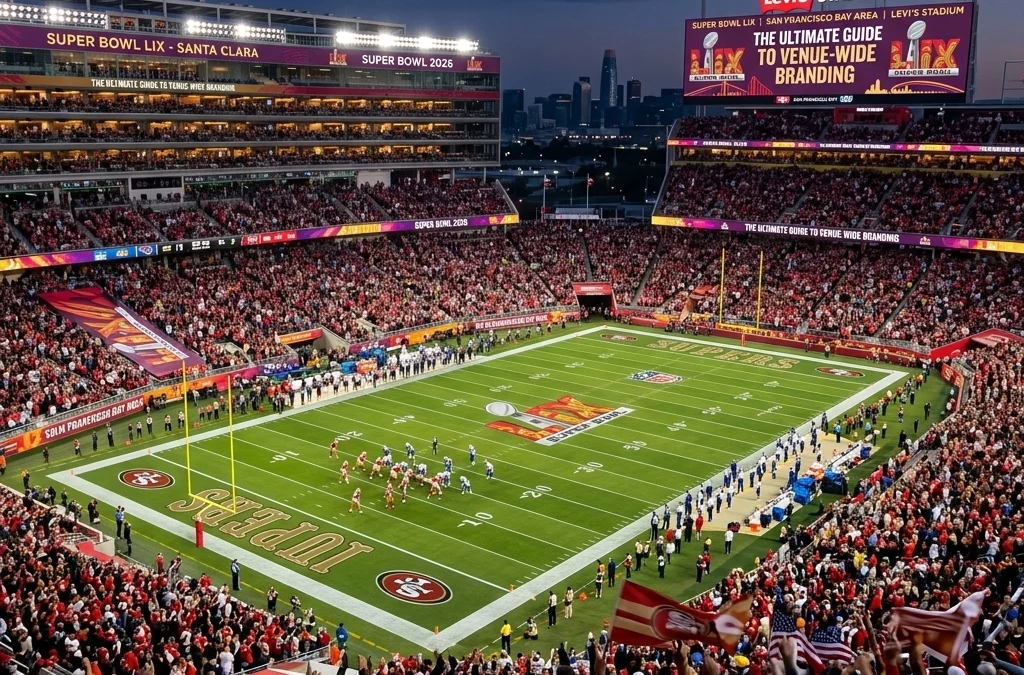
The conclusion of Super Bowl LX on February 8, 2026, at Levi’s Stadium in Santa Clara marked a milestone for both the NFL and the advertising industry. With the Seattle Seahawks defeating the New England Patriots 29-13, the event provided a masterclass in how modern sports marketing operates within a high-pressure environment. For OOH Sports, this event also served as a celebration of 40 years of advertising leadership, showcasing the transition from traditional signage to sophisticated, venue-wide digital ecosystems.
Effective branding during an event of this magnitude requires more than just a single billboard or a 30-second television spot. It demands a holistic strategy that captures the attention of the 68,500 fans in attendance and the millions watching via digital extensions. This guide explores the mechanics of successful venue-wide branding, drawing on decades of expertise to outline how brands can dominate the sports advertising landscape.

Forty Years of Advertising Leadership
The evolution of sports marketing over the last four decades has been defined by a shift from static visibility to interactive engagement. Forty years ago, stadium advertising was largely confined to fixed wooden boards and basic scoreboards. Today, OOH Sports leverages a multi-layered approach that includes everything from floor graphics and digital kiosks to massive stadium wraps and programmatic screens.
The longevity of a firm in this sector depends on its ability to adapt. As the industry moves toward 2030, projections suggest that DOOH sports advertising will hit $50 billion. This growth is driven by the integration of data-driven targeting and the seamless execution of venue-wide campaigns that surround the consumer at every touchpoint.
Strategy: The Venue-Wide Approach
To succeed at an event like the Super Bowl, a campaign must be pervasive. This means occupying the physical and digital space from the moment a fan approaches the stadium until they leave. A venue-wide strategy involves several key components:
- Entry Points and Perimeters: Utilizing large-format billboards and digital displays on the approach to Levi’s Stadium.
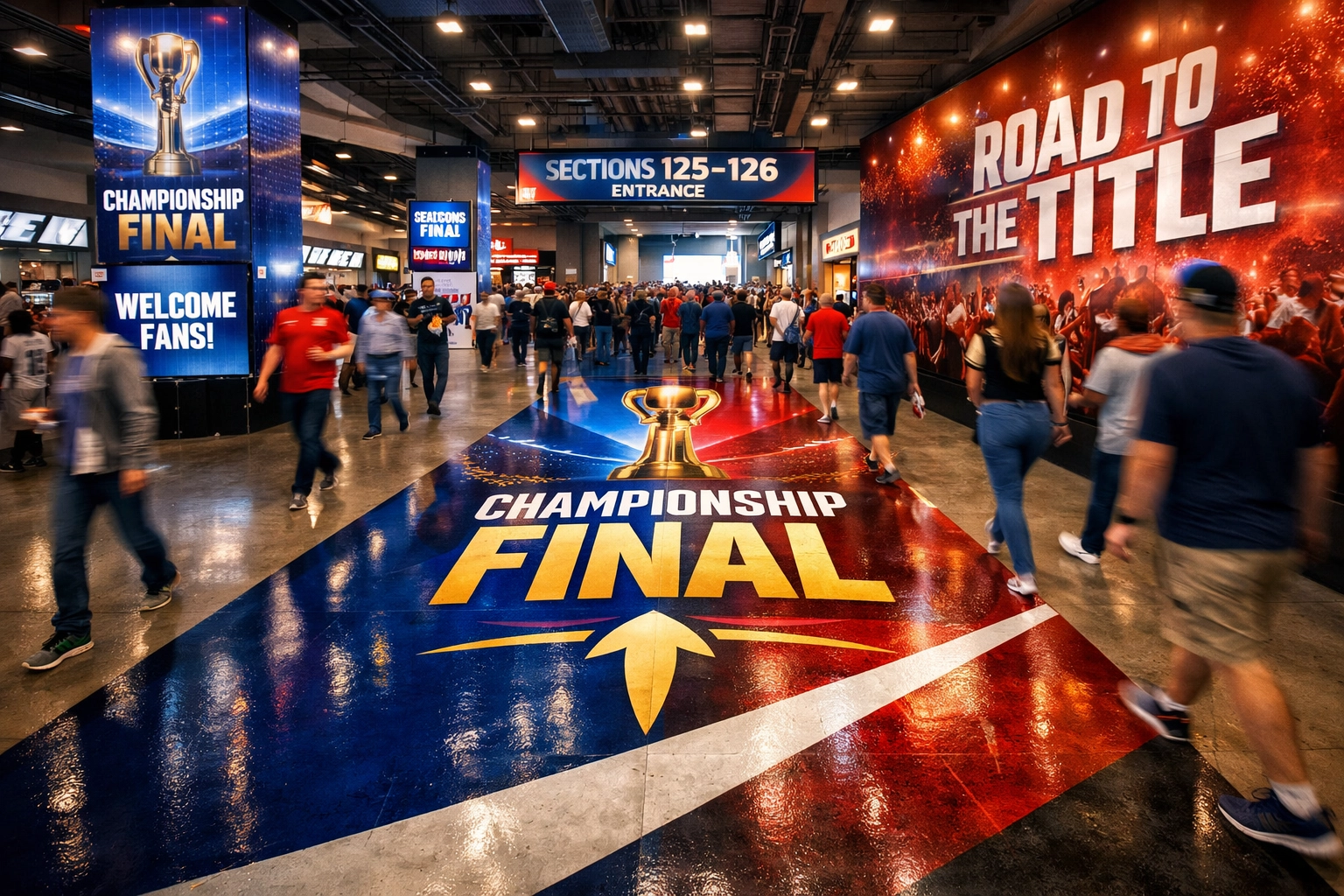
- Concourse Dominance: Implementing floor graphics and pillar wraps that guide fans through the venue.
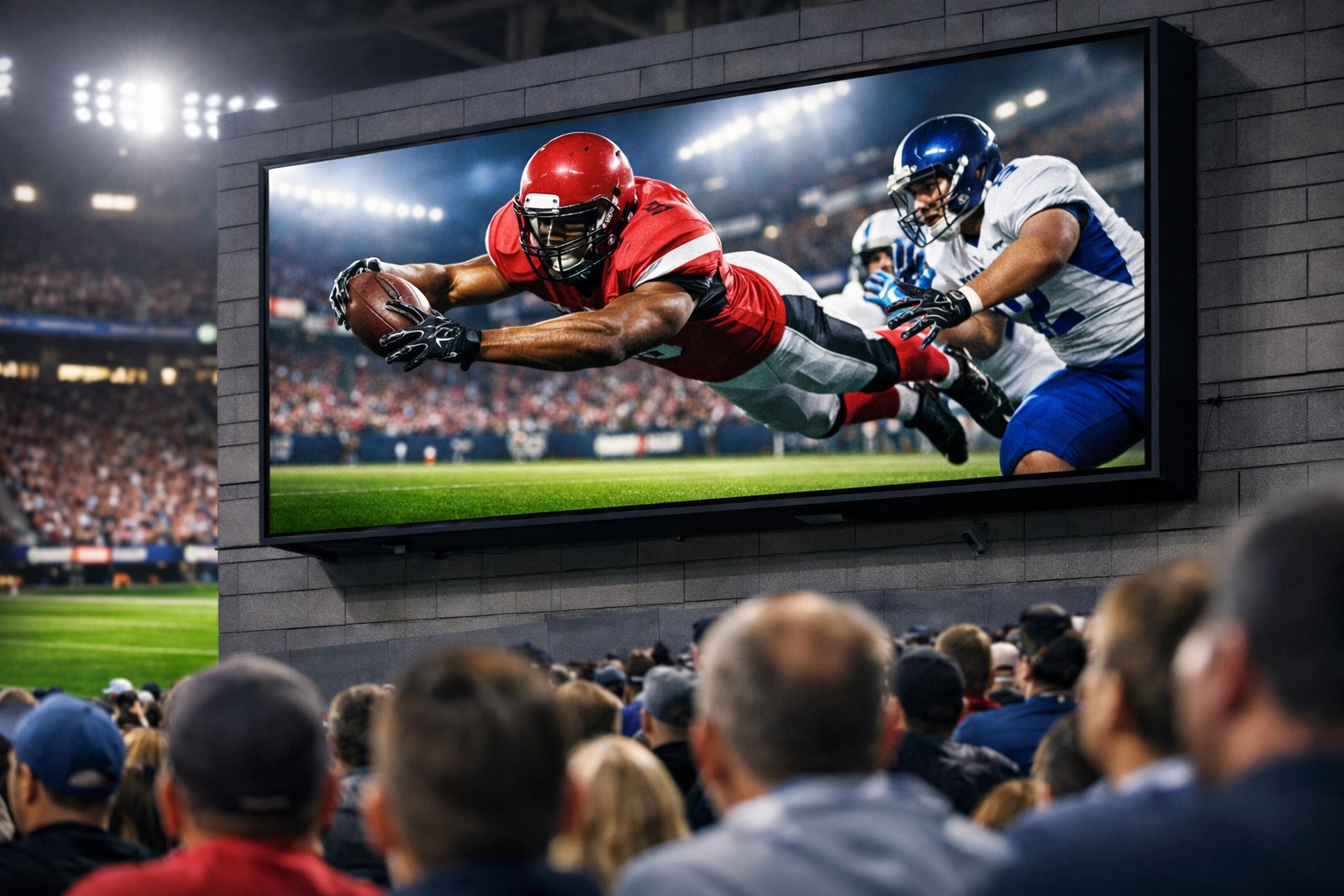
- Seating Bowl Integration: Leveraging Sportrons and LED ribbons to maintain brand presence during the game.
- Digital Integration: Connecting physical ads to mobile devices through geofencing and programmatic retargeting.
https://www.youtube.com/watch?v=l6J-0zileKE
Objective and Strategy: Beyond the Screen
The primary objective of venue-wide branding is to create a singular brand environment. During Super Bowl 2026, the strategy focused on high-impact visuals that capitalized on the stadium's expanded capacity of 75,000. By using a mix of traditional out-of-home (OOH) and programmatic digital out-of-home (pDOOH), brands were able to maintain visibility even when fans were away from their seats.
One of the most effective tactics used in recent years is the deployment of floor graphics. Often overlooked, the ground beneath a fan's feet is prime real estate in high-traffic areas like concession stands and restrooms. When combined with traditional billboards, these elements create a 360-degree branding experience that is difficult for consumers to ignore.
Technological Execution and Programmatic Integration
The shift from traditional stadium ads to programmatic solutions has fundamentally changed the ROI for sports marketing. In a recent analysis comparing programmatic DOOH vs. traditional stadium ads, data indicates that programmatic delivery offers superior flexibility and measurement.
At Super Bowl LX, programmatic platforms allowed advertisers to trigger creative changes based on real-time events. For example, if a specific play occurred on the field, digital screens throughout the concourse could update instantly to reflect a relevant brand message. This level of responsiveness was pioneered through partnerships with specialized platforms, ensuring that the right message reached the right audience at the optimal moment.
Measurable Results: Data-Driven Outcomes
Success in modern advertising is measured through hard data and brand lift studies. Previous campaigns managed by OOH Sports provide a roadmap for what is possible when venue-wide branding is executed correctly.
- Purchase Consideration: In a campaign for White Claw, the use of programmatic DOOH led to a 74 percent lift in purchase consideration.
- Brand Image: AB InBev’s Mike’s Hard Iced Tea saw a 119 percent lift in positive brand image by utilizing targeted DOOH placements.
- Direct Impact: Sea-Doo's first digital OOH campaign resulted in a 144 percent increase in purchase consideration.
These results are achieved by tracking device IDs exposed to the ads and following those users through the purchase funnel. By quantifying the impact of each placement, from the floors to the billboards, brands can justify the significant investment required for Super Bowl-level visibility.
Logistics and Execution: The OOH Sports Methodology
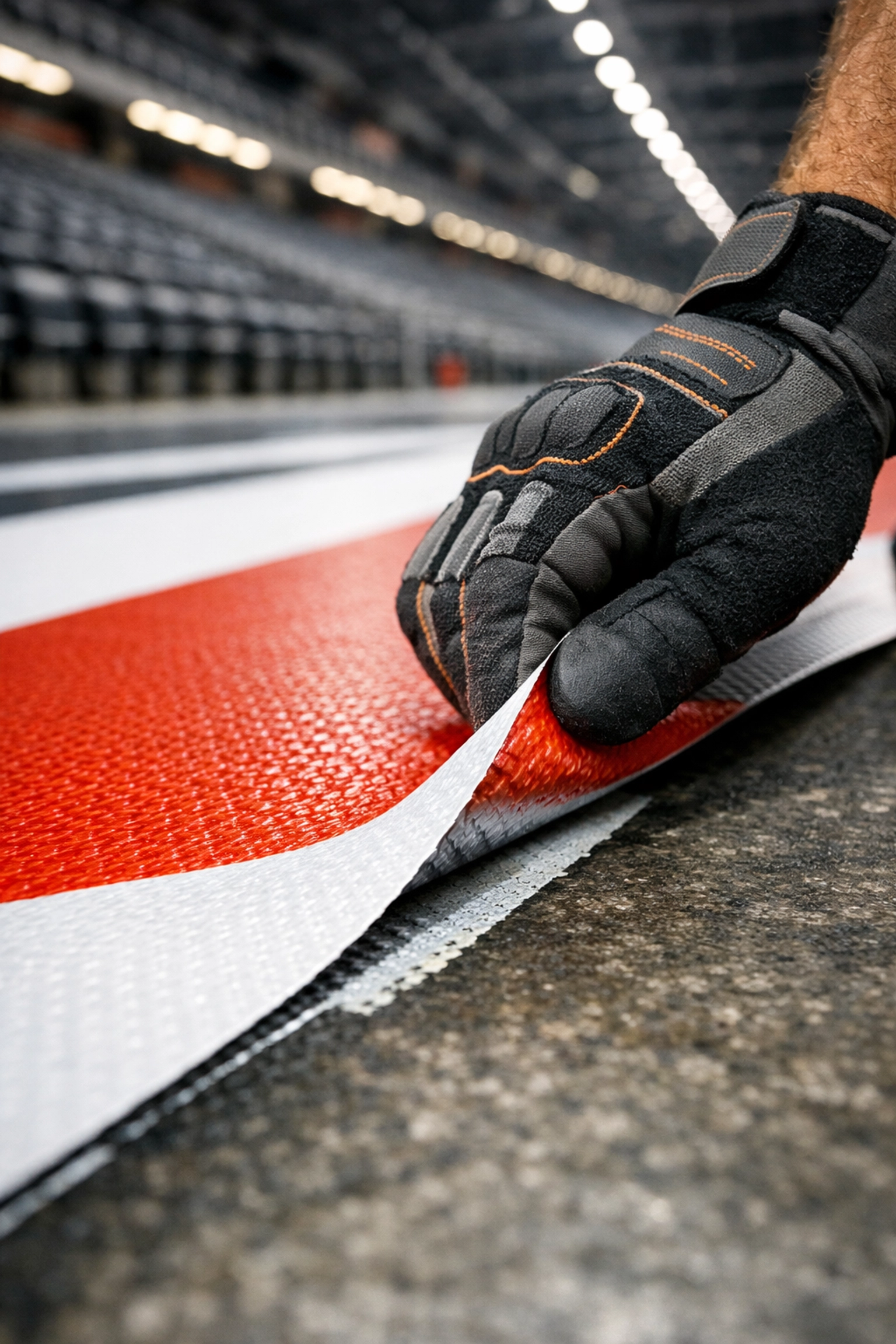
Executing a venue-wide campaign at Levi’s Stadium involves complex logistics. Every asset, from the vinyl used for floor decals to the digital files for the Sportrons, must meet strict company policies and terms of service.
The execution process typically follows these steps:
- Site Survey: Identifying high-dwell areas and optimal sightlines within the venue.
- Creative Optimization: Ensuring that visuals are legible from various distances and work across different screen aspect ratios.
- Installation and Integration: Managing the physical rollout of signage and the digital upload of programmatic assets.
- Monitoring and Optimization: Tracking play logs and physical condition of assets during the event to ensure 100 percent uptime.
The Role of DSPs in Omnichannel Campaigns
The use of Demand-Side Platforms (DSPs) has become an industry standard for managing the digital side of venue branding. For instance, the StackAdapt DSP has been instrumental in driving DOOH adoption by allowing advertisers to manage their stadium presence alongside their mobile and social media spend. This omnichannel approach ensures that the brand message is consistent across all platforms, reinforcing the impact of the physical signage located inside the stadium.
Conclusion: Preparing for the Future of Sports Advertising
The success of branding at Super Bowl 2026 was not an accident. It was the result of 40 years of refining the art and science of out-of-home advertising. As technology continues to evolve, the principles of venue-wide coverage remain the same: be visible, be relevant, and be measurable.
For brands looking to replicate this success at future events, the focus must remain on a comprehensive strategy that utilizes every available surface. Whether it is the floor of a high-traffic concourse or a programmatic billboard overlooking the stadium, every touchpoint is an opportunity to drive brand lift and purchase consideration.
To learn more about how to implement these strategies for upcoming seasons, visit the OOH Sports marketing page or explore detailed case studies from past campaigns. For direct inquiries regarding venue-wide opportunities, interested parties may contact the OOH Sports team.