
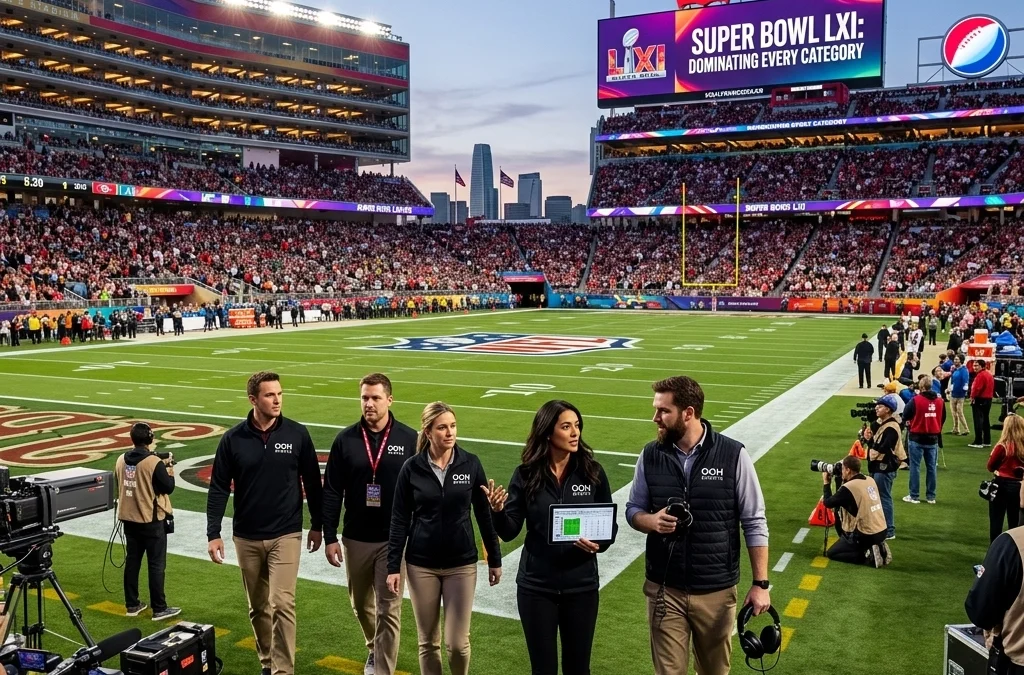
Super Bowl LX has concluded, leaving behind a trail of broken records and massive shifts in how brands approach large scale sports marketing. While the Seattle Seahawks secured a victory over the New England Patriots, the real competition took place outside the lines of the gridiron. For advertisers, the 2026 Super Bowl served as the ultimate testing ground for a strategy refined over four decades.
The landscape of sports advertising has moved beyond the single, high cost television spot. In 2026, the most successful campaigns utilized a "ground up" approach that dominated every physical and digital category. This method relied on a combination of legacy expertise and cutting edge technology to ensure that brand messaging was impossible to ignore, whether a fan was walking through the stadium corridors or scrolling through a mobile device in the stands.
The Forty Year Foundation of Advertising Leadership
Success at the level of the Super Bowl does not happen overnight. OOH Sports has spent 40 years navigating the complexities of out of home advertising, witnessing the transition from static paper billboards to the fully integrated digital ecosystems seen in 2026. This history provides a unique perspective on what captures human attention in high pressure environments.
Over the decades, the goal has remained consistent, to place the right message in front of the right person at the exactly right moment. However, the tools used to achieve this have evolved significantly. The foundation of the 2026 strategy was built on long term relationships with venue operators and a deep understanding of fan psychology. By leveraging forty years of data, OOH Sports identified that the most impactful moments for a brand often occur before the fan even reaches their seat.

Venue-Wide Coverage: From Floors to Billboards
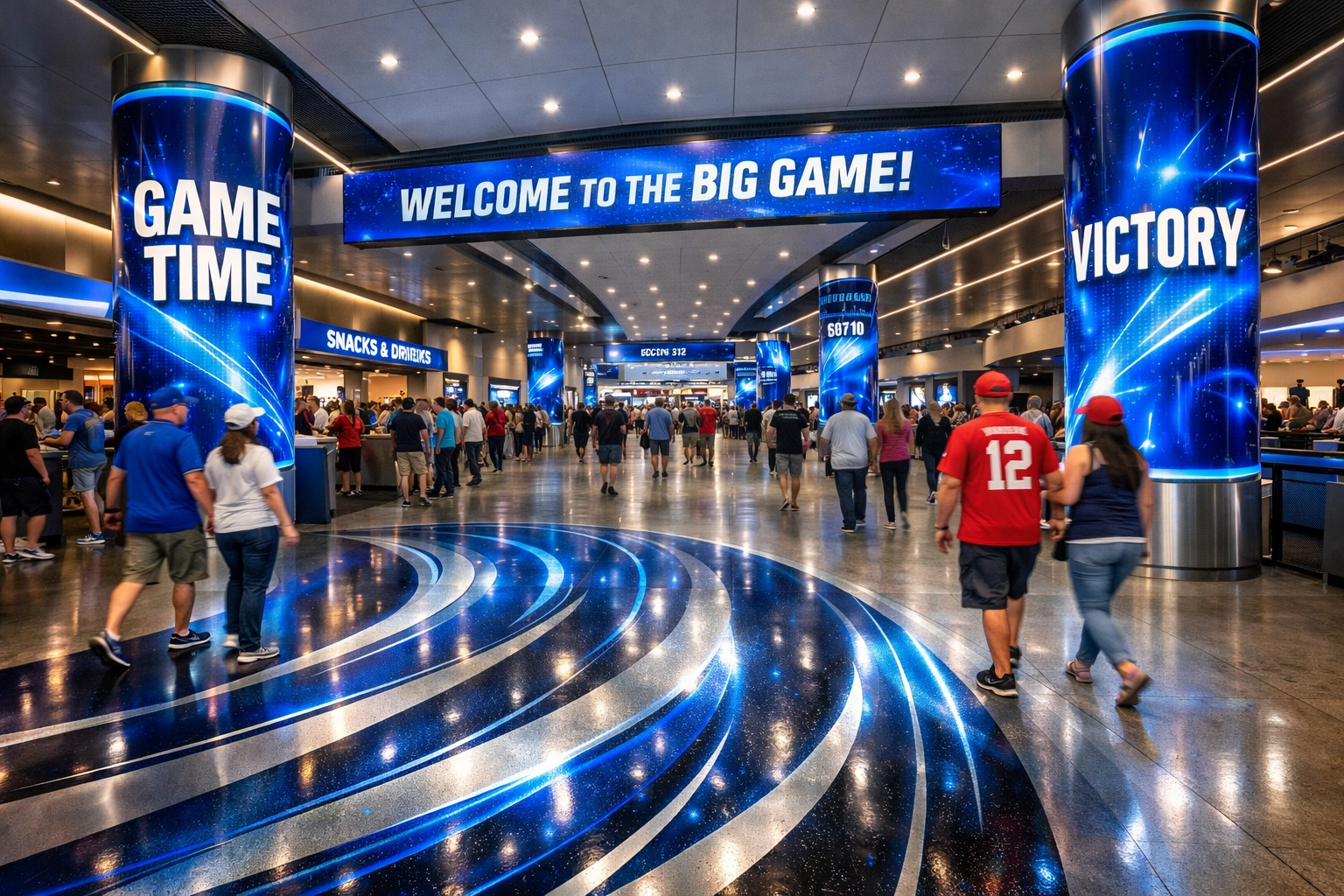
To dominate a category at the Super Bowl, a brand must achieve omnipresence. In 2026, OOH Sports implemented a venue-wide coverage model that treated every surface as a potential touchpoint. This included everything from traditional large scale billboards surrounding the stadium to unconventional placements like floor graphics, elevator wraps, and digital kiosks.
This "ground up" philosophy ensures that the consumer is constantly immersed in the brand narrative. When a fan enters the host city, they are greeted by massive static and digital displays. As they move closer to the venue, the messaging becomes more frequent and more targeted. Inside the stadium, the coverage extends to the very floors they walk on. This comprehensive saturation creates a psychological sense of brand authority that a standalone TV ad simply cannot match.
For more information on how digital assets are shifting the industry, you can read about how 25,000 digital screens are changing sports marketing.
The Three Wave Strategy for Market Dominance
The execution of the Super Bowl 2026 campaign followed a disciplined, three-wave calendar approach designed to build momentum and maximize ROI.
Wave 1: The Foundation
The first wave focused on establishing a baseline presence in the months leading up to the game. This involved securing prime real estate in the host city and surrounding transportation hubs. The objective was to claim the physical space before competitors could react. This wave relied heavily on the "spine" of the campaign, the permanent and semi-permanent physical billboards that defined the city’s skyline.
Wave 2: Product Proof
Two weeks before kickoff, the strategy shifted to "Product Proof." This phase used social validation and comparison messaging to position brands as the undisputed leaders in their respective categories. Advertisers leveraged influencer endorsements and real time digital updates to create a sense of urgency. During this window, the messaging moved from general awareness to specific value propositions.
Wave 3: The Main Event Activation
The final wave occurred during the week of the game. This was the most intense phase of the campaign, characterized by venue-wide saturation and real time digital triggers. Every screen and every physical surface was synchronized to deliver a cohesive message.
Integrating the "Spine" and the "Muscle"
One of the most significant "secrets" revealed during the 2026 season was the seamless integration of physical assets (the Spine) and digital technology (the Muscle). Physical OOH assets provide the scale and authority, while programmatic digital out of home (pDOOH) provides the flexibility and precision.
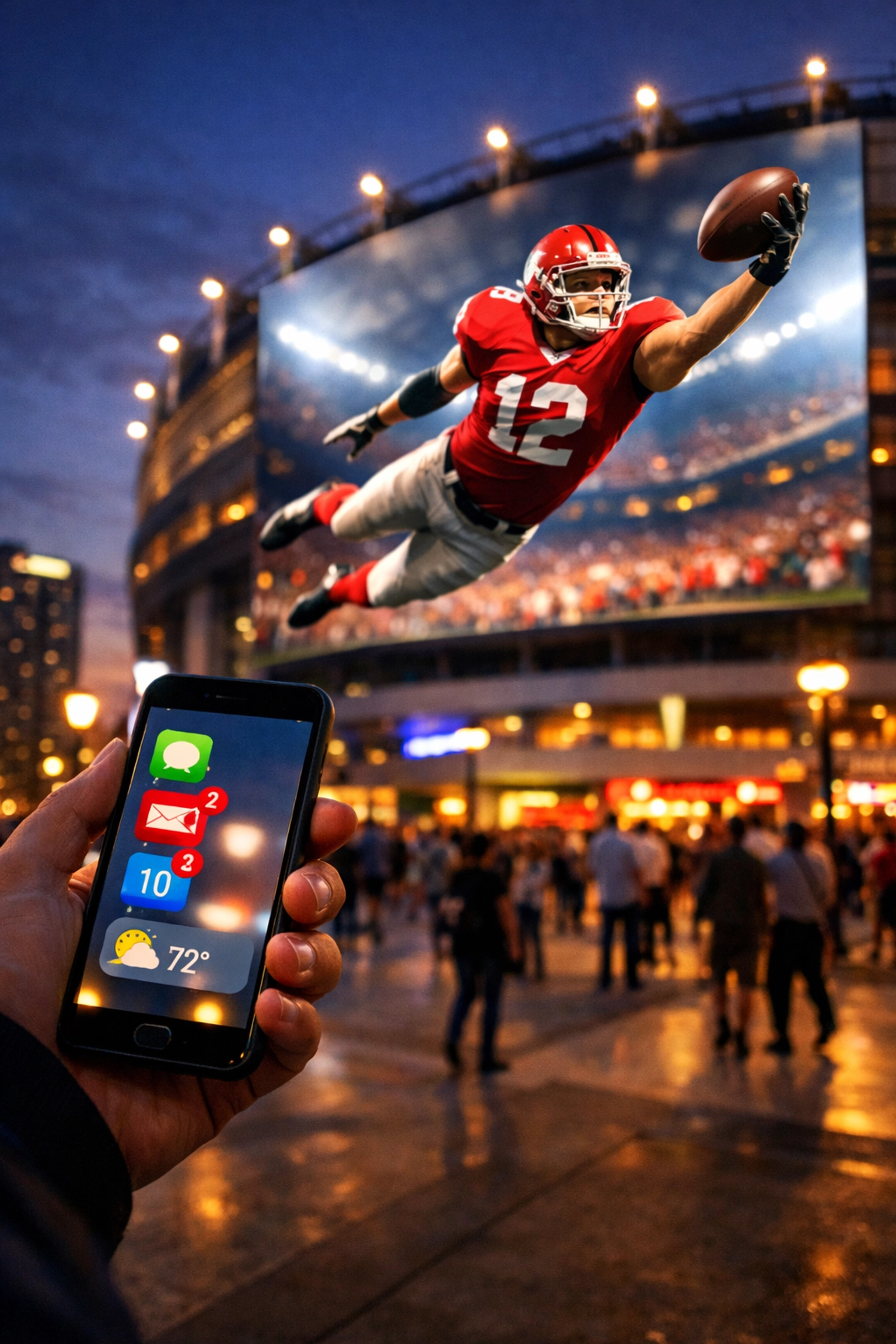
By using mobile proximity messaging, OOH Sports was able to target fans who were physically standing near specific billboards or floor graphics. When a fan passed a brand’s physical activation, they received a synchronized notification or offer on their mobile device. This cross channel approach ensures that the message follows the consumer, reinforcing the physical visual with a digital call to action.
https://www.youtube.com/watch?v=l6J-0zileKE
This combination of tactics is a primary reason why programmatic DOOH sports campaigns are projected to hit $58 billion by 2030. The ability to adjust creative in real time based on game events or local weather conditions gives advertisers a level of agility that was previously impossible.
Quantifying Success: Results and ROI Analysis
The success of the 2026 "ground up" approach is backed by measurable data. Campaigns that integrated venue-wide OOH with digital proximity targeting saw significantly higher brand lift than those that relied on traditional methods alone.
For instance, previous studies conducted by industry partners indicated that programmatic DOOH campaigns can drive up to a 74% lift in purchase consideration. During Super Bowl 2026, brands that utilized the full spectrum of floor to billboard coverage reported a marked increase in positive brand image and real time engagement.
The ROI of these campaigns is often superior to traditional stadium sponsorships. By bypassing the limitations of official league partnerships and focusing on the surrounding ecosystem, brands can achieve similar or better results at a fraction of the cost. The data shows that programmatic DOOH often delivers better ROI for sports marketing because it eliminates waste and focuses spend on the most valuable audiences.
Execution and Technical Logistics
The logistics of dominating every category at the Super Bowl are immense. It requires a coordinated effort between media planners, hardware technicians, and data analysts. For the 2026 event, OOH Sports managed thousands of individual assets, ensuring that every digital screen was functional and every physical wrap was perfectly installed.
The technical execution involved using specialized Demand Side Platforms (DSPs) to manage real time bidding for digital screens. This allowed brands to increase their presence during peak traffic times, such as the hours immediately preceding kickoff and the period following the final whistle. The use of AI powered analytics also played a crucial role, providing real time feedback on foot traffic and audience dwell times.

The Future of Sports Advertising Beyond 2026
As we look past the 2026 season, the strategies used to dominate this year’s Super Bowl will become the new industry standard. The reliance on 40 years of expertise, combined with the aggressive adoption of venue-wide digital integration, has changed the expectations of what a successful campaign looks like.
The "secrets" revealed in 2026 are not just about having the biggest billboard or the most expensive TV spot. They are about creating a comprehensive, inescapable environment where the brand and the event become one. By starting from the ground up, literally from the floors of the stadium to the billboards in the sky, OOH Sports has demonstrated that category dominance is a matter of strategic precision and technical excellence.
For advertisers looking to replicate this success in future events, the lesson is clear. The era of the fragmented campaign is over. The future belongs to those who can integrate the physical and the digital into a single, cohesive experience for the fan. As the industry moves toward 2030, OOH Sports will continue to lead this evolution, utilizing the same disciplined approach that made Super Bowl LX a landmark achievement in advertising history.