
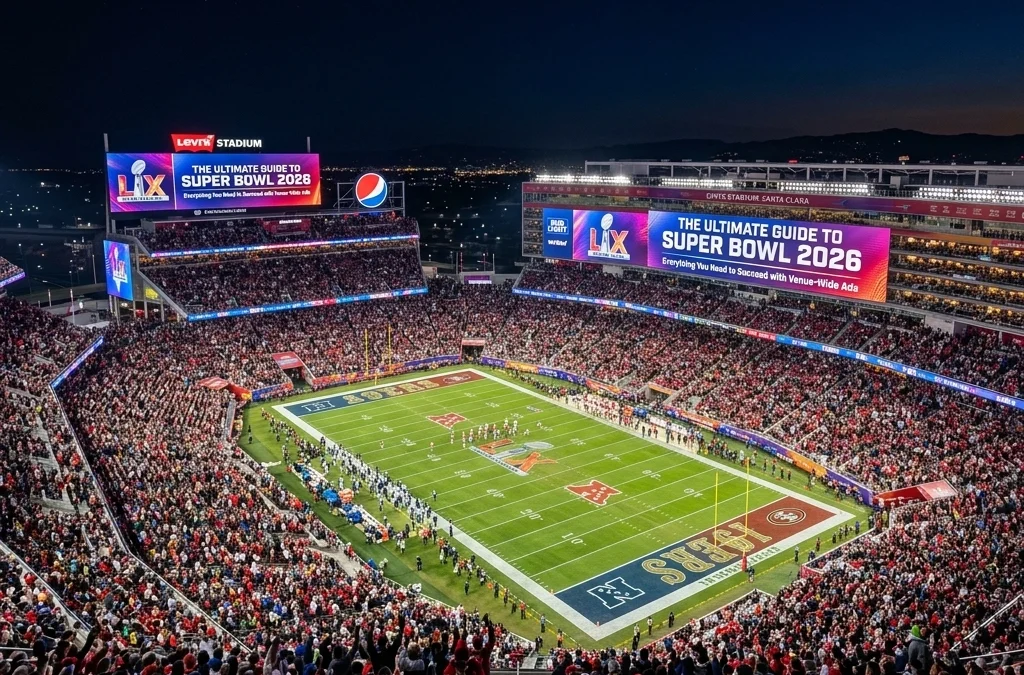
Super Bowl LX, held on February 8, 2026, at Levi's Stadium in Santa Clara, California, represented a milestone in sports history and advertising excellence. The Seattle Seahawks victory over the New England Patriots with a score of 29-13 provided a high-intensity backdrop for brands looking to capture the attention of over 68,000 fans in attendance and millions watching globally. For advertisers, the 2026 season was not just about a single game. It was the culmination of forty years of leadership in the out-of-home (OOH) advertising sector.
Achieving success at an event of this magnitude requires a venue-wide strategy that moves beyond simple television spots. It involves a comprehensive approach that saturates the environment from the parking lot to the stadium floor. This guide examines the strategies, technologies, and historical expertise required to dominate the advertising landscape during the most significant sporting event of the year.
Forty Years of Advertising Leadership
The advertising landscape has shifted significantly since the mid-1980s. Four decades ago, stadium advertising was limited to static wooden boards and basic scoreboard mentions. Today, the environment is a fully integrated digital ecosystem. OOH Sports has spent these forty years refining the process of connecting brands with fans. This experience allows for a deep understanding of fan psychology and movement patterns within large venues.
Leading an industry for forty years involves constant adaptation. The transition from traditional print to programmatic digital out-of-home (pDOOH) has changed how budgets are allocated and how impact is measured. By leveraging long-term relationships with stadium owners and technical providers, advertisers can secure premium placements that are often unavailable to those without a historical foothold in the industry.

The Strategy of Venue-Wide Coverage
A successful Super Bowl campaign must be immersive. This means moving beyond high-level billboards and into the physical path of the consumer. Venue-wide coverage ensures that a brand message is the first thing a fan sees when they arrive and the last thing they see as they leave.
Floor Graphics and Ground-Level Impact
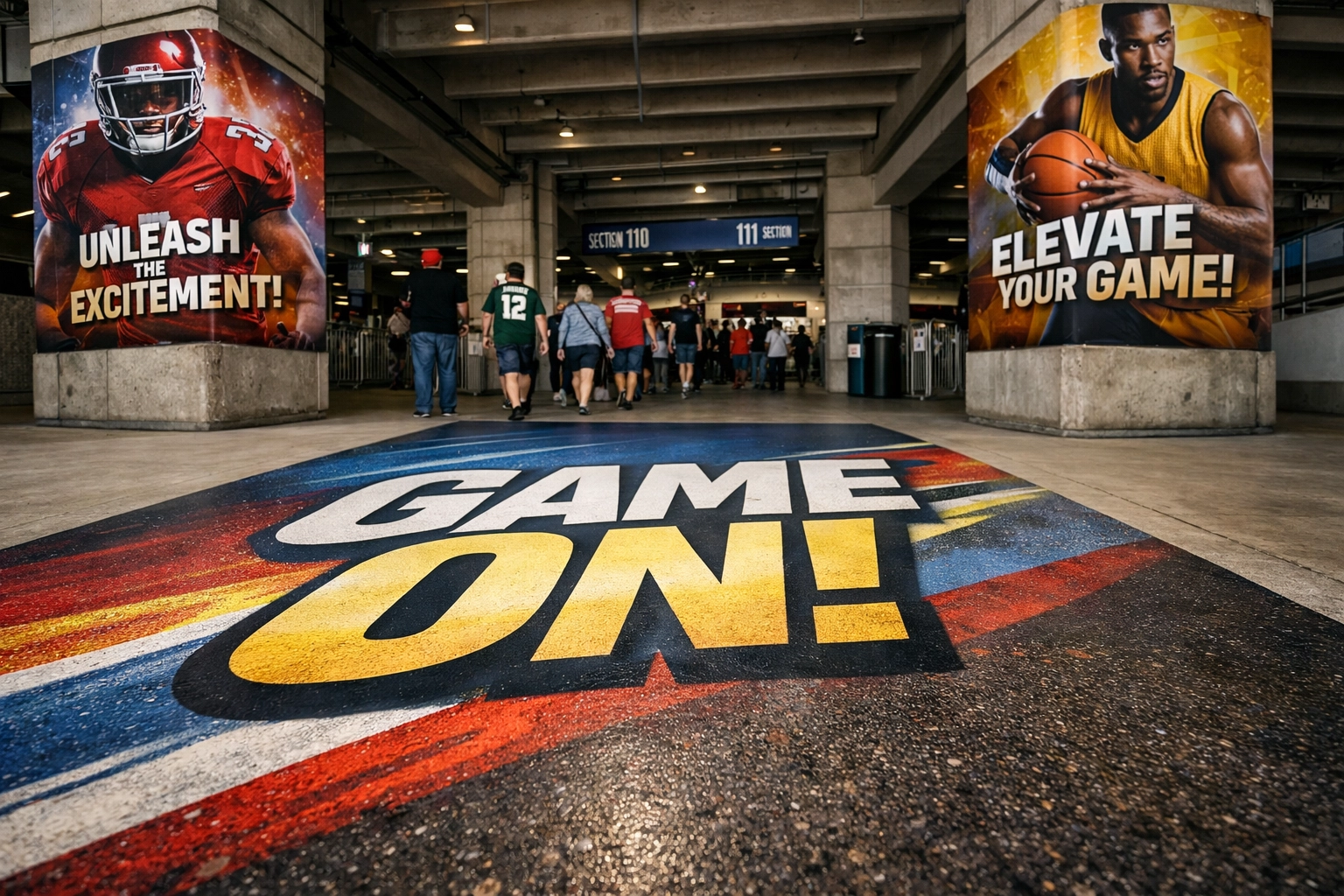
One of the most overlooked areas in stadium advertising is the ground. Floor graphics in high-traffic concourses, entryways, and VIP lounges offer a unique touchpoint. These placements are highly effective because they exist within the natural line of sight of fans navigating the stadium. During Super Bowl LX, floor graphics were used to guide fans to specific activations, creating a seamless blend of utility and promotion.
Digital Billboards and Sportrons
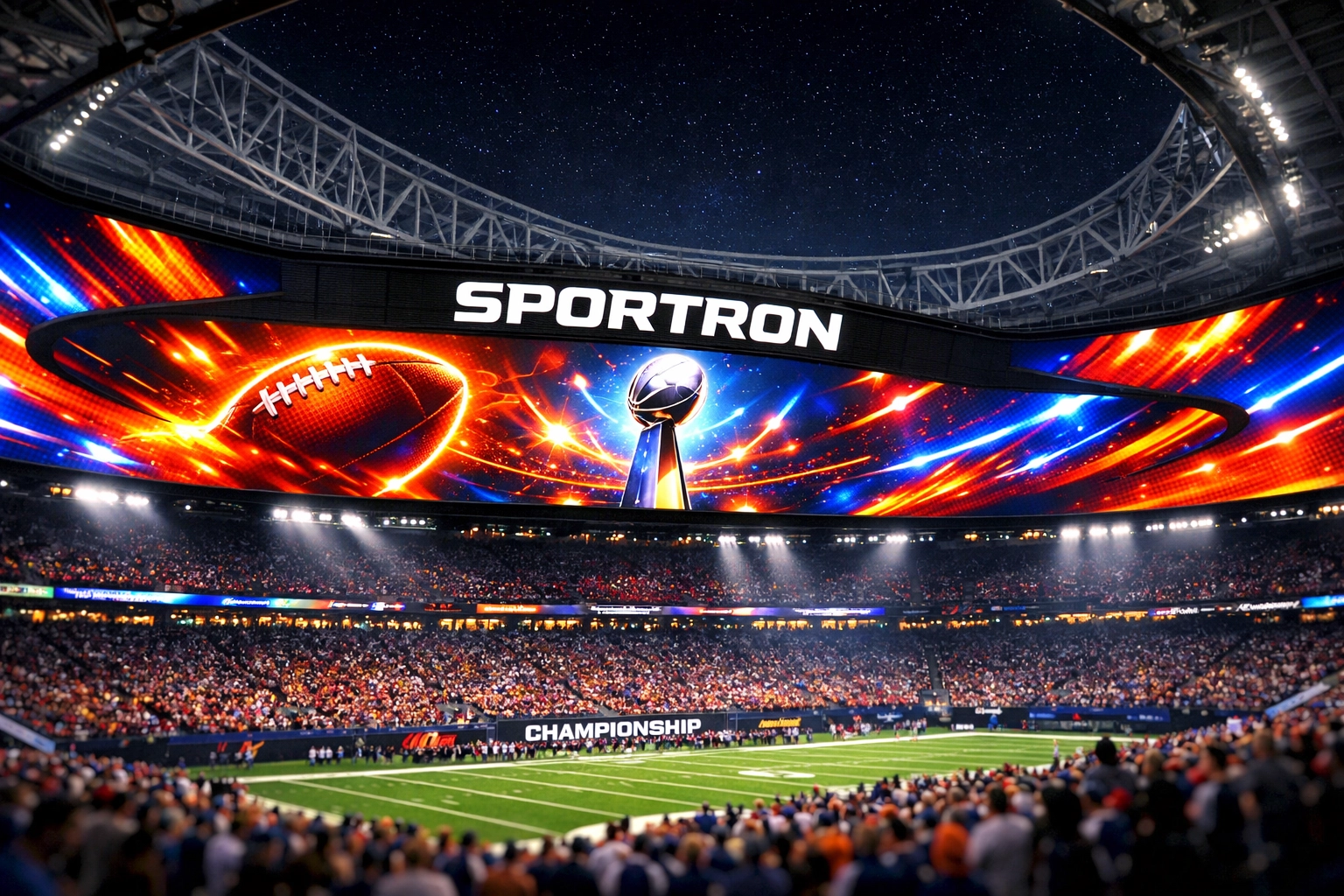
Traditional billboards still play a vital role, but the integration of Sportrons has revolutionized the visual impact. These high-definition displays provide the flexibility to change creative in real-time, allowing brands to react to the action on the field. If a specific player performs a historic play, advertisers can update their messaging within minutes to capitalize on the momentum.
Digital Integration and the Power of Video
Visual storytelling is the most effective way to engage a distracted audience in a high-energy environment. Incorporating high-quality video content into the stadium circuit ensures that the brand message is not just seen, but experienced.
The following video demonstrates the scale and impact of modern sports advertising placements:
https://www.youtube.com/watch?v=l6J-0zileKE
Objective and Strategy: The Roadmap to Success
To succeed at an event like the Super Bowl, the objective must be clear. Whether the goal is brand awareness, purchase consideration, or direct fan engagement, the strategy must be data-driven.
- Early Entry: Securing inventory months in advance is essential. The demand for Super Bowl LX placements began nearly a year before kickoff.
- Audience Segmentation: Not every fan in the stadium is the same. Luxury suite occupants require different messaging than those in the general stands.
- Omnichannel Alignment: The OOH campaign must mirror the digital and social media efforts to create a unified brand voice.
Advertisers often wonder how these strategies translate to actual results. For instance, analyzing how Sea-Doo's first digital OOH campaign increased purchase consideration by 144 percent provides a blueprint for how sports marketing can drive tangible business outcomes.
Programmatic DOOH vs. Traditional Stadium Ads
The debate between programmatic and traditional advertising is central to modern sports marketing. Programmatic digital out-of-home (pDOOH) allows for more precise targeting and flexible buying models. Instead of buying a static board for a set period, brands can buy impressions during specific times when fan density is at its peak.
Research into programmatic DOOH vs. traditional stadium ads suggests that while traditional ads provide consistent visibility, programmatic options often deliver better return on investment (ROI) by reducing wasted impressions. This efficiency is crucial when ad spend for a single Sunday can reach record-breaking levels.
Technology Partners and Execution
Execution is where many campaigns fail. Working with specialized technology partners ensures that the creative is delivered without technical glitches. Platforms like StackAdapt have become industry standards for driving programmatic adoption in sports.
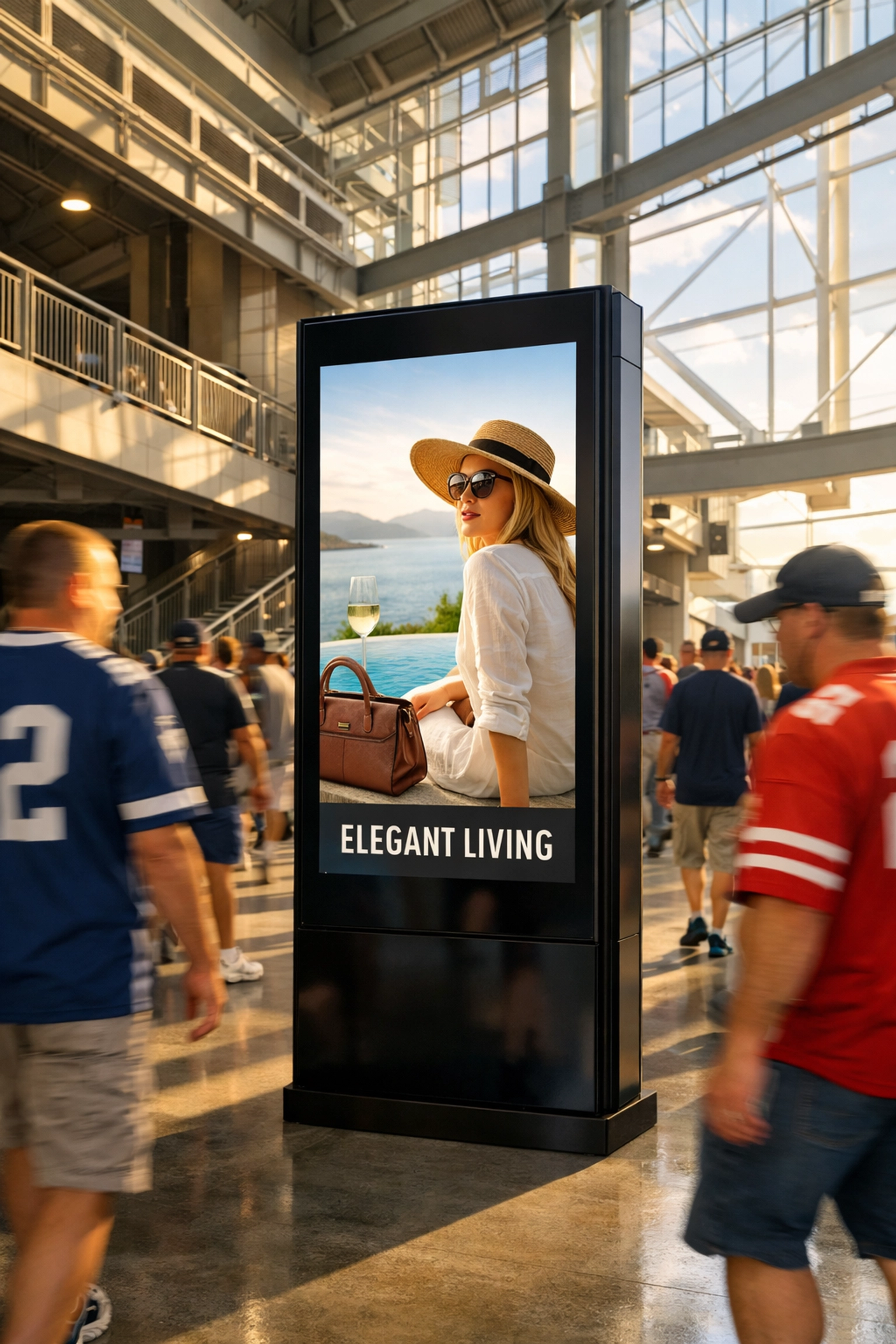
At Levi's Stadium, the infrastructure supports high-bandwidth content delivery, but the management of that content requires expert oversight. From monitoring hardware health to ensuring that color calibration is consistent across hundreds of screens, the logistics of venue-wide advertising are complex.
Measurable Results and Case Studies
The success of a Super Bowl campaign is measured through brand lift studies, foot traffic attribution, and sales data. Recent industry data shows that the sports advertising market is on a significant upward trajectory. In fact, DOOH sports advertising is expected to hit 50 billion dollars by 2030.
Looking at specific examples, the effectiveness of these campaigns becomes clear:
- White Claw: Their programmatic DOOH campaign drove a 74 percent lift in purchase consideration for their vodka launch.
- AB InBev: Mike's Hard Iced Tea saw a 119 percent lift in positive brand image through strategic OOH placements.
- Nike: During major sporting events, Nike often dominates the visual landscape even without being an official sponsor, as seen in their ambush marketing tactics at the NYC Marathon.
Logistics: From the Floor to the Billboards
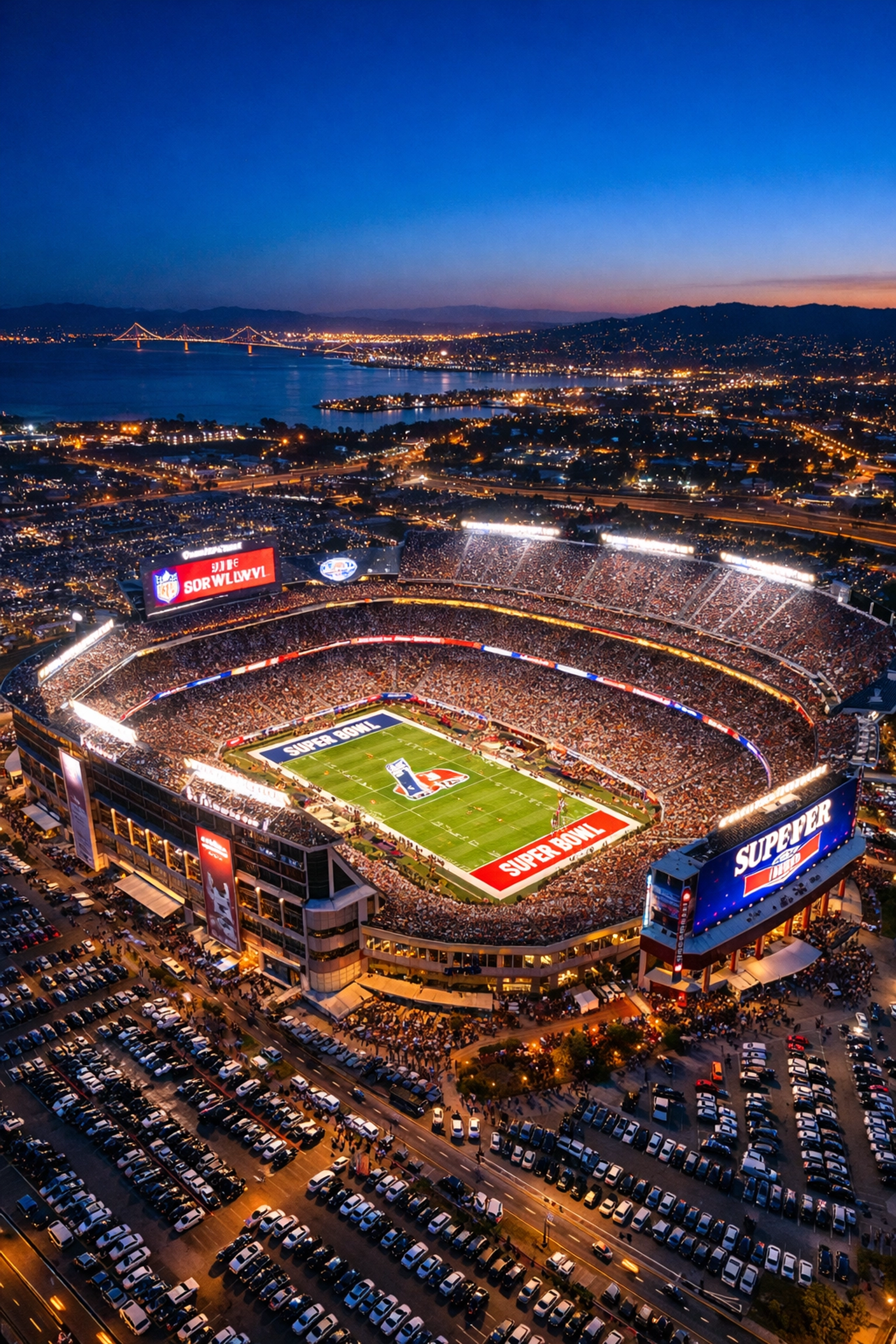
To achieve venue-wide coverage, an advertiser must coordinate multiple layers of inventory:
- Exterior Billboards: These target fans as they enter the Santa Clara area via major highways.
- Parking Lot Signage: This captures the "tailgate" audience before they enter the security perimeter.
- Concourse Screens: These are critical for reaching fans during halftime and bathroom breaks.
- In-Bowl Sportrons: These offer the highest visibility during play and the halftime show featuring Bad Bunny.
- Floor Graphics: These provide high-impact, close-proximity engagement in high-traffic zones.
Managing these moving parts requires a partner with a proven track record. The logistics of installation, especially for custom floor graphics and large-format wraps, must be handled during tight stadium windows leading up to the game.
The Importance of Brand Tone and Creative
While the technology and logistics are vital, the creative content must be simple and impactful. In a loud, crowded environment, complex messages are lost. The brand tone should be straightforward and aligned with the energy of the crowd. Simple visuals with bold text perform best on Sportrons and billboards.
Conclusion: Looking Toward the Future
Super Bowl LX was a testament to the power of venue-wide advertising. As the industry moves toward 2030, the integration of data and physical space will only deepen. For brands looking to succeed, the lessons of 2026 are clear: start early, think venue-wide, and leverage forty years of expertise to ensure every corner of the stadium tells your story.
For more information on how to implement these strategies for upcoming seasons, visit the OOH Sports blog or explore our case studies to see the data behind the wins. To start planning your next venue-wide campaign, you can contact the team directly.