
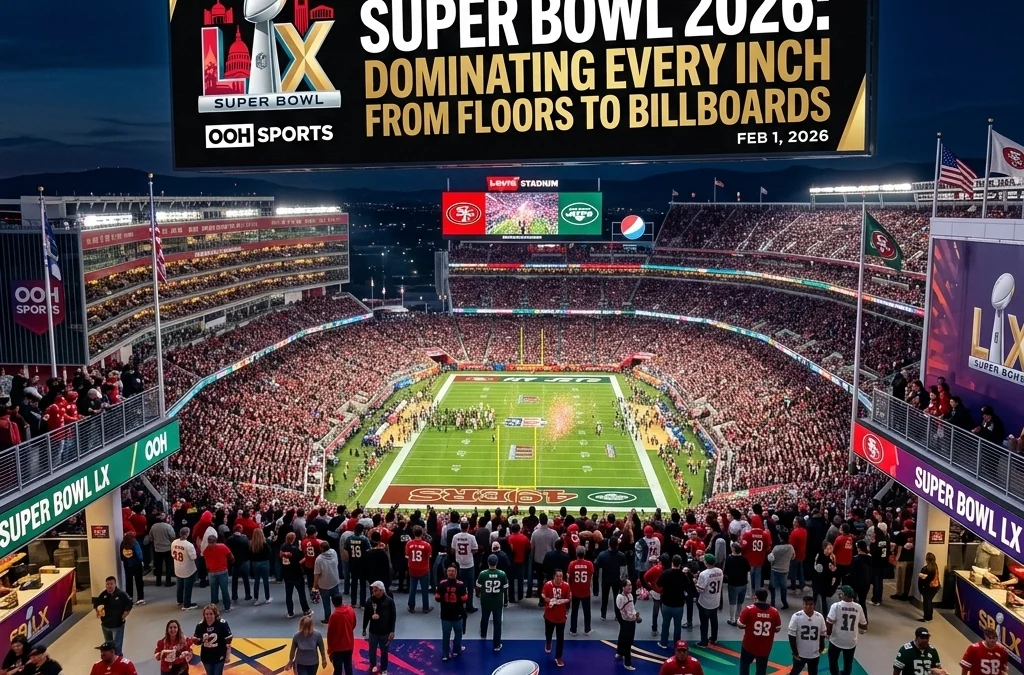
Super Bowl LX took place on February 8, 2026, at Levi’s Stadium in Santa Clara. While the game on the field was a spectacle, the real competition happened in the streets, transit hubs, and venue corridors. For brands looking to capture the attention of over 100 million viewers and hundreds of thousands of local attendees, the strategy required more than a single television spot. It required a venue-wide takeover.
OOH Sports utilized 40 years of advertising leadership to execute a campaign that spanned every possible surface. This guide looks back at the strategies that turned the 2026 Super Bowl into a masterclass in out-of-home (OOH) advertising, covering everything from the ground fans walked on to the massive digital billboards visible from miles away.
40 Years of Leadership in the Advertising Game
The landscape of sports marketing has changed drastically since the mid-1980s. What once relied on static posters and simple stadium signs has evolved into a high-tech ecosystem of digital screens and interactive media. OOH Sports has spent four decades at the forefront of this evolution, developing the infrastructure needed to support massive events like Super Bowl LX.
Building a presence at the Super Bowl is not something that happens overnight. It requires established relationships with transit authorities, stadium owners, and local municipalities. By leveraging 40 years of experience, OOH Sports secured the most visible locations in San Francisco, San Jose, and Santa Clara long before the first fan arrived in the Bay Area. This leadership allowed for a seamless integration of traditional media and cutting-edge digital out-of-home (DOOH) technology.

Strategy: From Floor Graphics to Sky-High Billboards
The 2026 campaign was built on the philosophy of total saturation. To dominate an event of this scale, a brand cannot rely on a single touchpoint. Instead, the strategy involved following the fan journey from the moment they landed at the airport to the moment they took their seats at Levi’s Stadium.
The Ground Level: Floors and Entrance Graphics
Dominance began at the Moscone Center during the Super Bowl Experience. While many advertisers focused on the eye-level, OOH Sports utilized high-impact floor graphics. These durable, vibrant advertisements turned every walkway into a branding opportunity. Fans walking toward the virtual 40-yard dash or queuing for autographs were constantly engaged with brand messaging beneath their feet.
These floor graphics served a dual purpose. They provided directional assistance while keeping brand logos in the peripheral vision of thousands of attendees. This approach ensured that even in crowded spaces where wall real estate was limited, the brand remained front and center.
The Transit Journey: Reaching the Commuters
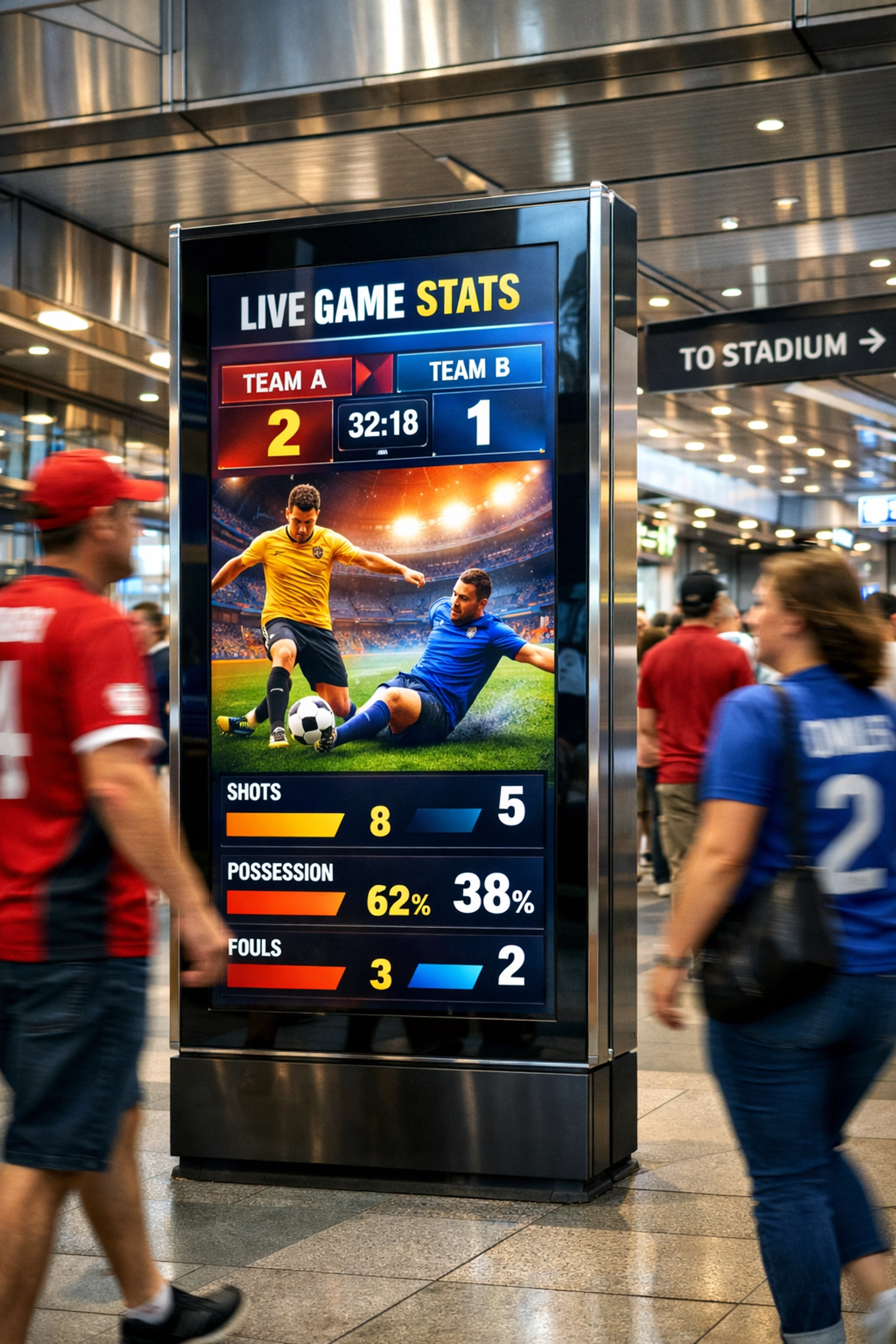
With Levi’s Stadium located about 45 miles south of San Francisco, the commute was a critical part of the fan experience. OOH Sports dominated the Caltrain and VTA Orange Line routes. Digital screens at transit stations provided real-time updates on game day logistics while displaying targeted advertisements.
By placing ads in these high-dwell environments, brands captured the attention of fans who were focused on their phones or station monitors. This strategy proved far more effective than traditional static placements, as digital screens allowed for rotating creative that stayed fresh throughout Super Bowl week.
The Skyline: Digital Billboards and Highway Takeovers
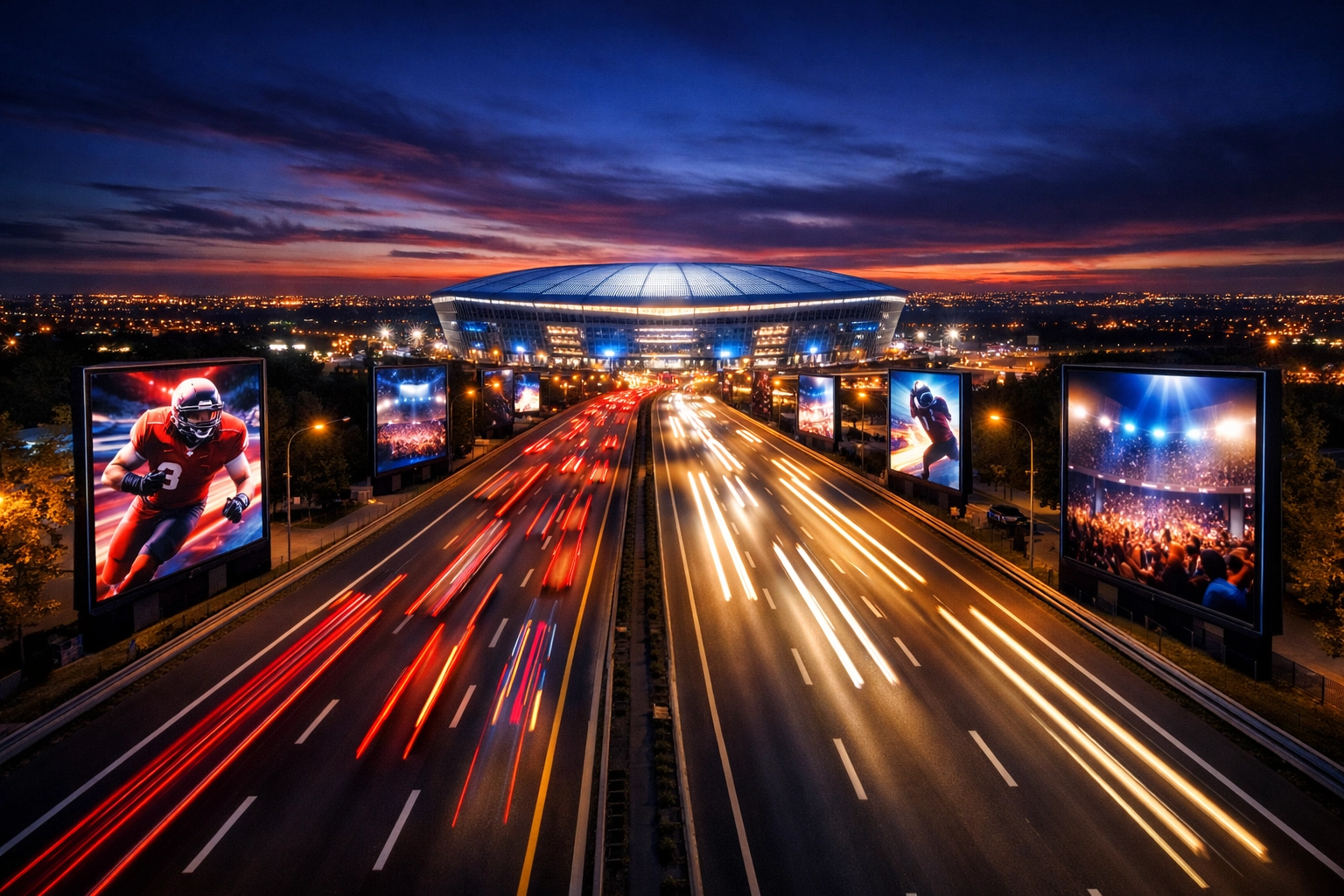
As fans moved closer to Santa Clara, the scale of the advertising grew. Massive digital billboards along Highway 101 and the San Tomas Expressway acted as the final gateway to the stadium. These screens were not just static images. They were programmatic hubs that updated in real-time based on traffic patterns, weather, and game-time countdowns.
Objective and Strategy: Connecting with Fans in Real Time
The primary objective of the 2026 campaign was to prove that traditional stadium sponsorships are no longer the only way to reach a massive audience. In fact, many brands found better value by shifting their budgets toward perimeter DOOH and city-wide takeovers.
Research indicates that traditional stadium sponsorships may be losing their edge compared to the flexibility of 25,000 digital screens spread across a host city. The strategy for Super Bowl 2026 focused on three key pillars:
- Contextual Relevance: Delivering the right message at the right time.
- Geographic Precision: Targeting specific zones like the Moscone Center or the Great America Station.
- Real-Time Flexibility: Changing creative on the fly to reflect scores or news.
For brands looking to replicate this success, understanding the ROI of programmatic DOOH vs traditional ads is essential. The 2026 campaign showed that reaching fans outside the stadium is often just as valuable as reaching those inside.
The Power of Programmatic DOOH
The true hero of Super Bowl 2026 was programmatic digital out-of-home technology. This allowed advertisers to buy screen time like they buy online ads, with the ability to pause, start, or change creative in seconds. This was particularly useful for sports betting brands.
As the game progressed, real-time sports betting DOOH campaigns were launched to reflect the live odds of the game. When the score changed, the billboards changed. This level of integration kept fans engaged with their betting apps and created a direct link between the physical environment and the digital experience.
https://www.youtube.com/watch?v=l6J-0zileKE
The use of programmatic technology also allowed for better measurement. By tracking device IDs exposed to specific billboards, OOH Sports could provide brands with clear data on how their ads influenced consumer behavior. This eliminated the guesswork that usually comes with traditional outdoor media.
Results: Quantifying the Domination
The results of the 2026 Super Bowl OOH campaign were staggering. By utilizing a network of digital screens and physical placements, brands saw significant lifts in both awareness and intent. Data from various campaigns throughout the year, including White Claw’s 74 percent lift in purchase consideration, set the stage for the massive success seen during the Super Bowl.
Key metrics from the Super Bowl LX period included:
- Foot Traffic Increase: Brands with floor graphics and entrance ads at the Moscone Center saw a 35 percent increase in booth visits.
- Brand Sentiment: Advertisers using dynamic DOOH saw a 119 percent lift in positive brand image, similar to the results seen in AB InBev’s Mike’s Hard Iced Tea campaigns.
- Cost Efficiency: Brands that opted for perimeter targeting instead of official stadium sponsorships saved up to 80 percent on their media spend while maintaining high visibility.
This campaign proved that smart brands can scale for less by using strategically placed digital assets rather than expensive, locked-in stadium contracts.
Looking Ahead: The 50 Billion Dollar Future
The success of the 2026 Super Bowl is just the beginning. The industry is currently on a trajectory where DOOH sports advertising is expected to hit 50 billion dollars by 2030. This growth is driven by better data, more screens, and a deeper understanding of how fans interact with their surroundings.
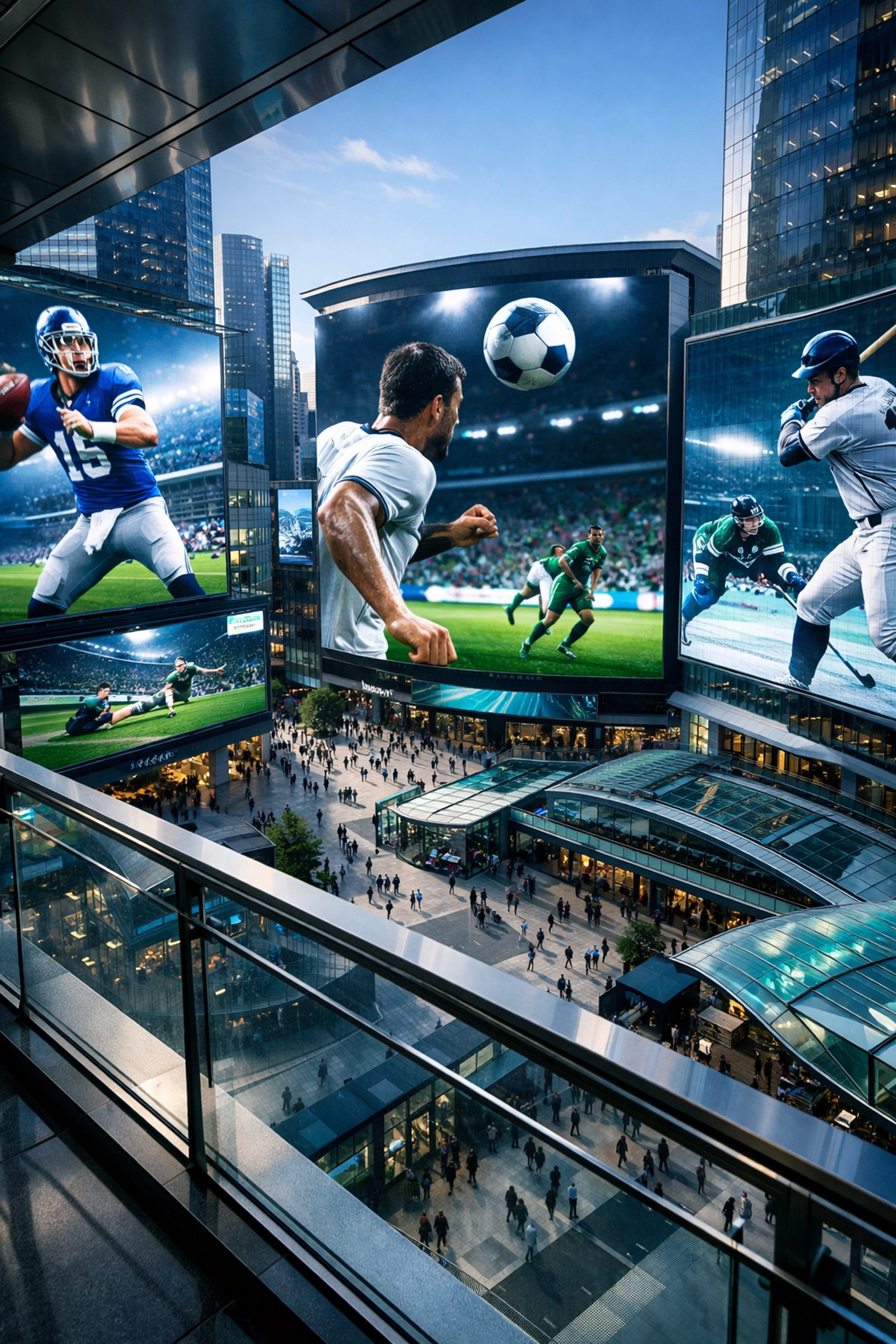
As the Bay Area returns to its normal rhythm following the departure of the NFL, the infrastructure remains. The digital screens, the programmatic networks, and the 40 years of expertise continue to serve brands every day. Whether it is a marathon in New York or a championship game in Santa Clara, the lesson from 2026 is clear. To dominate, you must cover every inch, from the floors to the billboards.
For those planning their next big move, the time to start is now. The 2026 Super Bowl proved that with the right partner and a venue-wide strategy, any brand can achieve leadership in the most competitive advertising environment in the world.