
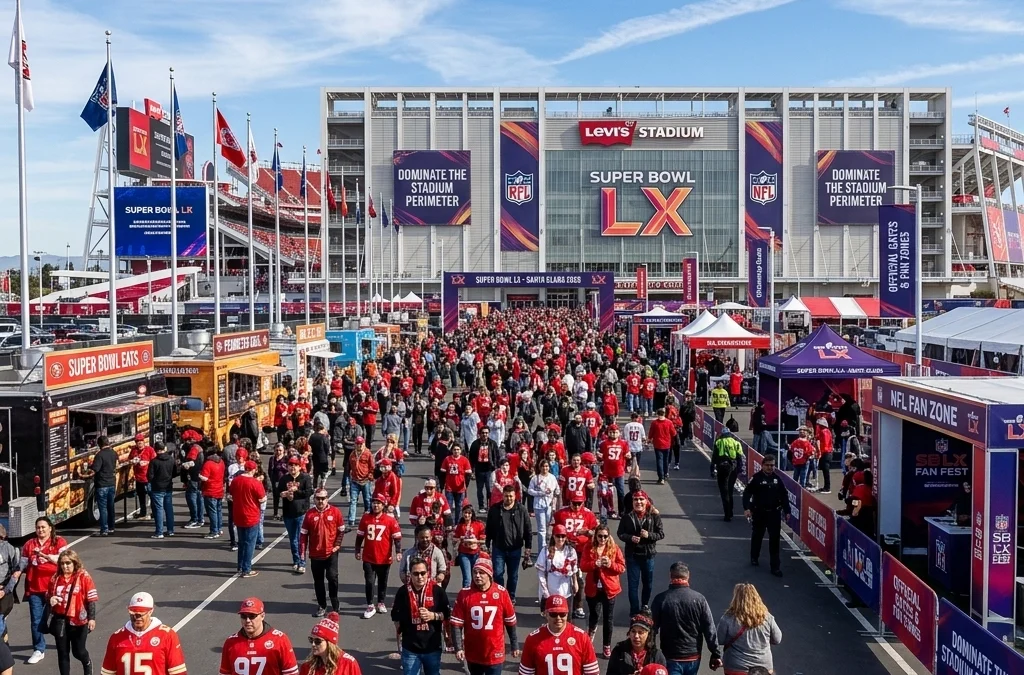
Super Bowl LX has come and gone, leaving a trail of broken records and marketing triumphs in its wake. The event at Levi’s Stadium in Santa Clara was more than just a football game. It was a massive showcase for the power of Out of Home (OOH) advertising. For brands looking to understand how to dominate the perimeter of the biggest sporting event on the planet, 2026 provided the perfect blueprint.
OOH Sports took center stage during this event. With 40 years of advertising leadership, the company applied decades of experience to the complex landscape of the San Francisco Bay Area. Success in this arena is not just about having a big budget. It is about understanding the flow of people, the psychology of the fan, and the technology that connects a digital screen to a physical location.
Forty Years of Experience on the Biggest Stage
Experience is the one thing that cannot be faked in the advertising world. Dan Kost and the team at OOH Sports have spent four decades refining the art of stadium perimeter dominance. This long history allows for a deep understanding of how fans move from their hotels to the fan zones and finally into the stadium seats.

In 2026, this expertise was put to the test. The Bay Area is a sprawling metroplex. Navigating the regulations and the high demand for space required a steady hand. OOH Sports used its established relationships to secure the most impactful spots. From the moment fans landed at the airport to the final whistle at Levi’s Stadium, the presence of smart, high-impact advertising was impossible to miss.
Venue Wide Coverage: From Floors to Billboards
The 2026 strategy was built on the idea of venue wide coverage. Most brands think about billboards, but the perimeter strategy goes much deeper. It involves every surface that a fan might encounter. This includes floor graphics, elevator wraps, and even digital displays in transit hubs.

Floor graphics were a standout success in Santa Clara. These high-traction, vibrant decals were placed in high-traffic areas where fans were naturally looking down at their feet or their phones. By capturing attention in these unexpected places, brands were able to maintain a constant connection with the audience.
On the other end of the spectrum, the massive billboards surrounding the stadium served as the anchors of the campaign. These large-format displays provided the reach and the "wow" factor that the Super Bowl demands. When combined with smaller, more frequent touchpoints, the result was a surround-sound effect for the brand message. You can learn more about these tactics at oohsports.com/marketing.
The Power of Programmatic Digital Out of Home
One of the biggest shifts in 2026 was the heavy use of programmatic digital out of home (DOOH). This technology allowed brands to change their creative in real-time based on the weather, the time of day, or the score of the game.
https://www.youtube.com/watch?v=l6J-0zileKE
As seen in the video above, the energy of the event is infectious. Programmatic DOOH captures that energy by being flexible. For example, if a specific player made a big play, a brand could update its screens across the city within minutes to reference that moment. This level of relevance is what turns a simple ad into a part of the conversation.
The data backs this up. Previous campaigns have shown that this level of targeting works. For instance, White Claw saw a 74 percent lift in purchase consideration for a vodka launch using these methods. You can read the full breakdown here: White Claw Case Study.
Dominating the Santa Clara Perimeter
The perimeter of Levi’s Stadium is unique. Unlike some stadiums that are tucked away in city centers, Levi’s Stadium is surrounded by tech campuses and retail hubs. This meant the perimeter was not just a narrow circle around the gates. It extended for miles.

OOH Sports focused on the key transit arteries. This included the light rail systems and the highways leading into Santa Clara. By owning these spaces, brands were able to start the conversation hours before kickoff. The goal was to be the first thing a fan saw when they left their hotel and the last thing they saw before they entered the stadium.
Strategic placement is the core of what OOH Sports does. Whether it is a traditional billboard or a modern digital screen, the placement is determined by data. For more on the history and mission of the company, visit oohsports.com/about.
Measurable Results and Brand Impact
In the past, OOH was sometimes seen as hard to measure. That changed in 2026. Using mobile location data and brand lift studies, OOH Sports was able to show exactly how these campaigns moved the needle.
Consider the success of other brands in similar high-stakes environments. Sea-Doo saw a 144 percent increase in purchase consideration through their first digital OOH campaign. Mike’s Hard Iced Tea saw a 119 percent lift in positive brand image. These are not just vanity metrics. They represent real shifts in how consumers perceive and interact with brands. These insights are shared regularly on the OOH Sports blog.

During Super Bowl LX, brands that invested in the stadium perimeter saw similar spikes in engagement. By targeting fans during their "dwell time" (the time they spend waiting or walking), advertisers captured a captive audience. When fans are excited and surrounded by friends, they are more likely to notice and remember the ads they see.
Why Simple Beats Complex
The brand tone of OOH Sports is simple for a reason. In the chaos of the Super Bowl, simple messages win. A fan walking through a crowded plaza does not have time to read a paragraph of text. They have time to see a logo, a punchy tagline, and a vibrant image.
OOH Sports helps brands distill their message down to its most potent form. This simplicity is then scaled across the entire venue. Whether it is a floor decal or a massive digital board, the message remains clear and consistent. This consistency is what builds trust and brand recognition over time.
Looking Toward the Future
While the 2026 game is now a part of history, the lessons learned will shape the future of sports advertising. The combination of 40 years of experience and cutting-edge technology like programmatic DOOH has set a new standard.
The stadium perimeter is no longer just a place for "support" media. It is now a primary destination for brand storytelling. As we look toward future events, the strategies used in Santa Clara will serve as the benchmark for success.
For those looking to explore the technical side of these campaigns or to see more data-driven results, the oohsports.com website offers a wealth of information. From case studies to detailed marketing strategies, the resources are there to help any brand dominate the field.
Summary of the 2026 Blueprint
To dominate an event like the Super Bowl, a brand needs three things:
- Experience: A partner who has been there for 40 years and knows the ropes.
- Coverage: A strategy that covers every surface, from the floors to the sky.
- Flexibility: The ability to use programmatic technology to stay relevant in real-time.
The 2026 Super Bowl was a masterclass in these three elements. By following this guide, brands can ensure they are not just spectators, but major players in the world’s biggest marketing arena.
For more information on how to get started or to view our company policies, you can visit our contact page or read our terms of service. The world of advertising is always moving, and OOH Sports is leading the way, one billboard at a time.