
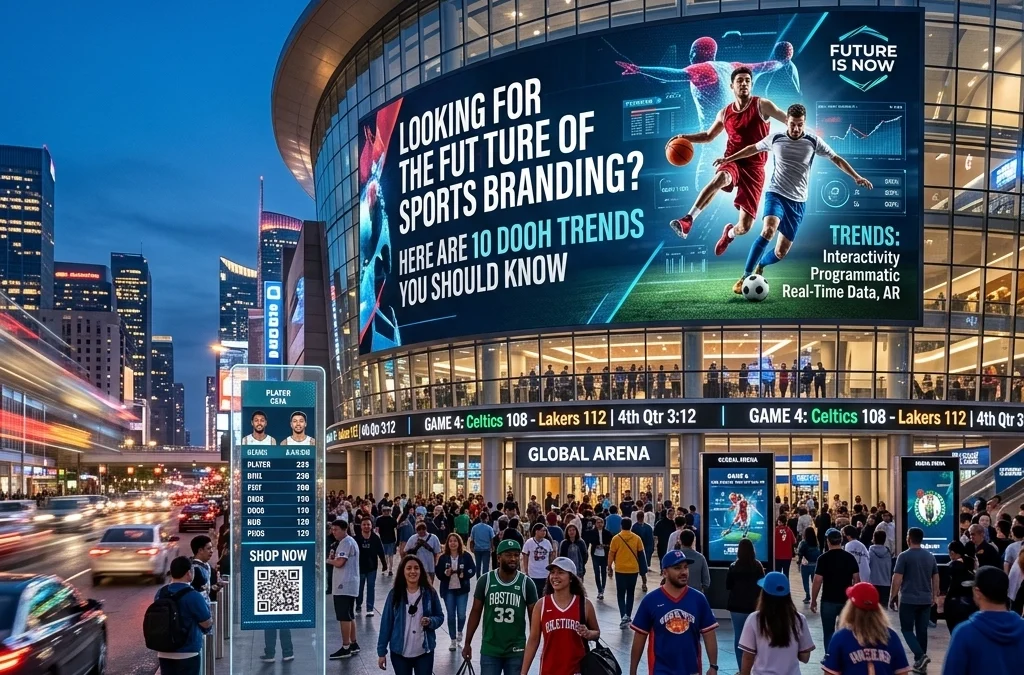
The landscape of sports advertising is shifting away from static placements and toward agile, data-driven experiences. As fans move between stadiums, transit hubs, and social spaces, the ability to maintain a consistent brand presence is paramount. Digital Out-of-Home (DOOH) advertising has emerged as a primary tool for achieving this connection. By leveraging real-time data and programmatic technology, brands can now interact with fans in ways that were previously impossible.
Industry data suggests the DOOH sports advertising market is projected to reach approximately $50 billion by 2030. This growth is driven by a move toward precision personalization, where the goal is no longer just reaching a broad audience but delivering a specific message at a specific moment. For brands looking to stay competitive, understanding the mechanics of these shifts is essential.
1. Dynamic Creative and Real-Time Data Integration
One of the most significant advancements in sports branding is the use of dynamic creative. This technology allows advertisements to change instantly based on external data feeds. In a sports context, this means a billboard can update to show the live score of a game, celebrate a home run within seconds of it happening, or adjust the featured product based on the current weather at the stadium.
This strategy ensures that messaging remains relevant throughout the duration of a sporting event. If a team is leading, the creative might focus on celebratory energy. If the game is tied in the final minutes, the ad can pivot to a high-tension, "don't miss the finish" message. This level of responsiveness keeps the brand at the center of the fan conversation.
2. Hyperlocal Targeting and the Fan Journey
Successful DOOH campaigns now map out the entire fan journey rather than focusing solely on the venue. Marketers are identifying key touchpoints where fans congregate before and after games, such as transit centers, parking garages, sports bars, and even residential elevators.
By utilizing hyperlocal targeting, advertisers can deliver messages that are contextually relevant to a specific location. For example, a campaign might promote a specific beverage brand on screens inside sports bars located within a five-block radius of the arena. This proximity-based approach increases the likelihood of immediate consumer action.

3. TVOOH: Synchronized Multi-Screen Experiences
TV Out-of-Home (TVOOH) is a trend that bridges the gap between home viewing and public spaces. This technology synchronizes DOOH screen content with live broadcast moments. When a critical play occurs on television, such as a penalty kick or a championship-winning shot, nearby DOOH screens can display synchronized content to create a "surround sound" effect.
This synchronization maximizes brand impact by capturing attention across multiple environments simultaneously. It creates a unified experience for the fan, whether they are watching the game on a large screen in a plaza or seeing a digital poster while walking to their car.
4. Programmatic Buying and Strategic Flexibility
The move toward programmatic DOOH has changed how sports branding is purchased and executed. Unlike traditional OOH, which often required long lead times and fixed contracts, programmatic platforms allow for automated, real-time bidding on ad inventory.
This flexibility is particularly valuable in sports, where schedules can change or unexpected storylines can emerge. Brands can increase their spend during high-stakes playoff runs or pull back if a key player is injured, ensuring that marketing budgets are always allocated to the most impactful moments. More information on these strategies can be found through OOH Sports marketing resources.
5. Omnichannel Synergy with Mobile Integration
DOOH is most effective when it functions as a component of a larger omnichannel strategy. A common tactic involves using geofencing to identify mobile devices that have been exposed to a specific DOOH screen. These users can then be retargeted with display ads or social media content on their smartphones.
For instance, a fan who sees a digital jersey advertisement near a stadium might later receive a mobile notification with a discount code for that same jersey. This creates a seamless transition from brand awareness in the physical world to a conversion opportunity in the digital world.
6. AI-Powered Personalization at Scale
Artificial intelligence is becoming a cornerstone of sports branding by enabling hyper-personalization. AI can analyze vast amounts of fan data to determine which types of content resonate most with specific demographics. In the future, DOOH screens may use AI to adjust creative elements in real-time based on the aggregate profile of the audience currently in front of the screen.
This trend is already visible in broadcast environments where AI-generated commentators or highlights provide personalized daily recaps. Bringing this level of customization to outdoor screens allows brands to speak more directly to the unique interests of different fan bases.
7. Athlete and Creator-Led Content
The role of the athlete has evolved from a simple endorsement to a long-term media partnership. Brands are increasingly using DOOH to showcase athlete-generated content or behind-the-scenes footage that feels more authentic than traditional commercial shoots.
By featuring athletes as creators, brands can leverage the trust and influence these individuals have built with their followers. When this content is displayed on high-impact digital screens in urban centers, it commands attention and drives deeper brand loyalty among fans who follow those specific players.
8. Quantifiable Brand Lift and Impact Measurement
One of the most critical trends in DOOH is the shift toward rigorous measurement. Modern campaigns are evaluated using brand lift studies and attribution modeling to prove ROI. Data shows that 73% of consumers view DOOH ads more favorably than traditional television or online ads, and 81% of consumers feel more positively toward brands that sponsor sports.
Specific case studies demonstrate the power of this medium. For example, a programmatic DOOH campaign for White Claw saw a 74% lift in purchase consideration during a product launch. Similarly, Mike's Hard Iced Tea achieved a 119% lift in positive brand image through a targeted DOOH strategy. Detailed analysis of these results can be found in the White Claw case study and the AB InBev report.

9. Extended Engagement Beyond Game Day
Sports branding is no longer confined to the hours of a live match. Trends show that brands are finding success by engaging fans throughout the entire week. DOOH screens can be used to build anticipation on the days leading up to a game with countdowns and "keys to the match" segments.
After the game ends, the conversation continues with post-game analysis, highlights, and fan-voted "player of the match" results displayed on digital screens. This extended engagement window ensures that the brand remains top-of-mind even during the "off" days of the sports calendar.
10. Focus on First-Party Data Strategies
As privacy regulations change and third-party cookies are phased out, brands are prioritizing first-party data collection. DOOH screens are frequently used as entry points for fans to join brand communities. By including QR codes or interactive elements on a billboard, brands can encourage fans to sign up for newsletters or loyalty programs.
This strategy allows advertisers to build a direct relationship with the consumer. Once a fan opts in, the brand can use that data to further refine their OOH targeting, creating a feedback loop that improves the efficiency of every subsequent campaign.

Strategic Implementation and Execution
To capitalize on these trends, a structured approach to execution is required. Successful campaigns generally follow a logic-based process:
- Objective Setting: Define whether the goal is brand awareness, positive image lift, or direct purchase consideration.
- Audience Mapping: Identify the physical locations where the target demographic spends time during a sports season.
- Creative Development: Design assets that can be easily adapted for dynamic triggers and real-time updates.
- Technology Integration: Partner with programmatic platforms and data providers to ensure seamless ad delivery.
- Measurement: Use device ID tracking and consumer surveys to measure the delta between exposed and unexposed audiences.
By focusing on these mechanics, advertisers can move beyond simple visibility and toward a strategy that produces measurable business outcomes.
Conclusion
The future of sports branding is inextricably linked to the evolution of Digital Out-of-Home technology. The ability to combine the physical presence of a billboard with the data-driven precision of digital advertising offers a unique advantage. As programmatic adoption grows and AI capabilities expand, the gap between the brand and the fan will continue to close.
For organizations looking to lead in the advertising space, staying informed on these trends is the first step toward building more impactful, data-backed campaigns. More insights and industry updates are available at the OOH Sports blog.
