
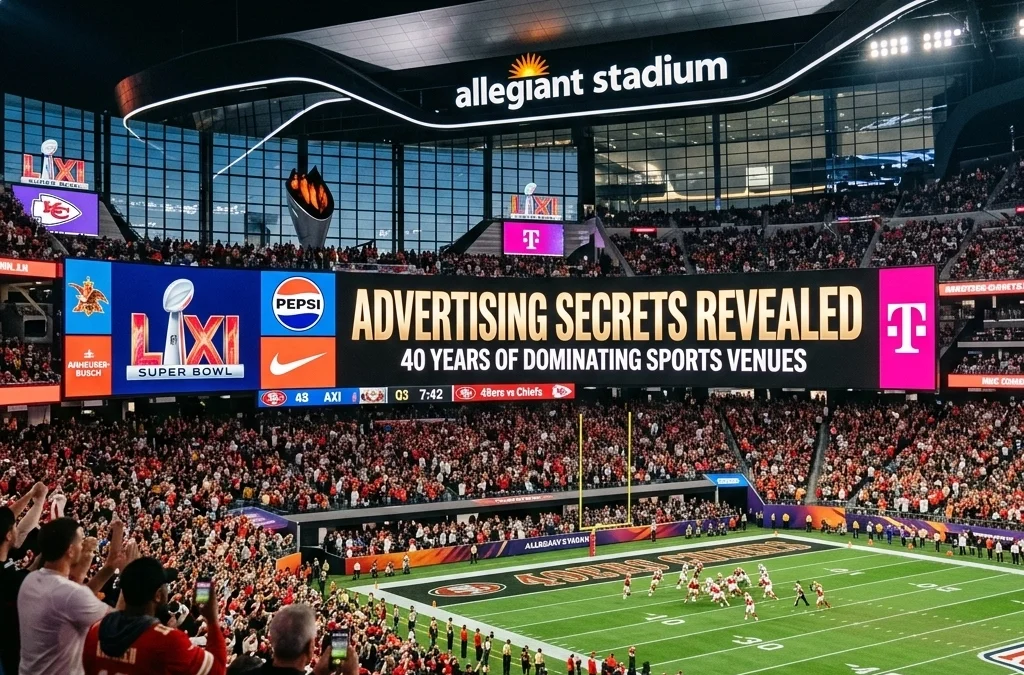
The conclusion of Super Bowl 2026 marked a significant milestone in the world of sports marketing. While the game on the field provided its usual drama, the real battle for consumer attention happened across a multi-channel ecosystem that spanned from the stadium floors to massive digital billboards across the host city. This year, the advertising landscape showed a clear evolution. Brands moved away from the traditional "one-and-done" television spot and toward a comprehensive venue-wide presence.
OOH Sports has spent 40 years perfecting the art of venue dominance. This four-decade journey has seen the transition from simple static banners to high-tech, programmatic digital out-of-home (DOOH) networks that react in real-time to game events. The strategies utilized during Super Bowl 2026 revealed how the most successful brands now treat the big game as a catalyst for a much larger, month-long marketing campaign.
The 40-Year Evolution of Venue Advertising
Forty years ago, sports advertising was largely limited to what the television cameras could see. If a brand was not on the stadium wall or in a 30-second commercial, it practically did not exist for the remote audience. Today, the strategy is about creating a "brand bubble" that surrounds the consumer from the moment they land in the host city until weeks after the championship trophy is raised.
The shift from analog to digital has allowed for unprecedented flexibility. In the past, a billboard was printed and stayed up for a month. In 2026, advertisers used programmatic technology to swap creative content based on the score of the game, the weather outside, or the specific demographic of fans walking past a screen. This level of precision is the result of 40 years of learning how fans interact with their environment during high-stakes sporting events.

The Super Bowl 2026 Three-Phase Strategy
The most effective campaigns in 2026 did not just show up on game day. Analysis of the top-performing brands shows a distinct three-phase approach that maximized ROI and ensured brand message longevity.
Phase 1: Pre-Game Momentum (Mid-January to February 7)
Successful advertisers began their narrative weeks before kickoff. This phase focused on building anticipation through digital billboards and venue partnerships. By the time fans arrived in the host city, they were already familiar with the campaign themes. Brands used this period to establish a presence in transit hubs, hotels, and fan zones, ensuring they were part of the pre-game conversation.
Phase 2: Game Day Dominance
During the game, the strategy shifted to multi-screen engagement. With over 80 percent of viewers using a second screen during the broadcast, brands utilized OOH displays to drive digital interactions. QR codes on stadium floors and NFC-enabled concourse displays allowed fans to jump from a physical advertisement to a mobile experience instantly. This phase emphasized "contextual syncing," where physical ads complemented the digital content fans saw on their phones.
Phase 3: Post-Game Saturation (February 9-15)
The week following the game is often overlooked by traditional advertisers, but it was a gold mine in 2026. This phase focused on "search momentum." As consumers searched for "best ads" or "game highlights," brands saturated digital OOH networks with follow-up content. This extended the life of the $7 million TV spots and ensured the brand remained top-of-mind during the post-game cultural reflection.

Venue-Wide Coverage: From Floors to Billboards
One of the biggest "secrets" revealed in 2026 was the power of non-traditional placements within the venue. While the high-profile billboards get the glory, the "ground-up" approach proved to be incredibly effective for engagement.
Floor Graphics and Experiential Zones
Advertisers utilized stadium floors, escalators, and concourse walkways to capture attention in high-traffic areas. These placements are hard to ignore because they sit directly in the line of sight for fans moving through the venue. In 2026, these graphics were often paired with augmented reality (AR) triggers. A fan looking at a floor graphic through their phone camera could see 3D player stats or interactive brand stories.
Billboards and Large Format Displays
The host city was "blanketed" with digital displays. This was not just about quantity but about strategic placement. Billboards near the stadium were synced with mobile proximity messaging. When a fan walked within a certain distance of a display, their mobile device could receive a notification or a special offer that mirrored the billboard's content. This created a seamless transition between the physical and digital worlds.
https://www.youtube.com/watch?v=l6J-0zileKE
The Reality of the $7 Million TV Spot
In 2026, the average cost for a 30-second television commercial hit $7 million. While this provides a massive audience of over 100 million people, data shows that the spot itself is no longer the endgame. Instead, savvy brands used the broadcast as a "retargeting pool."
By airing a commercial, brands could tag device IDs of viewers who engaged with the ad via social media or brand websites. They then used OOH Sports networks to retarget those specific consumers in the weeks following the game. This approach treats the expensive TV spot as a lead-generation tool rather than a final destination.

Key Results and Strategic Shifts in 2026
The data from the 2026 season highlights several key shifts in how sports marketing is being executed.
- Celebrity Fatigue: While 61 percent of ads featured celebrities, many of them failed to resonate. The most successful campaigns used celebrities as supporting characters to a strong product story.
- Tech Sector Growth: Sixteen tech companies advertised during the Super Bowl in 2026, an increase from fourteen in 2025. This shows a growing reliance on technology and automation in the advertising space.
- OOH Efficiency: Brands that split their budget between a single TV spot and a wide-reaching DOOH campaign saw a significantly higher "brand preference rating" compared to those who spent their entire budget on television.
- Programmatic Adoption: The use of programmatic DOOH allowed for real-time adjustments. If a certain creative was not performing well on Friday, it was swapped out by Saturday morning, ensuring maximum efficiency for the Sunday game.
For more information on how these strategies are applied in modern marketing, you can explore the OOH Sports marketing page or read through our detailed case studies.
The Power of Programmatic DOOH vs. Traditional Ads
A major theme of the 2026 post-game analysis was the ROI of programmatic DOOH compared to traditional stadium ads. Traditional ads are static and fixed, but programmatic options offer a level of agility that fits the fast-paced nature of sports.
When a major play happened on the field, programmatic ads throughout the city could be updated within seconds to reference the event. This "real-time relevance" is something traditional television or static print cannot match. It allows a brand to be part of the living history of the game as it happens.

Looking Toward the Future of Sports Advertising
With 40 years of history as a guide, it is clear that the future of sports advertising lies in total venue integration. The "secrets" of 2026 were built on the foundations laid decades ago, but they have been supercharged by AI and data analytics. Brands are no longer just buying space. They are buying moments, movements, and the ability to follow a consumer throughout their entire journey.
As the industry looks toward 2027, the focus will likely shift even further toward personalization. Digital viewers on streaming platforms are already receiving tailored ad versions, and it is only a matter of time before the billboards in the stadium can do the same for the physical crowd.
The success of Super Bowl 2026 proved that when a brand dominates a venue from the floors to the billboards, the impact goes far beyond the final whistle. It creates a lasting impression that drives purchase consideration long after the fans have gone home.
To stay updated on the latest trends and strategies in the industry, visit the OOH Sports blog. For those looking to implement these high-level strategies for their own brands, our contact page is the best place to start the conversation.
Understanding the mechanics of these campaigns is essential for any brand looking to compete on the world's biggest stage. Whether it is through Sportrons or city-wide DOOH networks, the goal remains the same: being where the fans are, with the right message, at the exact right moment.