
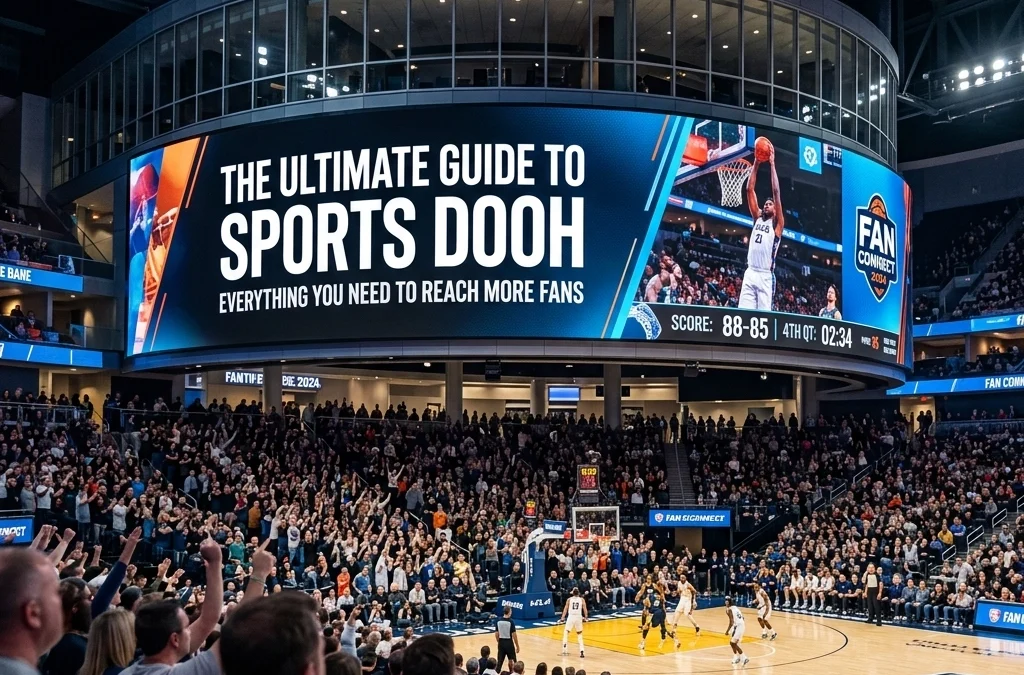
Digital Out-of-Home (DOOH) advertising has become the critical connective tissue linking brands to sports fans outside the stadium. This technology transforms sports marketing from static, location-based buys into dynamic, routine-based strategies that capture fan attention in everyday spaces. While traditional advertising often struggles with fragmented audiences, sports remains one of the last bastions of live, collective attention.
Reaching fans effectively requires understanding that the "fan experience" does not begin or end at the stadium gates. It happens in transit hubs, at retail locations, and in social environments. This guide explores how OOH Sports utilizes a network of over 25,000 digital screens to deliver high-impact messaging that resonates with the emotional journey of the modern sports enthusiast.
The Strategic Value of the Modern Sports Fan
Sports fans represent a uniquely valuable audience for media buyers and brand managers. They are mobile, emotionally invested, and highly receptive to brands that support their interests. Research indicates that 81 percent of fans feel more positive toward brands that sponsor sports, and a significant portion of consumers discuss sporting events with friends or family after seeing an out-of-home advertisement.
Unlike typical consumers, fans operate on a schedule of high-intensity emotional peaks. This creates a prime opportunity for brand recall. When a campaign aligns with the excitement of a victory or the anticipation of a major rivalry, the message becomes part of the experience rather than an interruption.

Multi-Moment Activation Strategy
A successful sports DOOH campaign is not a single event. It is a series of activations synchronized with the game-day cycle. By breaking the strategy into three distinct phases, brands can maintain a consistent presence and build narrative momentum.
1. Pre-Game Build-Up
The 48 hours leading up to a kickoff or tip-off are defined by planning and anticipation. Fans are checking betting lines, organizing logistics, and purchasing supplies. During this phase, screens in transit hubs, office districts, and retail centers are most effective.
Tactics for this phase include:
- Countdown Clocks: Building urgency for the upcoming event.
- Real-Time Odds: Providing utility to bettors through live updates.
- Retail Triggers: Encouraging last-minute purchases of beverages, snacks, or apparel.
Brands can launch real-time sports betting DOOH campaigns that convert in under 24 hours by tapping into this pre-game excitement.
2. During-Game: Capturing Collective Attention
While the game is in progress, the focus is on the live action. However, the physical world remains a vital touchpoint. For major sponsors, DOOH extends expensive television and stadium investments into the real world. This ensures that even those not inside the stadium are exposed to the brand.
Dynamic creative allows ads to update automatically based on live moments. If a team scores, the digital billboard in a high-traffic area can immediately reflect that celebration, creating a shared communal reaction between the brand and the fan.
3. Post-Game and Retargeting
The period following a game is often overlooked, yet it is when emotional engagement is at its peak. Whether in celebration or commiseration, fans remain highly active on mobile devices. This phase is ideal for retargeting those who were exposed to DOOH screens during the day, reinforcing the message and driving them toward online conversions or future event ticket sales.
Technology and Targeting: The Data Revolution
Modern DOOH is a precision tool fueled by location intelligence and mobility data. It is no longer about broad, unquantifiable reach. Instead, it focuses on when and where the target audience is most likely to be present.
Programmatic DOOH (pDOOH)
Programmatic technology allows brand managers to bid on inventory in real time. This agility ensures that budgets are spent efficiently, focusing on the windows of time when fan density is highest. Many media planners are shifting budgets toward digital out-of-home platforms due to this increased flexibility and the ability to pause or pivot campaigns instantly.
Dynamic Creative Optimization (DCO)
DCO is the foundation of modern sports marketing. It allows the creative content to change based on external triggers without manual intervention. Common triggers include:
- Game Scores: Changing the creative to reflect a winning or losing scenario.
- Weather Conditions: Promoting rain gear during a storm or cold beverages during a heatwave.
- Social Media Sentiment: Incorporating trending hashtags or fan reactions into the ad copy.

Comparing DOOH to Traditional Stadium Sponsorships
For many years, stadium sponsorships were the primary way to reach sports fans. However, these often come with high entry costs and rigid contracts. The rise of 25,000 digital screens is changing the landscape by offering a more accessible and scalable alternative.
Traditional stadium ads reach only those inside the venue. Sports DOOH reaches everyone in the surrounding city, the commuters on their way to the game, and the fans watching at sports bars. This broader reach often results in a higher Return on Investment (ROI) because it captures the "99 percent" of the fan base that isn't sitting in the premium seats.

Measurable Results and ROI
One of the most significant shifts in DOOH is the ability to prove success through hard data. Media buyers no longer have to rely on guesswork. Using AI-powered analytics and device ID tracking, campaigns can now measure:
- Brand Lift: Percentage increases in brand awareness and purchase consideration.
- Foot Traffic Attribution: Measuring how many people visited a store after being exposed to an ad.
- Online Conversion: Tracking search activity and website visits triggered by DOOH exposure.
For example, a White Claw programmatic DOOH campaign recently drove a 74 percent lift in purchase consideration. Similarly, Sea-Doo saw a 144 percent increase in purchase consideration by leveraging targeted digital displays. These results demonstrate that when DOOH is data-driven, it outperforms traditional media in driving consumer action.
Common Pitfalls in Sports DOOH
To maximize the effectiveness of a campaign, brand managers should avoid these common mistakes:
- Using Static Creative: Failing to update creative throughout a season makes a brand look out of touch. The emotional state of a fan base changes weekly, and the creative should reflect that.
- Ignoring Context: An ad that works on a quiet subway platform might not work on a loud, crowded street corner. The environment must dictate the design and messaging.
- Poor Timing: Running ads for a game that has already finished is a waste of budget. Automated scheduling and programmatic triggers are essential to prevent this.
- Lack of Measurement: Without AI-powered analytics, it is impossible to optimize a campaign mid-flight or accurately report on the final ROI.

The Future of Fan Engagement
The sports marketing industry is moving toward a future where the digital and physical worlds are fully integrated. By 2030, the DOOH sports advertising market is projected to reach significant heights, as more brands recognize the value of real-time, fan-centric messaging.
Success belongs to those who move beyond the stadium walls and embrace a holistic view of the fan journey. By combining the emotional power of sports with the technical precision of DOOH, brands can build lasting connections with their most loyal audiences.
The strategy is clear: plan early, leverage dynamic technology, and use data to prove results. In the competitive arena of sports marketing, DOOH provides the agility and reach necessary to stay ahead of the curve and capture the attention of fans wherever they may be.