
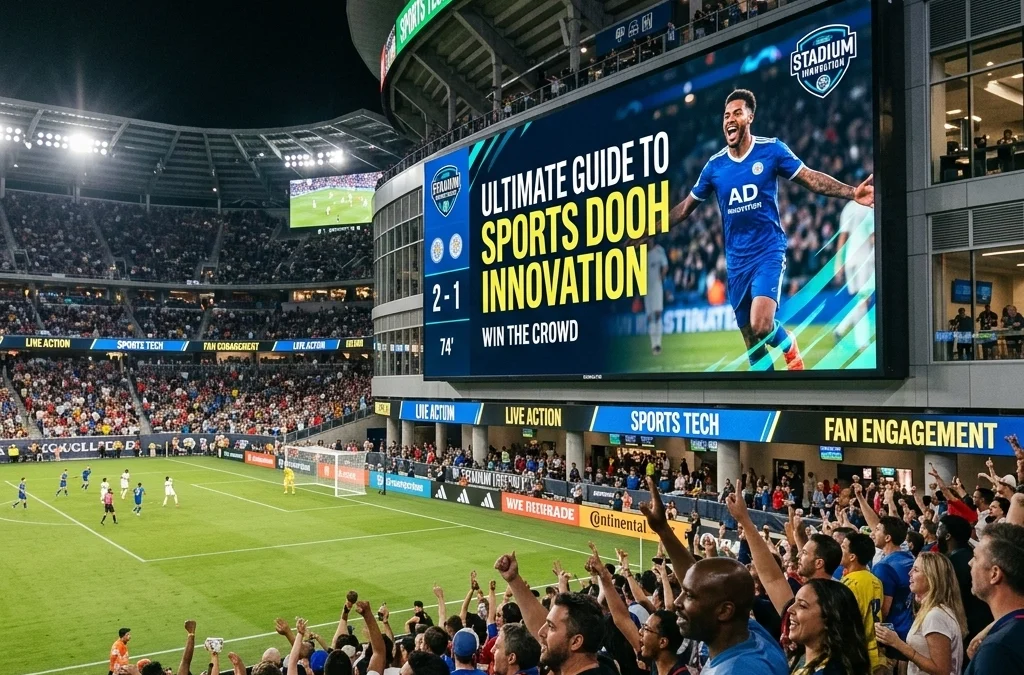
Winning the attention of sports fans used to mean buying a billboard outside a stadium or a 30-second spot during a game. While those methods still exist, the landscape has changed. Digital Out-of-Home (DOOH) advertising has moved sports marketing from a location-based buy into a routine-based strategy. Most fans never step foot inside the arena on game day. Instead, they are at the grocery store, the gym, or the local sports bar.
This guide explores how brands can use over 25,000 digital screens to capture fan attention where it actually lives. By using real-time data and programmatic technology, media buyers can now reach the 99 percent of fans who are engaging with sports through their daily routines.
The Strategy of Routine-Based Sports Marketing
The modern fan journey does not begin at kickoff. It starts days earlier when a fan checks the weather, looks at betting lines, or buys snacks for a viewing party. Traditional stadium sponsorships often come with high price tags and limited inventory, but DOOH allows brands to scale their presence for a fraction of the cost.
Rather than buying a single screen, a successful campaign buys a moment in a fan's routine. This shift is why many media planners are moving budgets toward digital platforms. Programmatic DOOH offers a level of agility that static billboards simply cannot match. It allows for a presence in transit hubs, office districts, and retail centers during the critical 48 hours before a big game.

Objectives and Strategic Placements
To win the crowd, a brand must be where the crowd goes. Different locations serve different purposes in the fan journey:
- Transit Hubs and Airports: These are essential for reaching traveling fans and commuters. Messaging here should focus on anticipation and travel-related needs.
- Retail and Grocery Stores: This is where the "game day prep" happens. It is the perfect place for beverage and snack brands to trigger purchase intent.
- Gyms and Health Clubs: These locations reach an active audience often interested in fitness apparel, supplements, and wellness tech.
- Sports Bars and Restaurants: Using screens in these venues allows for high-relevance messaging while fans are already in a sports-focused mindset.
By distributing ads across these touchpoints, brands create a priming effect. When a fan sees a brand on a digital urban panel during a commute and then encounters it again in a retail setting, the memory structure of the brand is strengthened. This makes every marketing dollar more efficient.
Real-Time Innovation with Dynamic Creative
One of the biggest innovations in sports DOOH is Dynamic Creative Optimization (DCO). This technology allows ads to change automatically based on external triggers and real-time data feeds. Static ads are becoming a thing of the past because they cannot react to the drama of live sports.
Relevant triggers for sports campaigns include:
- Live Score Updates: Screens can display the current score of a game, keeping fans informed and the brand relevant.
- Weather Conditions: A beverage brand can promote cold drinks when the temperature rises, or an apparel brand can highlight rain gear when a storm is forecasted.
- Betting Odds: Real-time shifts in betting lines can be displayed to engage the growing audience of sports bettors.
- Game Outcomes: Creative can automatically switch to a celebratory message for the winning city or promote the next matchup immediately after a game ends.
This level of relevance ensures that the content remains useful to the viewer, which significantly boosts engagement. For more on this, brands can look at how real-time sports betting DOOH campaigns are executed.
The Three-Phase Framework for Fan Engagement
To maximize ROI, a campaign should be structured around three distinct phases of the sporting event.
Phase 1: Pre-Game Anticipation
The goal here is to build excitement and drive tune-in. Media buyers should focus on countdowns, win/loss records, and "who will win" polls. This is the time to surround the fan's daily commute and retail visits with reminders of the upcoming event.
Phase 2: Game-Time Excitement
During the game, the strategy shifts to real-time relevance. Using live highlights or score updates on high-traffic screens in city centers ensures that even people who are not watching the game stay connected. This creates FOMO (fear of missing out) and can encourage people to tune in to the broadcast.
Phase 3: Post-Game Reaction
After the final whistle, the messaging must pivot instantly. Celebrating a win or acknowledging a hard-fought game keeps the brand in the conversation. This is also the best time to promote tickets for the next game or merchandise for the winning team.

Programmatic DOOH vs. Traditional Stadium Ads
There is a growing debate regarding programmatic DOOH vs. traditional stadium ads. Traditional stadium advertising offers prestige, but programmatic DOOH offers precision and flexibility.
Programmatic buying allows brands to bid on impressions in real-time. Instead of a fixed three-month contract for a single sign, a brand can spend its budget across thousands of screens only during the hours when fans are most active. This flexibility allows for better budget management and the ability to pause or pivot a campaign based on performance or team news.
Furthermore, geospatial and mobility data allow planners to understand exactly who passes a screen. This data-driven approach ensures that ads are shown to the right demographic at the right time, rather than just anyone who happens to be in a stadium seat.
Quantifiable Results and Case Studies
The success of sports DOOH is not just theoretical. Data from recent campaigns shows significant lifts in brand metrics.
- Purchase Consideration: In one campaign, a beverage brand achieved a 74 percent lift in purchase consideration by using programmatic triggers to reach consumers at key times. You can read the details of that White Claw DOOH campaign here.
- Brand Image: Another campaign saw a 119 percent lift in positive brand image. By staying relevant to the local sports culture through digital screens, the brand became a natural part of the fan experience.
- Direct Attribution: Campaigns that combine DOOH with mobile retargeting have shown a 14 percent lift in televised event tune-in.
These numbers prove that when brands move away from guesswork and toward data-driven execution, the results follow. Many companies are now using AI-powered analytics to prove the success of their campaigns.
Creative Execution Best Practices
In the world of DOOH, the creative must be designed for a fast-moving audience. Most viewers will only see a screen for six to fifteen seconds.
- Motion is Mandatory: Animation and video capture attention much more effectively than static images. Subtle motion is often enough to draw the eye without being distracting.
- Simple Messaging: A clear headline and a single call to action are essential. If a fan has to squint to read the ad, the opportunity is lost.
- Local Relevance: Mentioning the specific city or the local team creates an immediate connection. Geographically targeted strategies have been shown to boost fan engagement by 90 percent.
- High Contrast: Use bold colors and high-contrast designs to ensure the ad is visible in all lighting conditions, from bright noon sun to city streetlights at night.

Technology Partners and the Future of Sports Media
The future of sports marketing lies in the integration of digital and physical worlds. Smart venues are beginning to integrate DOOH screens with mobile apps to create interactive experiences. For example, a fan might see a QR code on a transit screen that leads to an exclusive discount or a digital collectible.
The shift toward programmatic adoption is also being driven by specialized platforms. DSPs (Demand-Side Platforms) are making it easier for media buyers to include DOOH in their omnichannel campaigns. This allows for a seamless transition between mobile ads, social media, and the physical world.
Conclusion: The Path to Winning the Crowd
To win in the modern sports landscape, brands must look beyond the stadium walls. Innovation in DOOH has provided the tools to reach fans during their daily routines with messages that are timely, relevant, and engaging.
By focusing on dynamic creative, strategic placements, and programmatic flexibility, media buyers can ensure their message is seen during the moments that matter most. Whether it is building anticipation before the game or celebrating a win afterward, DOOH provides a scalable and measurable way to connect with the most passionate audiences in the world.
For those ready to move their budget into more effective channels, understanding the shift in media planner budgets is the first step toward securing a share of the crowd. The technology is here, the screens are waiting, and the fans are already out there. It is time to meet them where they are.