
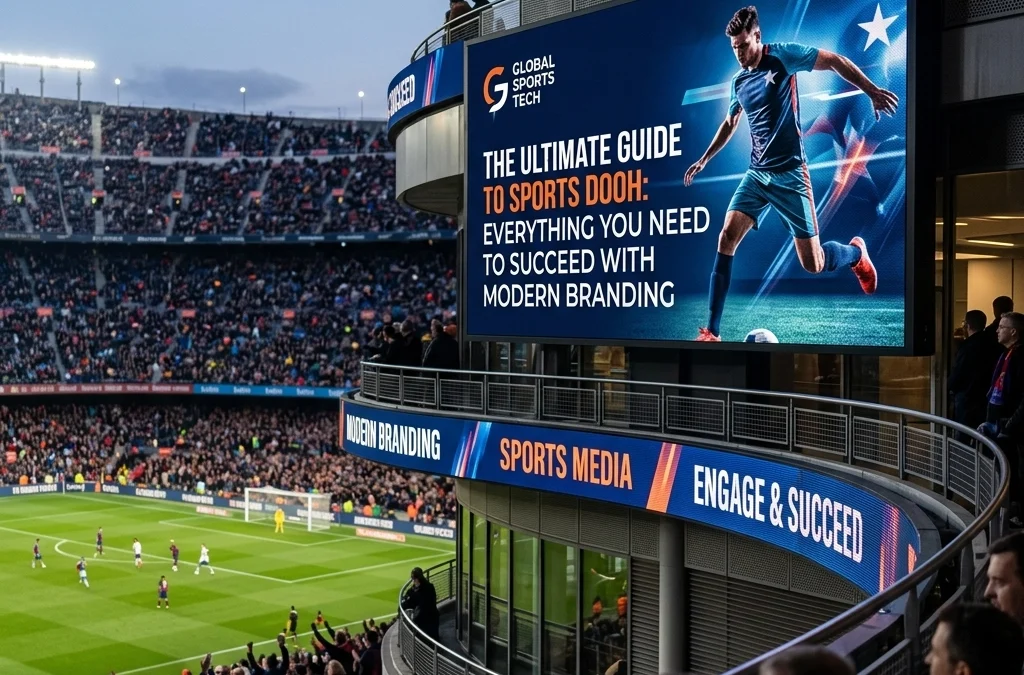
Digital Out-of-Home (DOOH) advertising has transformed from a simple digital version of a paper billboard into a high-tech, data-driven powerhouse. For brands looking to capture the attention of sports fans, it is no longer enough to just have a presence. You need a strategy that lives where the fans live. This guide explores how modern branding thrives in the sports world by utilizing DOOH to turn every commute, stadium visit, and pre-game hangout into a brand-building opportunity.
What is Sports DOOH?
At its core, Digital Out-of-Home (DOOH) refers to digital media that appears in public environments. In the context of sports, this includes the massive screens outside stadiums, digital posters in transit hubs leading to the game, and even screens inside sports bars and retail centers. Unlike traditional static ads, DOOH allows for movement, video, and real-time updates.
For a brand, this means the ability to change a message based on whether a team won or lost, the current weather, or the specific time of day. It is the bridge between the digital world of our smartphones and the physical world where we live our lives. For more information on how these displays work, you can visit OOH Sports.

Why Sports Fans are the Ultimate Target
Sports fans are a unique demographic because their engagement is rooted in high emotion and community. When a fan is on their way to a game, they are in a state of heightened awareness and positivity. This makes them significantly more receptive to brand messaging.
Modern sports branding is about more than just a logo. It is about becoming part of the fan experience. Research shows that DOOH captures attention in everyday moments, such as transit hubs or retail centers, where fans are already in a "go" mindset. By placing ads in these high-traffic areas, brands move from being a distraction to being a fixture in the fan's journey.
Strategic Advantages of DOOH in Sports
One of the primary benefits of DOOH is the "priming effect." This occurs when a consumer sees an ad on a large digital screen in public and then later sees a similar ad on their mobile device or TV. The public nature of DOOH creates a sense of trust and stature. It makes a brand feel "big."
1. Omnichannel Reinforcement
When you combine digital urban panels with social media or television advertising, the memory structure of the campaign strengthens. A fan who sees a 15-second spot on a transit screen and then encounters the brand on Instagram later that night is much more likely to remember the message. This synergy is a key part of modern marketing strategies.
2. Democratized Access
In the past, only the largest companies could afford to be seen in the sports world. Today, programmatic DOOH allows smaller and mid-sized brands to play on the same field. You can buy specific "slices" of time or specific locations near a stadium without having to commit to a multi-million dollar season-long sponsorship. This makes sports advertising accessible to everyone.
3. Dynamic Content
The ability to use Dynamic Creative Optimization (DCO) is a game-changer. Imagine an ad for a beverage company that changes its creative based on the score of the game. If the home team is winning, the ad shows a celebratory message. If the weather turns cold, the ad shifts to promoting hot coffee or branded hoodies.

Creative Best Practices for Sports DOOH
Because DOOH screens are often seen by people on the move, your creative strategy must be sharp and immediate. Here are the pillars of successful DOOH creative:
- Keep it Simple: Use bold fonts and high-contrast colors. A viewer might only have three to five seconds to digest your message.
- Visual Consistency: Your logo and brand colors should be the stars. Consistent branding across all displays builds recognition and trust.
- Minimal Text: If you use more than seven words, you have probably lost them. Let the imagery do the heavy lifting.
- Call to Action: If you want them to do something, make it easy. A simple URL or a clear "Available at [Retailer Name]" works wonders.
For a deeper dive into the technical specs of these displays, check out our section on Sportrons.
Measuring Success: ROI and Data
One of the biggest myths about outdoor advertising is that it cannot be measured. With modern DOOH, that is simply not true. Through the use of anonymized mobile location data and audience analytics, brands can now track how many people saw an ad and, more importantly, what they did afterward.
Brand Lift Studies
Many campaigns now use brand lift studies to measure changes in consumer perception. For example, White Claw used a programmatic DOOH campaign to drive a 74% lift in purchase consideration for a new product launch. You can read the full breakdown in our White Claw case study.
Foot Traffic Attribution
By tracking device IDs that were exposed to a specific digital screen, brands can see if those same devices later visited a retail location. This "store visit" metric provides a clear line between the advertisement and consumer action. Another example is Sea-Doo, which saw a 144% increase in purchase consideration through their first DOOH campaign. Details are available on our case study page.

Tactical Implementation: Programmatic vs. Traditional
There are two main ways to buy DOOH space: traditional direct buys and programmatic buys.
Traditional Direct Buys
This involves booking specific screens for a set period. This is excellent for "owning" a location, such as the big screens directly outside a major stadium during the playoffs. It guarantees your spot and is great for high-impact, long-term awareness.
Programmatic DOOH
Programmatic buying uses software to purchase ad space in real-time based on specific triggers. You can set a campaign to only run when the temperature is above 80 degrees, or only during the two hours before a game starts. This is highly efficient and reduces wasted spend. To learn more about how this compares to old-school stadium ads, see our article on programmatic vs. traditional ROI.
Legal and Practical Considerations
When entering the world of sports branding, you must be careful with intellectual property. Unless you are an official sponsor, you cannot use team logos or player likenesses. However, savvy brands use "fan-speak," team colors, and city landmarks to connect with the audience without infringing on trademarks.
It is also important to consider the location of your ads. High-traffic areas like New York City require a different strategy than a suburban stadium in the Midwest. You can explore how different cities handle these campaigns in our NYC shopping destination guide.
The Future of Sports DOOH
The industry is moving toward a future where every screen is connected and every ad is relevant. Experts predict that DOOH sports advertising will reach $50 billion by 2030. To stay ahead, brands must embrace 7 key strategies, which we have outlined in our industry insights blog.
As technology improves, we will see more integration with augmented reality (AR) and even more precise targeting based on real-time fan sentiment. The goal is to make the ad feel like a part of the game-day excitement, not an interruption to it.

Getting Started with Your Campaign
If you are ready to take your brand into the physical world, the first step is defining your goals. Are you looking for raw reach, or are you trying to drive people to a specific retail location? Understanding your objective will determine whether you focus on massive stadium screens or a network of smaller digital panels in urban centers.
At OOH Sports, we specialize in helping brands navigate this landscape. Whether you are looking for a case study to inspire your next move or you want to contact us to start planning, the opportunities in sports DOOH are limitless.
Success in modern branding requires being where your audience is, and for sports fans, that means being out in the world, sharing the excitement of the game. By utilizing the power of digital out-of-home advertising, your brand can become a permanent part of their favorite sports memories. For more tips and industry trends, keep an eye on our blog.