
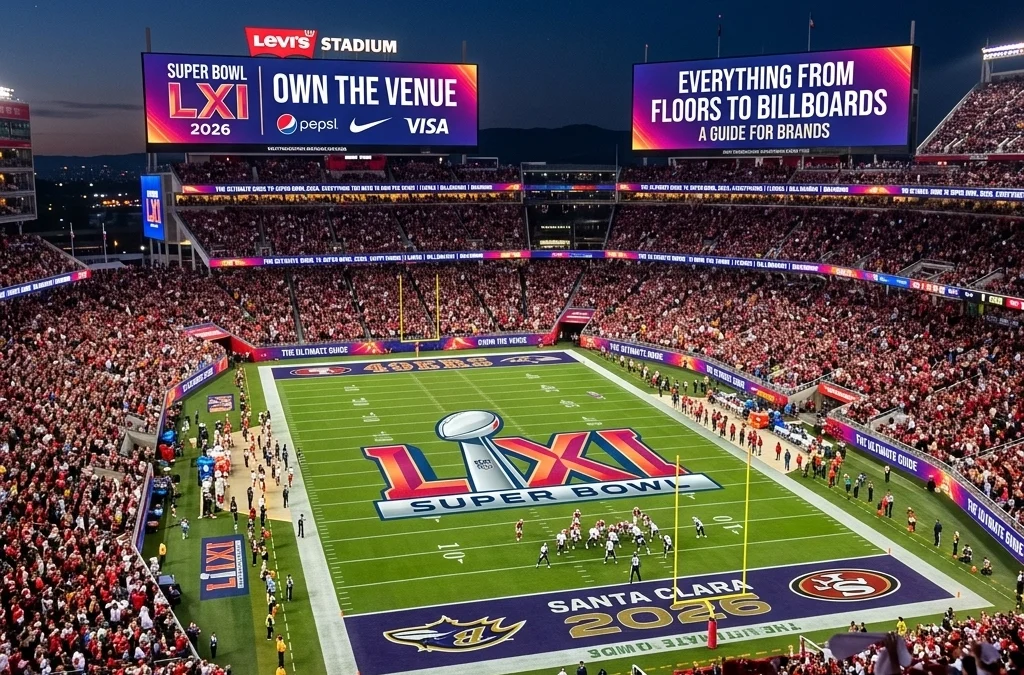
Super Bowl LX has officially entered the history books. On February 8, 2026, the sports world descended upon Levi's Stadium in Santa Clara, California. While the Seattle Seahawks were busy securing a 29-13 victory over the New England Patriots, another competition was happening outside the lines of the field. This was the battle for attention. For advertisers, the 2026 Big Game represented the pinnacle of four decades of innovation in out-of-home advertising.
Owning a venue during an event of this magnitude is not just about buying a single ad spot. It is about creating a cohesive, immersive environment that follows the fan from the moment they leave their home until they reach their seat. OOH Sports utilized its 40 years of leadership to transform Levi's Stadium and the surrounding Bay Area into a high-impact marketing ecosystem. From massive billboards along the 101 freeway to high-traffic floor graphics inside the concourse, the strategy was simple: be everywhere the fans are.
Four Decades of Advertising Leadership
Experience matters when the stakes are this high. OOH Sports has spent 40 years refining the art of stadium and event-based marketing. This deep history allows for a unique understanding of fan psychology and traffic flow. In 2026, this expertise was put to the test. The goal was to provide venue-wide coverage that felt organic yet impossible to miss.
Traditional advertising often relies on static placements. However, the leadership at OOH Sports has pushed the industry toward a more integrated approach. By combining physical assets like floor decals with digital powerhouses like Sportrons, the company created a 360-degree brand experience. This long-term perspective is what separates a standard campaign from a venue takeover.

Strategy: The Venue Takeover from Floors to Billboards
The strategy for Super Bowl 2026 focused on the fan journey. The campaign did not start at the stadium gates. It started miles away. Large-format billboards and digital displays were strategically placed along major transit routes to catch the 70,823 attendees as they made their way to Santa Clara.
Once fans arrived at Levi's Stadium, the coverage moved inward. This is where the concept of "owning the floors" became a reality. Floor graphics are often an overlooked piece of real estate, but they are highly effective. Fans are constantly looking down at their phones or at the ground while navigating crowds. Placing high-contrast, slip-resistant brand messages on the floors ensures that even in a crowded concourse, the brand remains visible.

Key Tactics for Venue Dominance
- Strategic Proximity: Placements were chosen based on their proximity to high-dwell areas like concessions and restrooms.
- Sequential Messaging: Billboards were timed and placed to tell a story as fans moved closer to the venue.
- Immersive Floor Graphics: Using durable materials to turn every square foot of the concourse into a branding opportunity.
- Digital Integration: Linking physical signage with mobile triggers to drive online engagement.
For brands looking to understand how these strategies work in a real-world setting, the OOH Sports marketing page offers a deeper dive into the methodology used for major sporting events.
The Role of Programmatic DOOH in 2026
One of the biggest shifts seen during Super Bowl LX was the heavy reliance on programmatic Digital Out-of-Home (DOOH). Unlike traditional stadium ads that are static for the duration of an event, programmatic ads allow for real-time adjustments. If a brand wanted to change its messaging based on the score of the Seahawks versus Patriots game, they could do so in seconds.
This level of flexibility is changing the ROI landscape. By using platforms like the StackAdapt DSP, advertisers can drive programmatic adoption and reach specific demographics with surgical precision. This approach was highlighted in a recent study on StackAdapt's impact on omnichannel campaigns.
The data from 2026 shows that brands using programmatic DOOH saw significantly higher engagement rates. This technology allows for dynamic creative that reacts to the environment, the weather, or the energy of the crowd. It is no longer just about being seen, it is about being relevant in the moment.
https://www.youtube.com/watch?v=l6J-0zileKE
Quantitative Results: Why Venue-Wide Coverage Works
The success of a campaign is measured in numbers, not just aesthetics. Looking back at previous campaigns provides a roadmap for what was achieved in 2026. For example, White Claw’s programmatic DOOH campaign saw a 74% lift in purchase consideration. Similarly, AB InBev’s Mike’s Hard Iced Tea experienced a 119% lift in positive brand image through targeted DOOH efforts.
In 2026, the venue-wide approach at Levi's Stadium yielded similar results. Brands that took advantage of the "floors to billboards" strategy reported higher brand recall than those that stuck to traditional 30-second TV spots. The physical presence in the stadium creates a "halo effect." When a fan sees a brand on a billboard, then on the floor, and finally on a digital screen, the brand becomes a part of their Super Bowl memory.

Logistics and Execution: Making It Happen
Executing a campaign for the Super Bowl is a logistical marathon. Coordination with local authorities and venue management is required months in advance. The process involves:
- Site Surveys: Identifying the best lines of sight for both physical and digital assets.
- Material Selection: Ensuring floor graphics can withstand tens of thousands of footsteps without fading or peeling.
- Content Management: Scheduling digital rotations to ensure maximum exposure for all partner brands.
- Compliance: Adhering to all company policies and local regulations regarding advertising content.
The 2026 event was particularly challenging due to the high volume of traffic in the San Francisco Bay Area. Road closures and transportation impacts were in effect from late January through February 9. OOH Sports managed these hurdles by utilizing a distributed network of assets that didn't just rely on the stadium itself but blanketed the entire region.

The Future of Sports Advertising
As we look toward 2030, the sports advertising market is projected to hit $50 billion. The lessons learned from the 2026 Super Bowl will serve as the foundation for future strategies. The integration of traditional OOH and programmatic technology is no longer a luxury, it is a requirement.
Brands that want to capture their share of this growing market must think beyond the screen. They must think about the entire fan environment. Whether it is through Sportrons or innovative floor branding, the goal remains the same: create a connection that lasts long after the final whistle.
The transition from traditional stadium ads to a more holistic, tech-driven approach is well underway. For a detailed comparison of these methods, the analysis of programmatic DOOH vs traditional stadium ads provides valuable insights into why the ROI is shifting so dramatically.
Conclusion
Super Bowl LX was more than just a football game. It was a masterclass in how to own a venue. By leveraging 40 years of leadership and embracing the latest in advertising technology, OOH Sports demonstrated that the best way to reach a fan is to become a part of their journey. From the highways of Santa Clara to the very floors of Levi's Stadium, every inch was an opportunity.
For those interested in learning more about how to secure venue-wide coverage for future events, the contact page is the best place to start the conversation. The world of sports marketing is moving fast, and having a partner with four decades of experience is the surest way to stay ahead of the game. Explore the case studies to see the full scope of what is possible when a brand truly owns the venue.