
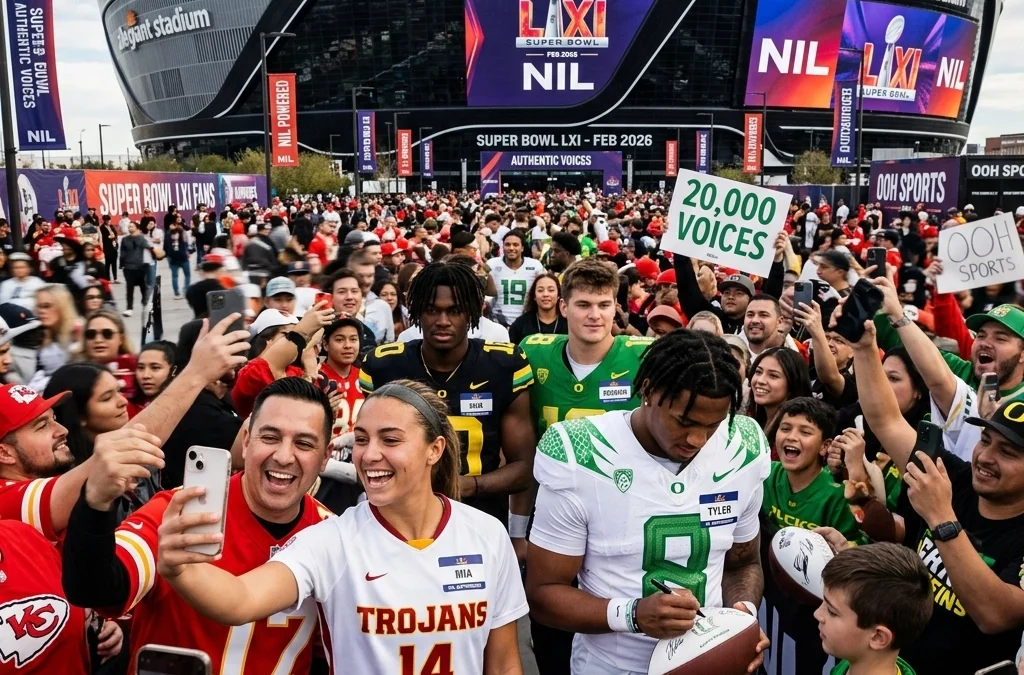
The landscape of sports marketing shifted significantly leading up to Super Bowl 2026. While traditional 30 second television commercials remained a staple of the event, the emergence of Name, Image, and Likeness (NIL) created a new frontier for media buyers. The primary challenge for brands in this high stakes environment is no longer just about securing airtime. It is about achieving authentic engagement in a fragmented digital world.
Leveraging a network of 20,000 authentic student-athlete voices provides a level of scale and trust that traditional celebrity endorsements cannot match. This guide explores the strategic framework required to dominate the Super Bowl cycle using the OOH Sports NIL platform. By moving away from single-point activations and toward a multi-phase narrative, brands can achieve second-screen dominance and measurable ROI.
The Shift to Authentic Influence
Modern audiences, particularly Gen Z and Millennials, demonstrate a high degree of skepticism toward traditional advertising. During the 2026 Super Bowl, data indicated that viewers were increasingly likely to look at their mobile devices during commercial breaks. This behavior creates a massive opportunity for brands that can capture attention on that second screen.
The power of 20,000 authentic voices lies in the concept of "micro-influence" at scale. When thousands of student-athletes share a brand message simultaneously, it creates a cultural groundswell. These athletes have deep, localized connections with their followers. Their content feels like a recommendation from a peer rather than a corporate mandate. This authenticity is the key to breaking through the noise of the biggest sporting event of the year.

Phase 1: The Pre-Game Build and Narrative Equity
Success during the Super Bowl is rarely the result of a single day of activity. The most effective NIL strategies begin in mid-January. This period is known as the Pre-Game Build. The objective during this phase is to establish narrative equity.
Narrative equity is the familiarity and trust an audience develops with a brand over time. By partnering with athletes during the playoff run, brands can integrate themselves into the seasonal story of the sport. Instead of appearing out of nowhere on game day, the brand becomes a supporting character in the athlete's journey.
Strategic Tactics for Pre-Game Build:
- Content Series: Athletes share training routines or "road to the big game" stories featuring the brand.
- Teaser Campaigns: Use the scale of 20,000 voices to hint at upcoming game-day activations or exclusive product drops.
- Localized Targeting: Focus on athletes from the cities of the competing teams to drive high-intent engagement.
This early investment lowers customer acquisition costs by the time the Super Bowl arrives. The audience is already primed to react when the main campaign launches.
Phase 2: Game Day Activation and Second-Screen Dominance
On Super Bowl Sunday, the competition for attention is at its peak. Traditional spots cost upwards of $7 million for a few seconds of exposure. However, over 70% of viewers engage with a second screen during the broadcast. This is where the NIL platform becomes a primary tool for media buyers.
Real-time activation allows athletes to react to the game as it happens. Whether it is a spectacular touchdown or a controversial halftime performance, the 20,000-voice network can pivot instantly. This level of agility is impossible for traditional television creative.

Achieving Second-Screen Dominance:
- Real-Time Social Proof: Athletes post reactions to the game that naturally incorporate the brand, providing immediate social proof.
- Live Q&A Sessions: High-profile student-athletes host live streams or social media takeovers to keep fans engaged during the game.
- Interactive Contests: Use the platform to drive viewers from their phones to specific landing pages or digital out-of-home (DOOH) interactions.
The integration of NIL with digital out-of-home advertising, such as the sportrons offered by OOH Sports, creates a physical-to-digital loop. Fans see the brand on a stadium screen or a city billboard and then see their favorite athletes discussing it on their phones.
https://www.youtube.com/watch?v=l6J-0zileKE
Phase 3: Post-Game Saturation and Measurement
The period following the Super Bowl is often overlooked, but it is critical for converting engagement into sales. The Post-Game Saturation phase extends the life of the campaign beyond the final whistle. Athletes share recaps, behind-the-scenes content, and exclusive post-game offers.
This phase is also where the most significant data collection occurs. By using tracked links and athlete-specific promo codes, brands can measure the direct impact of each voice. This level of attribution is a major advantage of the NIL platform over traditional marketing channels.
Key Metrics for Post-Game Analysis:
- Conversion Rates: Tracking how many followers moved from an athlete's post to a completed purchase.
- Brand Sentiment: Analyzing the tone of the conversation around the brand in the days following the event.
- Lead Generation: Measuring the number of new sign-ups or inquiries generated through the athlete network.

ROI Comparison: NIL vs. Traditional Media
When evaluating the effectiveness of a Super Bowl campaign, ROI is the ultimate metric. A traditional television spot offers high reach but carries a massive price tag and lacks direct attribution. In contrast, an integrated NIL campaign utilizing 20,000 voices can achieve similar, if not higher, engagement rates at a fraction of the cost.
Case studies from previous years have shown that programmatic DOOH and NIL integrations lead to significant brand lift. For example, programmatic campaigns have driven a 119% lift in positive brand image. When combined with the authentic voices of thousands of athletes, the impact is even more pronounced.
The scalability of the OOH Sports platform allows media buyers to distribute their budget across thousands of high-performing micro-influencers. This diversification reduces the risk associated with betting a total budget on a single 30 second time slot.
Logistics and Technology: Managing 20,000 Voices
Managing a campaign with 20,000 participants sounds like a logistical nightmare. However, the use of specialized platforms simplifies the process. The technology handles everything from athlete selection and contract management to content approval and payment.
Technology-Driven Execution:
- Automated Briefing: Sending campaign requirements to thousands of athletes simultaneously.
- Compliance Monitoring: Ensuring that all content meets brand standards and legal requirements.
- Real-Time Analytics: Monitoring the performance of the entire network from a single dashboard.
By leveraging these tools, brands can execute complex, large-scale campaigns with the same ease as a standard programmatic buy. This efficiency is what makes the 20,000-voice strategy viable for major events like the Super Bowl.

Strategic Integration with OOH Sports
The most successful campaigns in 2026 did not treat NIL as an isolated channel. Instead, they integrated it into a broader omnichannel strategy. OOH Sports provides the infrastructure to link these digital voices with physical advertising assets.
Whether it is through programmatic DOOH or traditional stadium placements, the goal is to create a consistent brand presence. When a consumer sees a brand on a billboard and then sees it again in their social feed via an athlete they follow, the message is reinforced. This "surround sound" effect is highly effective at driving purchase consideration and brand loyalty.
For those looking to explore specific results, the case study section provides detailed breakdowns of how these integrations have performed in the past.
Final Considerations for Media Buyers
The 2026 Super Bowl proved that the future of sports advertising is decentralized and authentic. Brands that rely solely on old-school methods risk being tuned out by a savvy audience. Winning in this environment requires a commitment to the three-phase NIL framework and the courage to leverage scale.
By tapping into 20,000 authentic voices, brands can create a campaign that is not just seen, but felt. It is about moving from being a spectator in the Super Bowl conversation to being the topic of the conversation itself. As the industry moves toward 2027 and beyond, the lessons from the 2026 NIL guide will remain the blueprint for success.
For more information on how to implement these strategies for your next campaign, visit the OOH Sports blog or reach out via the contact page. Understanding the intersection of technology, athleticism, and advertising is the first step toward winning the biggest game in marketing.