
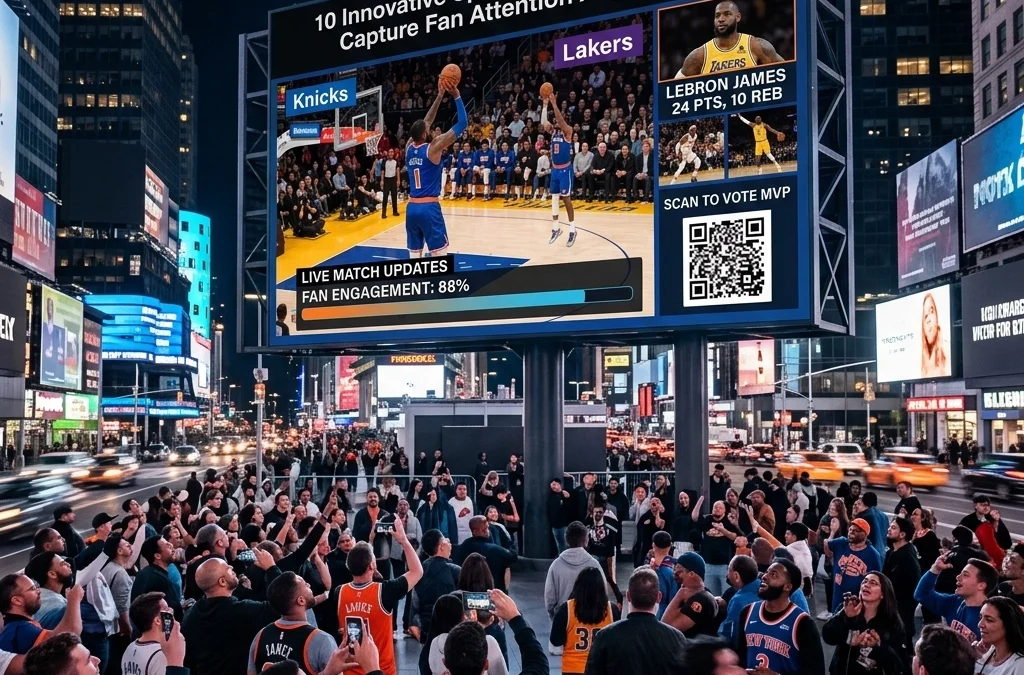
The landscape of sports marketing has shifted from static stadium banners to high-impact, digital experiences that follow fans wherever they go. Digital Out-of-Home (DOOH) advertising offers a unique bridge between the physical world and digital engagement. For media buyers and brand managers, the goal is no longer just visibility. The goal is to capture attention during the moments of highest emotional intensity.
OOH Sports specializes in these high-stakes environments, where the right message at the right time can turn a passerby into a lifelong brand advocate. By leveraging innovative technology, brands can move beyond traditional "spray and pray" tactics and into the world of precision-targeted fan engagement.

The Strategic Shift in Sports Marketing
Traditional sports sponsorships often rely on long-term contracts and fixed assets. While these have value, programmatic DOOH vs traditional stadium sponsorships offer a much more flexible and data-driven approach. Brands can now activate screens based on game schedules, real-time scores, or even the weather.
The following ten ideas represent the cutting edge of sports DOOH innovation, designed to maximize ROI and foster deep fan connections.
1. Real-Time Score and Stat Synchronization
One of the most effective ways to capture attention is by providing immediate value. By integrating live data feeds, digital billboards can update in real-time to show game scores, player statistics, or play-by-play updates.
Strategic Objective:
To position a brand as a primary source of information during live events. This strategy works particularly well in high-traffic urban areas or transit hubs where fans may be commuting during the game.
Execution Tactics:
- Use API integrations to pull live data from official league sources.
- Trigger creative changes based on "big moments," such as a home run or a touchdown.
- Keep the branding subtle but consistent alongside the live updates.
2. 3D Anamorphic "Forced Perspective" Visuals
3D DOOH has taken the industry by storm. These displays use "forced perspective" to make objects appear as if they are popping out of the screen. In a sports context, this could be a basketball flying toward the viewer or a star athlete appearing to step off the building and onto the sidewalk.
Strategic Objective:
To create "Instagrammable" moments that drive organic social media sharing. This significantly increases the reach of an OOH campaign beyond the physical location.

3. Interactive Fan Voting and Polls
Engagement increases when the audience feels they have a voice. Digital screens can display live polls asking fans to predict the "Player of the Game" or the final score. Fans can vote via their smartphones by scanning a QR code on the screen.
Strategic Objective:
To bridge the gap between the physical screen and the consumer’s mobile device. This allows for immediate data collection and retargeting opportunities.
Execution Tactics:
- Display real-time results on the screen to encourage further participation.
- Offer small incentives, such as digital coupons, for those who participate in the poll.
- Use the data gathered to inform future marketing segments.
4. Weather-Triggered Contextual Creative
In sports, weather is a major factor for both performance and fan experience. DOOH platforms can be programmed to change creative based on local weather conditions. If it starts to rain during a football game, a brand can pivot from showing summer gear to promoting waterproof jackets or hot beverages.
Strategic Objective:
To increase relevance and utility. Contextual ads are proven to have higher recall rates because they solve a problem the consumer is currently experiencing.
5. Hyper-Local Stadium Perimeter Targeting
While many brands focus on the inside of the arena, the "last mile" of the fan journey is equally important. Placing high-impact digital displays on the routes fans take to and from the stadium ensures your brand is the first and last thing they see.
Strategic Objective:
To dominate the local environment and capitalize on pre-game excitement and post-game celebrations. This is a core component of stadium perimeter branding.
Execution Tactics:
- Target transit shelters, digital kiosks, and large-format billboards within a 2-mile radius of the venue.
- Use messaging that references the local rivalry to build rapport with fans.
- Utilize Sportrons for high-visibility mobile units that can move with the crowd.

6. Social Media Wall Integration
Fans love seeing themselves on the big screen. Brands can curate user-generated content (UGC) from social media using specific hashtags and broadcast it onto DOOH displays in real-time.
Strategic Objective:
To build community and leverage the "social proof" of fans already engaging with the brand. It transforms a one-way advertisement into a two-way conversation.
Execution Tactics:
- Use a moderation tool to filter content before it goes live.
- Highlight "Fan of the Day" to encourage high-quality submissions.
- Combine this with live game highlights to keep the content fresh.
7. Dynamic Betting Odds and Prop Bets
With the legalization of sports betting in many regions, integrating live odds into DOOH is a massive opportunity for sportsbooks and related brands. Digital screens can update as the betting lines move throughout the day.
Strategic Objective:
To capture the attention of the high-value "betting" demographic. This provides actionable information that can lead to an immediate conversion on a mobile app.
8. AR-Enabled Fan Filters and Experiences
Augmented Reality (AR) can turn a static billboard into an interactive playground. By scanning a QR code, fans can see 3D versions of athletes through their phones, try on virtual merchandise, or participate in a digital scavenger hunt around the stadium.
Strategic Objective:
To provide a deep, immersive experience that traditional media cannot match. This level of innovation is why sports DOOH innovation will change the way you connect with fans.

9. Narrative-Driven Sequential Messaging
Rather than using one static message, brands can use a series of digital screens along a highway or transit line to tell a story. This "sequential messaging" can follow an athlete's journey or build anticipation for a major tournament.
Strategic Objective:
To increase dwell time and storytelling impact. As the consumer moves, the story evolves, keeping them engaged for a longer period.
Execution Tactics:
- Ensure each screen can stand alone but contributes to the larger narrative.
- Use high-contrast visuals to ensure readability from moving vehicles.
- Coordinate the timing of the screens based on average traffic speed.
10. Post-Game Attribution and Retargeting
The campaign does not end when the fan walks past the screen. Using mobile device IDs (anonymized for privacy), media buyers can track who was exposed to a DOOH ad and then retarget them with a follow-up ad on their smartphone.
Strategic Objective:
To measure the "offline-to-online" conversion. This is one of the DOOH industry secrets that allows brand managers to prove actual ROI.
Execution Tactics:
- Set a clear "geofence" around the DOOH assets.
- Deliver a specific call-to-action (CTA) to the exposed audience within 24 hours.
- Measure brand lift or store visits using third-party attribution partners.
Measuring the Impact of Innovation
Success in sports DOOH is measured through a combination of traditional metrics and modern data points. While "impressions" are the standard, innovative campaigns look at engagement rates, social media mentions, and conversion lift.
For example, when Nike successfully navigated the NYC Marathon environment, they didn't just use one screen. They used a comprehensive strategy that made them feel like an official sponsor through sheer presence and creative timing.

Why OOH Sports?
The world of sports moves fast. Your advertising needs to move faster. At OOH Sports, we understand the nuances of the fan experience. We don't just sell screens, we sell strategic access to the most passionate audiences on the planet.
Whether you are looking to deploy a high-tech anamorphic display or a fleet of Sportrons to follow the crowd, our team is equipped to handle the logistics and strategy from start to finish.
The future of advertising isn't just about being seen. It is about being part of the game. By utilizing these ten innovative ideas, brand managers can ensure their message isn't just background noise, but a highlight of the fan’s experience.
To learn more about how we can elevate your next campaign, visit our about page or contact us directly for a strategic consultation. For more insights on the evolving world of digital outdoor media, explore our blog.