
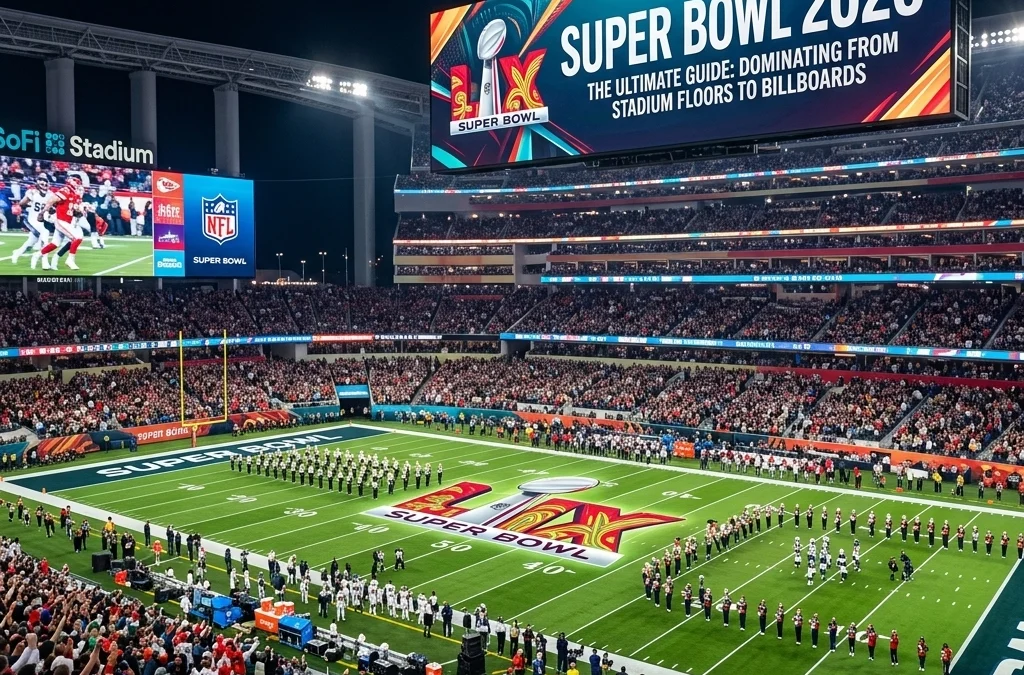
Super Bowl LX, held on February 8, 2026, at Levi’s Stadium, represented a pivotal moment in the evolution of sports marketing. As the industry looks back at the data from this massive event, one thing is clear: the integration of Out-of-Home (OOH) advertising has reached a level of sophistication that was once unimaginable. For OOH Sports, this event was the culmination of 40 years of advertising leadership, proving that the journey from the stadium floor to the highest highway billboard is the most effective way to capture fan attention.
With the 2026 season now in the rearview mirror and brands already looking toward 2027, this retrospective guide serves as the definitive playbook for dominating high-stakes sporting events. By analyzing the strategies that worked during Super Bowl LX, advertisers can understand how to move beyond simple brand awareness to driving measurable purchase intent and brand lift.
The 40-Year Evolution of Stadium Dominance
The landscape of sports advertising has shifted dramatically over the last four decades. Forty years ago, a brand was lucky to have a static banner hanging from a railing. Today, the environment is a fully integrated digital ecosystem. OOH Sports has been at the forefront of this change, transitioning from traditional print to a massive network of over 25,000 digital screens that blanket the most important venues in the world.
During Super Bowl 2026, this 40-year legacy was on full display. The strategy was no longer about just being seen, it was about being everywhere. This "venue-wide coverage" model ensures that a fan never loses contact with a brand from the moment they leave their home to the moment they take their seat.

Venue-Wide Coverage: A Floor-to-Ceiling Strategy
Dominating the Super Bowl requires more than a 30-second TV spot. It requires a physical presence that interacts with the fan's physical journey. This is where "Stadium Floors to Billboards" becomes more than a slogan, it is a logistical reality.
The Entry Point: Highway Billboards and Transit
The campaign begins miles away from the stadium. For Super Bowl LX, digital billboards along major Bay Area arteries provided the first touchpoint. By utilizing geographically targeted DOOH, brands were able to greet fans as they arrived in the city. Research has shown that geographically targeted DOOH strategies can boost fan engagement by as much as 90%, a figure that was validated by the foot traffic patterns seen in San Francisco during the week leading up to the game.
The Perimeter: Stadium Gates and Concourses
As fans approached Levi’s Stadium, the messaging transitioned from broad awareness to specific calls to action. Digital screens at stadium gates and throughout the concourses served as high-frequency touchpoints. These placements are critical because they reach fans during moments of high anticipation. Whether they are waiting in line for security or grabbing a beverage, the brand is part of the experience.
The Inner Sanctum: Stadium Floors and Perimeter Boards
The most innovative aspect of the 2026 strategy involved the use of high-impact digital flooring and field-level perimeter boards. By placing messaging directly in the line of sight of the action, brands achieved a "halo effect," where the excitement of the game itself became associated with the advertiser. This level of immersion is why many media planners are shifting budgets toward sports DOOH.
Strategy and Objective: The Programmatic Advantage
The secret to the success of Super Bowl 2026 was not just the number of screens, but the intelligence behind them. Programmatic Digital Out-of-Home (pDOOH) allowed brands to buy and trigger ads in real-time based on specific data points, such as game scores, weather, or crowd density.
Case Study: High-Impact Beverage Launches
Looking at past successes, such as White Claw’s programmatic campaign, which saw a 74% lift in purchase consideration, OOH Sports applied similar logic to the Super Bowl environment. Large-scale beverage brands utilized pDOOH to adjust their creative based on the time of day, switching from "get ready for the game" messaging in the morning to "celebrate the win" messaging in the fourth quarter.
Similarly, AB InBev’s Mike’s Hard Iced Tea previously saw a 119% lift in positive brand image using these real-time tactics. During Super Bowl LX, this was taken a step further by integrating real-time sports betting data.
https://www.youtube.com/watch?v=l6J-0zileKE
Real-Time Execution: The Betting and Engagement Layer
One of the standout trends of the 2026 Super Bowl was the integration of sports betting into the OOH landscape. With the ability to launch real-time betting campaigns in under 24 hours, advertisers were able to update odds on digital screens as the game progressed. This created a dynamic environment where the advertising felt like a live update rather than a static interruption.
For brands that weren't official sponsors, OOH provided a "stealth" way to dominate the conversation. Much like Nike’s unofficial presence at the NYC Marathon, smart brands used OOH Sports' network to surround the stadium and fan zones, creating a massive presence without the official sponsorship price tag.

Technology Partners and AI Integration
The backend of the Super Bowl 2026 campaign relied heavily on AI-powered analytics. By using specialized platforms like the StackAdapt DSP, OOH Sports was able to drive programmatic adoption across omnichannel campaigns. This technology allowed for precise measurement of how many fans were exposed to an ad and, more importantly, how many of those fans took action later.

Measuring Success with Precision
Gone are the days of guessing how many people looked at a billboard. In 2026, AI-powered analytics proved the success of these campaigns by tracking device IDs and measuring "store visitation lift" and "brand preference rating." This data-centric approach helps brands avoid guesswork and provides a clear ROI for every dollar spent in the stadium vicinity.
Results: Why the "Floor to Billboard" Approach Wins
The results from Super Bowl LX have set a new benchmark for the industry. Brands that utilized the full-funnel OOH approach: starting with high-level awareness on billboards and ending with high-intent messaging on stadium screens: saw significantly higher conversion rates than those that focused on a single medium.
- Increased Purchase Consideration: Similar to the 144% lift seen in Sea-Doo’s first digital campaign, Super Bowl advertisers in the automotive and tech sectors saw record-breaking spikes in online search and intent during and after the game.
- Cost Efficiency: While a TV spot can cost millions for 30 seconds, a coordinated DOOH campaign provides sustained exposure for a fraction of the cost. Brands are finding that smart scaling with perimeter DOOH can deliver equivalent or better results for 80% less spend.
- Omnichannel Synergy: The OOH placements served as a physical "anchor" for social media and mobile campaigns. Fans who saw a digital floor ad were significantly more likely to engage with a retargeted mobile ad on their way home.
Looking Forward: The 2027 Horizon
As the industry moves toward 2027, the lessons of Super Bowl 2026 are clear. The digital out-of-home sports advertising market is on track to hit 50 billion dollars by 2030. To capture a share of that growth, brands must embrace the "from floors to billboards" philosophy.
The success of Super Bowl LX was not an accident. It was the result of 40 years of experience, a network of over 25,000 screens, and a commitment to using the latest in programmatic and AI technology. For those who want to dominate the next big game, the path is already paved: from the highway to the stadium floor.

Key Tactics for Future Success:
- Start Early: Secure prime digital inventory months in advance to ensure venue-wide coverage.
- Go Programmatic: Use real-time triggers to keep messaging relevant to the action on the field.
- Focus on the Journey: Map out the fan's physical path and place ads at every major transition point.
- Measure Everything: Use AI-powered analytics to prove the impact of the campaign and optimize for the next event.
Super Bowl 2026 may be over, but the era of the integrated stadium experience is just beginning. By following this guide, brands can ensure they aren't just spectators at the next big event, they are the main attraction.