
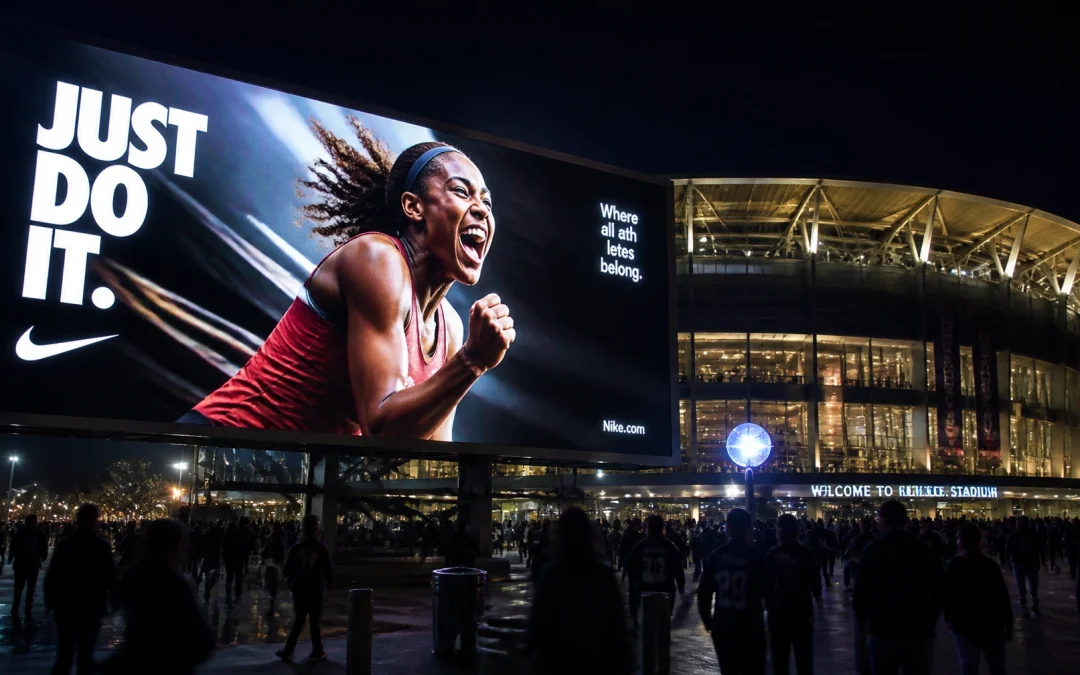
The landscape of sports marketing has undergone a massive transformation. Gone are the days when a static billboard near a stadium was the pinnacle of outdoor advertising. Today, brand managers and media buyers are looking for ways to cut through the noise and reach fans exactly where they are. This search for a competitive edge has led to the rise of Digital Out of Home (DOOH) advertising as a powerhouse in the sports industry.
The ability to combine the physical presence of outdoor media with the precision and flexibility of digital advertising has changed the game. Brands are no longer just buying space. They are buying moments, emotions, and specific audience behaviors. By leveraging a network that covers the perimeter around major sports venues, advertisers can ensure their message is seen by the right people at the absolute best time.
Here are 10 sports DOOH innovations that are currently defining the future of the industry and providing brands with that much-needed competitive advantage.
1. Programmatic Buying for "Fan Moments"
The transition from manual to programmatic buying is perhaps the most significant shift in DOOH. Programmatic technology allows for the automated purchase and delivery of advertising based on real-time data. This means brands can bid on impressions that coincide with specific "fan moments," such as the hour before a championship game or during the victory parade.
By using Demand-Side Platforms (DSPs), media planners can set specific parameters for when and where their ads appear. This level of automation ensures that budgets are spent efficiently, targeting only the most relevant audiences. For instance, the use of StackAdapt's DSP has become a standard for driving adoption in omnichannel campaigns, allowing for a seamless blend of DOOH and other digital channels.
2. Dynamic Creative Optimization (DCO)
Relevance is the key to engagement. Dynamic Creative Optimization (DCO) allows advertisers to create templates that automatically update based on live data feeds. In a sports context, this could mean changing the creative based on the current score of a game or the specific team that is playing in a nearby arena.
If the home team scores, the digital screen can instantly switch to a celebratory message. If the game is tied in the final minutes, the copy can shift to reflect the mounting tension. This automation allows for hundreds of localized variants to be served from a single template, making the campaign feel personal and immediate without requiring manual updates for every screen.

3. Weather-Responsive Triggering
Weather plays a huge role in the fan experience. Whether it is a sunny day perfect for a baseball game or a rainy afternoon that drives fans into indoor bars, the environment influences consumer behavior. Innovations in DOOH now allow for weather-triggered campaigns that react to local conditions in real time.
For example, a sports hydration brand might trigger an ad when the temperature rises above 80 degrees. Conversely, a retail brand might promote waterproof gear when the local forecast calls for rain. This level of contextual relevance ensures that the advertisement provides a solution to a current need, significantly increasing the likelihood of conversion.
4. Hyperlocal Targeting: The 10-Mile Perimeter
In sports marketing, location is everything. The most effective campaigns focus on the areas immediately surrounding the action. A 10-mile perimeter around sports venues represents a high-density zone of passionate fans, commuters, and travelers.
Targeting digital video boards within this specific radius ensures that a brand is part of the "game day journey." From the moment a fan leaves their house to their arrival at the stadium, and even during their post-game celebration at a local restaurant, the brand remains top-of-mind. This strategy creates a surround-sound effect that smaller, more scattered campaigns simply cannot match.

5. Augmented Reality (AR) and Mixed Reality
Innovation is not just about the screen itself. It is about how the screen interacts with the fan’s personal device. Web-based Augmented Reality (WebAR) is being used to bridge the gap between a digital billboard and a mobile experience. By scanning a QR code on a DOOH screen, fans can unlock interactive filters, mini-games, or virtual athlete meet-and-greets.
This "phygital" approach turns a passive viewing experience into an active one. It also provides brands with a direct way to capture first-party data and drive fans to social media or mobile apps. Because WebAR does not require an app download, it removes the friction that often prevents fans from participating in traditional AR activations.

6. Real-Time Score and Stat Integration
Fans are constantly looking for updates. Integrating live scores, player statistics, and game highlights directly into DOOH creative turns a billboard into a valuable information source. This strategy ensures that fans will look at the screen not just for the advertisement, but for the information they crave.
When a brand provides this utility, it builds a positive association with the fan base. The advertisement becomes part of the game-day infrastructure rather than an interruption. This is particularly effective for sports betting brands, which can display live odds that update as the game progresses, creating a sense of urgency and direct relevance.
7. Sentiment-Based Creative Swaps
The mood of a fan base can change in an instant. A major injury, a controversial call, or a last-minute victory can shift the collective emotion of a city. Advanced DOOH platforms can now use sentiment analysis and live game data to swap creatives based on the current vibe.
Pre-game ads might focus on "hype" and anticipation. During the game, the messaging might pivot to real-time analysis. Post-game creative can then be tailored to either celebration or commiseration. This nuanced approach shows that the brand is "in the moment" with the fans, fostering a deeper emotional connection.
8. Multi-Channel Synchronization
DOOH is most effective when it is part of a larger, synchronized campaign. Modern innovations allow brands to retarget individuals who have been exposed to a DOOH screen. For example, a fan who walks past a digital billboard near the stadium might receive a mobile ad for the same brand an hour later while they are browsing a sports news app.
This cross-channel approach reinforces the brand message and moves the consumer further down the funnel. By using device IDs and location data, planners can measure the frequency of exposure across different platforms, ensuring the brand remains at the forefront of the consumer's mind without being repetitive.
9. Strategic Audience Mapping
Beyond the stadium, fans congregate in specific "habitual spaces." Innovations in audience-led planning allow brands to identify and target these locations. This includes gyms, sports bars, college campuses, and transit hubs.
By mapping screens to the daily routines of sports fans, advertisers can reach their target audience even during the "off-hours." This always-on strategy ensures that the brand relationship is maintained year-round, rather than just during the three hours of a game. It treats the sports fan as a multifaceted individual with interests that extend beyond the arena.
10. Advanced Measurement and Brand Lift
Perhaps the most important innovation for media buyers is the ability to accurately measure the impact of DOOH. Modern attribution models can track how exposure to a digital billboard leads to real-world outcomes, such as retail footfall, app downloads, or purchase intent.
Campaigns for major brands have shown significant results using these metrics. For instance, White Claw’s programmatic campaign saw a 74% lift in purchase consideration, while Mike’s Hard Iced Tea achieved a 119% lift in positive brand image. Even newer entries into the space, such as Sea-Doo, have seen triple-digit increases in consideration by utilizing targeted DOOH. These data points provide the transparency and accountability that modern marketers require.

Strategy and Execution
The successful deployment of these innovations requires a clear strategy. Objectives must be defined early, whether the goal is broad brand awareness or specific footfall to a nearby retail location. The use of specialized technology partners and programmatic platforms is essential for managing the complexity of dynamic triggers and real-time data.
Technology Partners
Collaboration with industry-leading platforms ensures that campaigns are executed with technical precision. By integrating with high-quality DSPs and data providers, brands can access premium inventory and advanced targeting capabilities. This technical fluency is what allows for the seamless delivery of scores, weather updates, and AR experiences across thousands of screens simultaneously.
Results and Impact
The shift toward innovative DOOH is driven by measurable success. The ability to report on device IDs exposed, brand lift studies, and attribution metrics has moved DOOH from a "nice-to-have" to a core component of the media mix. As the technology continues to evolve, the brands that embrace these innovations will be the ones that maintain a competitive edge in the increasingly crowded sports marketing landscape.
In conclusion, the future of sports advertising is digital, dynamic, and deeply integrated into the fan experience. By moving beyond static images and embracing the power of real-time data and hyperlocal targeting, brands can create memorable moments that resonate long after the final whistle has blown.