
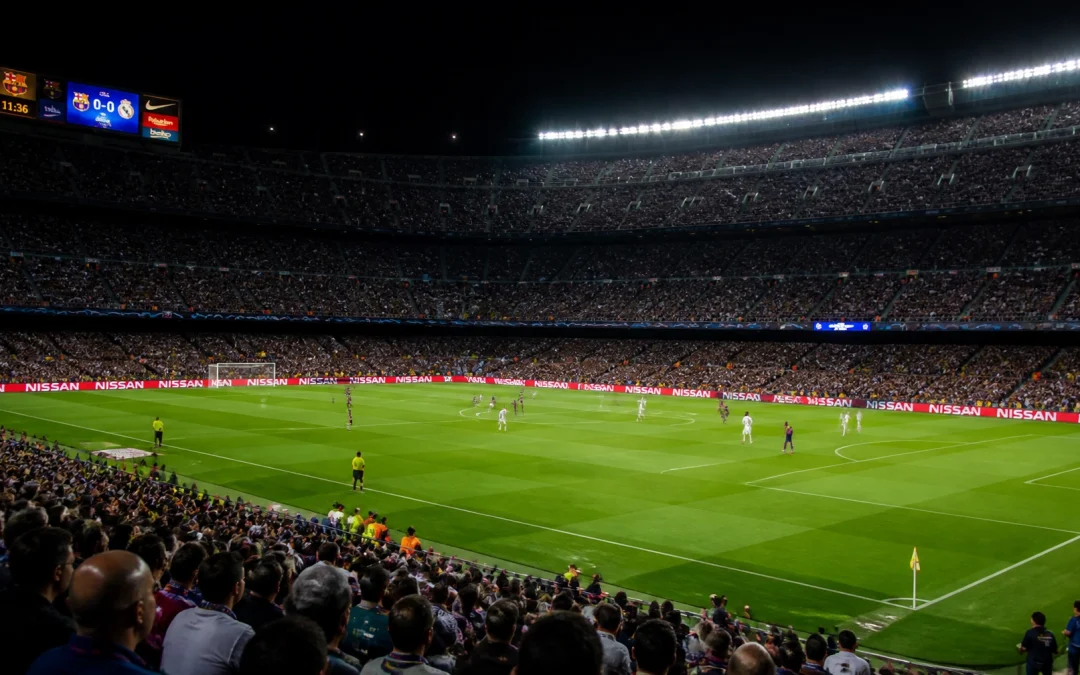
Digital out-of-home sports advertising is becoming a more connected, measurable part of the media landscape. Programmatic buying, venue perimeter targeting, dynamic creative, and mobile-enabled experiences are giving brands more control over how they reach fans before, during, and after live events.
The most effective campaigns now connect three elements:
- The physical environment around a sports venue
- The live context of the game or event
- Measurement that links exposure to brand and business outcomes
For media buyers, brand managers, CMOs, and creative directors, these developments create a practical framework for planning more relevant and accountable DOOH advertising.
Programmatic DOOH Is Becoming a Standard Media-Mix Component
Programmatic DOOH is moving from an experimental channel to a regular part of omnichannel planning. Research from VIOOH’s State of the Nation, based on 1,050 advertisers and agencies, points to continued adoption and investment.
Key findings include:
- 89% of recent programmatic DOOH buyers planned it as part of wider digital programmatic activity.
- 99% expected to increase or maintain investment in programmatic DOOH.
- Planned investment growth averaged 44%.
- Programmatic DOOH appeared in 34% of campaigns over the previous 18 months and was expected to reach 48% over the following 18 months.
- 90% used AI at some stage of the campaign process.
- 84% associated programmatic DOOH with innovative opportunities.
These figures indicate that programmatic DOOH is increasingly being planned alongside mobile, video, social, search, and connected television, rather than being treated as a separate out-of-home tactic.
For sports advertisers, the value is tied to flexibility. Campaigns can be adjusted by venue, audience, time window, game state, or local conditions without requiring a complete change to the media plan. Budgets can also be shifted toward the locations and moments most relevant to fan movement.
The Stadium Perimeter Extends the Fan Journey
Sports media planning is no longer limited to the screens inside a stadium. A venue perimeter strategy can include digital screens within roughly a 10-mile radius of a stadium or arena.
This approach follows the audience through the full event journey:
- Fans leave home or work.
- They travel through transit hubs and major roadways.
- They gather at bars, casual dining locations, gyms, and quick-service restaurants.
- They enter the stadium or arena.
- They leave through the same surrounding network after the event.
An effective stadium perimeter advertising plan can include:
- Sports bars and casual dining venues
- Gyms and fitness centers
- Office building screens
- Transit hubs and commuter routes
- Quick-service restaurants
- Urban panels and street-level displays
- Highway signs and major arterial routes
- Retail and hospitality locations near the venue
This network creates repeated exposure across multiple points of the fan journey. It also allows creative to be localized by venue, market, team, event type, or proximity to the stadium.
The result is a broader definition of OOH sports. Instead of focusing on a single perimeter board, the campaign can create a connected environment around the event.

Dynamic Creative Optimization Makes Relevance Operational
Dynamic creative optimization, or DCO, allows advertisers to prepare multiple creative variations and activate them through live data triggers.
In sports advertising, common triggers include:
- Real-time scores
- Game state and lead changes
- Halftime or intermission
- Time remaining
- Match start and end
- Weather conditions
- Time of day
- Venue proximity
- Traffic or fan density
- Retail or promotional conditions
A brand can prepare separate messages for a home-team win, a close game, a rain delay, or the period immediately before kickoff. The system then selects the relevant version based on approved rules and live data feeds.
This process supports several objectives:
- Increase contextual relevance
- Reduce manual trafficking
- Improve creative freshness
- Match messaging to the emotional rhythm of the event
- Coordinate exterior screens with in-venue messaging
- Adapt calls to action by audience location
Rainout Protection for Outdoor Venues
Weather triggers are particularly important for outdoor sports. A rainout protection workflow can prevent a campaign from displaying an offer or message that is no longer operationally relevant.
For example:
- Outdoor apparel messaging can activate during rain.
- Beverage or hydration creative can run during hot conditions.
- A weather-sensitive retail offer can pause when conditions change.
- Event-related messaging can be replaced if a game is delayed or canceled.
This type of automation protects the brand experience while reducing the risk of wasted impressions or inaccurate calls to action.
Measurement Must Go Beyond Impressions
Impressions remain an important planning metric, but they do not fully explain how a sports DOOH campaign performs. A stronger measurement framework combines exposure, attention, brand response, physical movement, and digital action.
Useful measurement layers include:
- Attention metrics: Indicators of whether audiences noticed and processed the message.
- Dwell time: The amount of time audiences remain in an environment or near a screen.
- Two-second viewed exposure thresholds: A defined standard for counting an exposure as viewed.
- Device IDs exposed: Privacy-compliant audience records used for retargeting or attribution.
- Brand lift: Changes in awareness, preference, recall, or intent among exposed and control groups.
- Purchase consideration: The change in likelihood that an audience will consider a product.
- Foot traffic: Visits to stores, restaurants, venues, or other locations after exposure.
- Attribution: Analysis connecting DOOH exposure with mobile engagement, visits, conversions, or sales activity.
A White Claw programmatic DOOH case study conducted with Broadsign and Happydemics reported a 74% lift in purchase consideration for White Claw Vodka among people who recalled the ads compared with non-recallers.
Related OOH Sports pilot reporting cited the following outcomes for campaigns using real-time creative and retargeting methods:
- 22% increase in brand preference
- 15% higher visitation rate
- 35% improvement in message recall
- 12% increase in mobile app engagement
These results illustrate why sports DOOH should be assessed as part of a wider measurement plan. Brand lift can show whether the message changed perception, while foot traffic and mobile engagement can help demonstrate downstream action.
Interactive Creative Connects Screens to Mobile
Interactive creative gives fans a direct way to respond to a DOOH message. QR codes are the most accessible format, especially in pedestrian zones where audiences have enough time to notice, scan, and act.
Potential applications include:
- Coupons and limited-time offers
- Mobile app downloads
- Merchandise access
- Fan polls and predictions
- Loyalty program enrollment
- Venue maps and event information
- Product education
- Exclusive video or social content
Augmented reality can add another layer. A QR code on a screen near a stadium could launch an AR filter, virtual product experience, digital trophy, or branded game. In a pedestrian environment, the mobile experience can continue after the fan moves away from the screen.
Interactive creative should be designed for the environment. A QR code shown for a short interval on a highway sign is unlikely to be practical, while the same code may perform well on a screen in a bar, transit hub, or stadium district.

Major Sports Events Provide Scalable Test Environments
Large tournaments, including the FIFA World Cup, offer proving grounds for sports marketing innovation. They bring together concentrated audiences, high travel volumes, multiple host locations, and a wide range of public viewing environments.
DOOH campaigns around major events can test:
- Citywide screen synchronization
- Stadium perimeter targeting
- Transit and airport activation
- Fan zone messaging
- Live score and match-state triggers
- Localized language and team creative
- QR-enabled promotions
- Augmented reality experiences
- Cross-market programmatic buying
The scale of these events also exposes operational requirements. Data feeds must be accurate. Creative variations need to be approved in advance. Media plans must account for crowd movement, venue access, weather, and changes to schedules.
The best use of a major event is not simply to buy more screens. It is to apply a repeatable system that can later be used for regular-season games, tournaments, concerts, and other high-attention occasions.
Actionable Takeaways by Role
For Media Buyers and Planners
- Include programmatic DOOH in the initial omnichannel plan.
- Map the full 10-mile venue perimeter, not only the stadium.
- Group inventory by audience environment and fan journey stage.
- Reserve budget for real-time optimization.
- Confirm access to score, weather, venue, and schedule data.
- Define exposure, attribution, and brand lift methodology before launch.
- Build retargeting audiences from privacy-compliant device and mobility data.
For Brand Managers and CMOs
- Set objectives beyond reach, including preference, consideration, visitation, and app engagement.
- Align the DOOH message with the broader sports marketing platform.
- Use venue proximity to increase relevance without limiting the campaign to ticket holders.
- Evaluate results against a control audience where possible.
- Treat the surrounding community as part of the event environment.
- Use live triggers when they support a clear business objective, not simply for novelty.
For Creative Directors
- Develop modular creative that can adapt to scores, weather, time, and location.
- Keep copy short and legible across different screen sizes.
- Prepare approved variations for wins, losses, delays, and neutral game states.
- Design QR codes for environments where audiences can safely scan.
- Use AR when it adds utility or participation to the experience.
- Maintain consistent branding across exterior screens, mobile destinations, and in-venue assets.
The Next Phase of Digital Out-of-Home Sports
DOOH sports advertising is developing into a connected media system. Programmatic buying provides flexibility. Venue perimeter targeting provides proximity. Dynamic creative adds context. Interactive formats create response paths. Measurement connects exposure to brand and business outcomes.
Together, these capabilities make fan engagement more measurable and more useful to advertisers across the planning cycle.
The DOOH sports community is encouraged to share its experience. Which live triggers have produced the strongest results? How are teams measuring attention, visitation, or purchase consideration? Which interactive formats have created meaningful fan participation?
Insights from media buyers, brand teams, agencies, venue operators, and technology partners can help shape the next phase of digital out of home sports, branding, and sports marketing innovation.